Seaweed Soup

The best Cantonese seaweed soup recipe for all your cold day's needs!

Cooking Summary
Ingredients: (detailed list)
- Main Ingredients: dried seaweed, dried shrimp, egg, napa cabbage, pork
- Pork Marinade: salt, cornstarch, water
- Soup Ingredients: oil, chicken broth, water, salt, sesame oil, fish sauce, white pepper
Steps:
Jump To Section
Overview
Seaweed Soup is an incredible Cantonese dish, not only because it's a staple of the cuisine and so good for your body, but also because of the way it can be easily adapted to include whatever ingredients are available.
My parents ate this a lot back in China, and we also ate it growing up. Each generation's seaweed soup may have had different ingredients and additions, but every iteration was still definitively, deliciously, heartwarmingly seaweed soup.
The versatility of this soup makes for a robust recipe, adaptable to whatever is local and available to you. I'm excited for you to make it your own!
Why this recipe
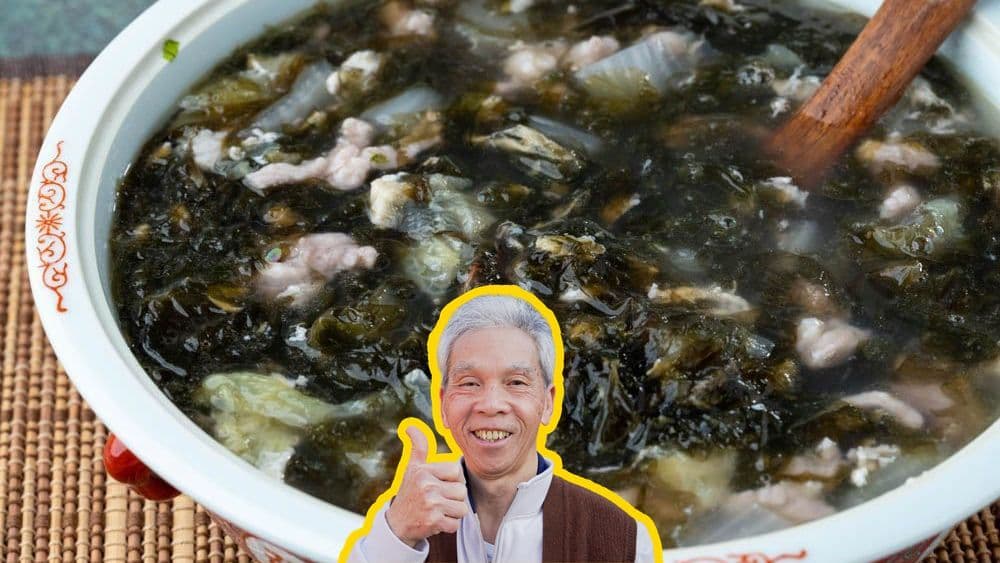
Most seaweed soup recipes online are tested only a handful of times. My dad used to make this dish multiple times a day, every day, for 60+ years and can make this in his sleep.
I know you'll love it as much as our community does! This recipe has over 285.5K views, 5.4K likes on YouTube.
Ingredients

Seaweed: super snack, super soup
I bet you've seen the fantastic variety of dried seaweed snacks line the snack aisle: roasted, salted, wasabi, teriyaki, even kimchi-flavored. Popular as they are, these tasty snacks are all basically the same kind of seaweed with different flavors.
But there are so many more kinds! These are some of the soup-making seaweeds that deliver to you vitamins, minerals, and essential amino acids:
Kombu is a category of heavy kelp that's the key ingredient in Japanese soup bases, or dashi. There are over ten types of kombu, and they all look and taste different!
Wakame, or miyeok in Korean, is another kind of seaweed that's used to make soup. Korean seaweed soup, miyeokguk, is traditionally eaten after childbirth and on birthdays.
The seaweed we're using for Cantonese Seaweed Soup resembles snacking seaweed in that it's thin rather than kelp-like, but instead of pressed into thin sheets, it's dried into loose cakes that you can tear or cut through very easily.
Build your own soup
My dad likes to add napa cabbage to build more complex and layered flavors in the soup. You can try other leafy vegetables too, like bok choy.
Tofu is a really popular addition. You can cube it and add it a bit after the pork.
Or, experiment with any kinds of proteins you have on hand. How wonderfully thematic would it be to have a seafood protein like fresh shrimp in your seaweed soup?
Our recipe uses fish sauce for seasoning. If you would rather not use fish sauce, or can't find it, you can use light soy sauce, or skip it altogether.
The answer to "yeet hay"
Do your parents blame chips, pizza, and fried foods for the pimples on your face?
In traditional Chinese culture, it’s believed that foods have two energies - yin, or cold, and yang, or hot. It doesn't correlate with the temperature of the food, but factors like when and where the food naturally grows or how it's prepared.
For example, radishes are yin/cold, even if they're freshly steamed and piping hot. Lychees are yang/hot, even if they're straight from the freezer. Carrots are neutral and don't lean heavily in either direction.
How about a doozy? American-grown ginseng is yin/cold, but Korean-grown ginseng is yang/hot.
When we consume too much of one type, our bodies become imbalanced, and Chinese tradition points to this imbalance as the root cause for symptoms like pimples.
Yeet hay, or "heaty", describes both the foods and symptoms we feel when we’ve consumed too much yang energy, and a common remedy is something like leung cha (Chinese herbal tea) or something like Seaweed Soup.
How to make Seaweed Soup
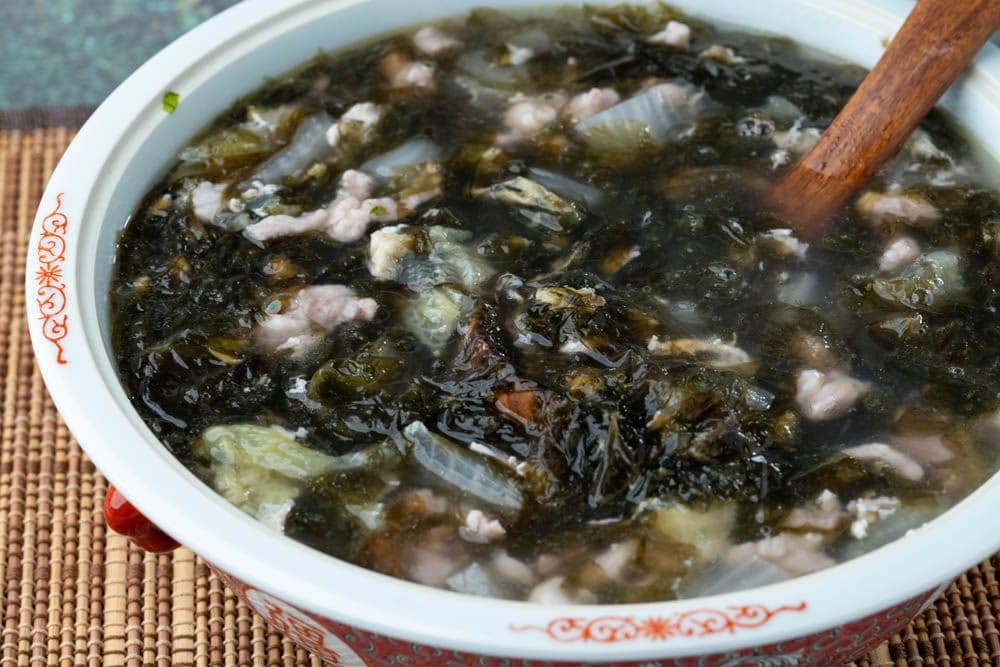
Start by rinsing the dried seaweed (½ oz). These days, dried seaweed tends to be very clean, but if your seaweed has a lot of sand and residue, that will come off with a few more rinses, and will sink to the bottom during the soak.
Then we need to soak the seaweed for around 10 minutes. It's fine if it ends up sitting in the water for longer than that, because it'll be cooking in a big pot of soup anyway.
Wash the dried shrimp (½ oz) twice to make sure they're clean, and rehydrate them by soaking in a small bowl of hot water for 5 minutes.
Crack the eggs into a bowl so they'll be ready for later.
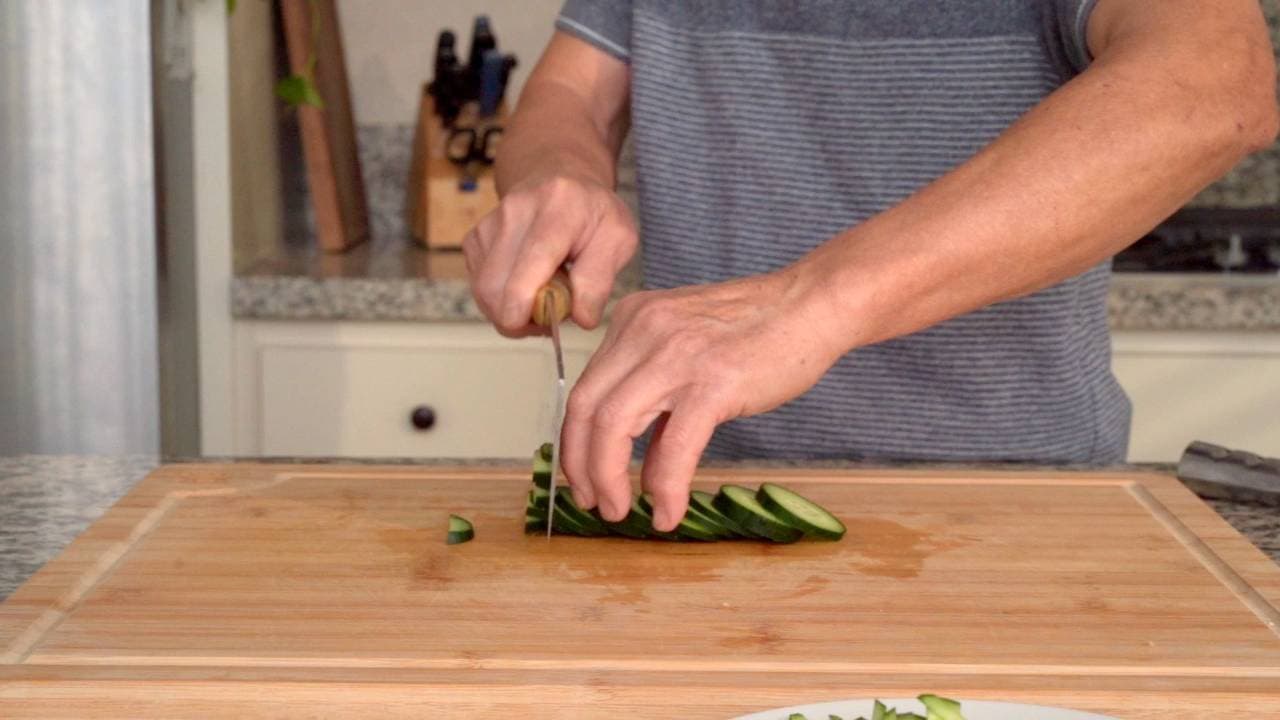
We'll cut the napa cabbage (6 oz) into manageable bites. Make two length-wise cuts, and then chop into pieces about 1-2 inches wide. The stem pieces should be smaller than the leafy pieces to account for cooking time.
You can slice the lean pork (5 oz) into any shape you like. For this recipe, we're cutting it into strips by slicing first, and then laying them down to cut strips. Besides strips, you can also do big slices or even mince the pork.
Put the pork in a bowl.
Then, we'll make the marinade for the pork with salt (½ tsp), cornstarch (1 tsp), and water (1 Tbsp). A handy technique is to mix the marinade ingredients to the side of the bowl that the pork's in, smoothing out any clumps there, and then stirring it into the pork.
This way, the marinade is smooth and easy to incorporate, and you don't have a separate marinade-making dish to clean later!
With a soup pot on the stove, turn the heat on high. Add oil (1 Tbsp) to the pot. It should heat up rather quickly.
Put the rehydrated dried shrimp in, making sure to save the soaking liquid, and cook for 50-60 seconds. The shrimp flavor will bloom and flavor the oil, and you'll be able to smell it.
Add chicken broth (14 oz) to the pot of soup, as well as the shrimp soaking liquid that we saved earlier. The liquid will add an extra little layer of shrimp flavor to the soup. Then add water (6 cup) and put the lid on the pot.
When the soup comes to a boil, remove the lid, and add the napa cabbage. Place the lid back on, and continue to cook on high heat. We need to wait for the soup to come back to a boil, which should take about 1.5 minutes.
Once the soup is boiling again, remove the lid, drain the rehydrated seaweed, and add it to the soup.
Add the marinated pork as well. Make sure to stir as the pork goes in, so that they cook evenly without sticking together.
We're going to add the eggs next, but to make sure the soup doesn't boil over while we're working, turn the heat down to medium.
Beat the eggs, and slowly pour the beaten eggs in while stirring the soup to create smooth wisps of silky egg. Then, turn the heat back up to high.
It's time to season the soup. Start with salt (1 tsp). It's not a lot, but you can always add more salt at the end if it's needed. Then add sesame oil (½ tsp), fish sauce (1 tsp), and white pepper (1 dash).
Finally, taste to adjust the flavors of the soup to your liking! This is usually served in a large serving bowl at the center of the table. Everyone can take the amount they want in smaller individual bowls.
Top 3 Mistakes
- Buying the wrong seaweed:
Use the dried Chinese seaweed cake specified for this soup. Seaweed sold for other styles of soup can behave differently, so check the ingredient before following this preparation.
- Skipping the soaking step:
Rehydrate the dried ingredients before you start cooking. Follow the recipe’s soaking instructions so they soften properly rather than staying tough in the finished dish.
- Pouring the eggs too fast:
Add the beaten eggs in the slow stream described in the recipe. Dumping them in at once changes how they set, giving you larger clumps instead of the delicate strands you want.
Frequently Asked Questions
What kind of seaweed do you use for Chinese seaweed soup?
It's important to get the right seaweed, because if you buy the type of seaweed for Korean or Japanese seaweed soup, this recipe won't work!!
The seaweed we're using for Cantonese Seaweed Soup resembles snacking seaweed in that it's thin rather than kelp-like, but instead of pressed into thin sheets, it's dried into loose cakes that you can tear or cut through very easily.
Look in the dried ingredient aisle of your Chinese supermarket for a circular cake of dried, dark seaweed. Sometimes it'll be labeled "dried seaweed" or "soup seaweed".
Be careful you don't use seasoned, snacking seaweed for soup.
How do you prepare seaweed for soup?
For Chinese seaweed soup, you start with a cake of dried seaweed. In the past, the seaweed cake wasn't as clean and often had some sand and grit you had to make sure to rinse away, to avoid chipping a tooth on a piece of sand.
Nowadays, the seaweed cakes are really clean and generally free of grit. Yay! If your seaweed does have some sand and residue, that will come off with a few more rinses, and will sink to the bottom during the soak.
Then you need to soak the seaweed for around 10 minutes. It's fine if it ends up sitting in the water for longer than that, because it'll be cooking in a big pot of soup anyway.
Is seaweed soup good for you?
Oh, seaweed soup is SO good for you!
Seaweed is super nutritious. It's the best source of dietary iodine out there, which is important for your thyroid. It's also got a lot of vitamins, minerals, and antioxidants. It's rich in fiber and we all love that!
To add to that powerhouse, our recipe for this soup also includes napa cabbage, eggs, pork, and dried shrimp. It's not only super healthy, but super tasty, too.
If you're feeling "heaty", or "yeet hay", this is a great cooling-to-neutral soup to balance your body out.
How do you keep seaweed soup from tasting fishy?
Since Chinese seaweed soup uses dried, thin seaweed, the seaweed itself is actually not very fishy. Japanese and Korean seaweed soups use thicker, kelp-like seaweed called wakame and miyeok, and those might be a little fishy.
Our recipe does use dried shrimp and fish sauce, but the soup doesn't taste fishy at all:
- the dried shrimp gets some nice frying action before the liquid goes in
- the amount of fish sauce is pretty small relative to the entire pot of soup
- we season with white pepper
- and we have a lot of other neutral-tasting ingredients, like napa cabbage and egg, to steer the soup into a super delicious direction
- sesame oil is also an incredibly intense flavor. Be careful with it!
Pairs well with
View all →

Made with love ❤️
We started Made With Lau to celebrate Cantonese culture and honor the legacy of our wonderful parents, Jenny and Chung Sun Lau.
Our hope is that these recipes and stories help you spread the joy, love, and nostalgia that I felt growing up.