Salt & Pepper Shrimp

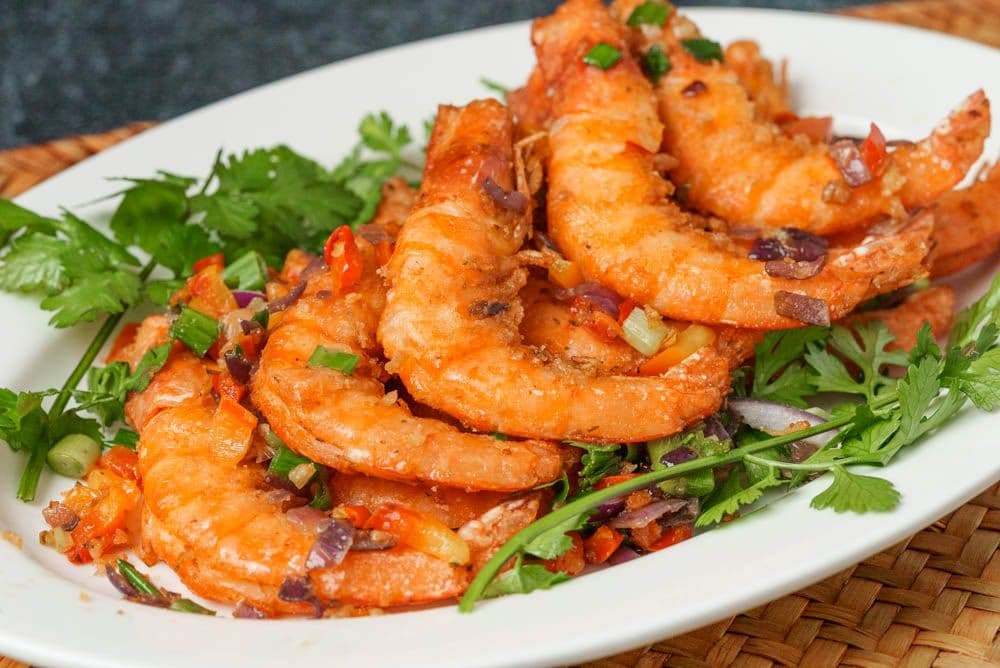
An easy, savory shrimp recipe that returns maximum flavor from simple ingredients!

Cooking Summary
Ingredients: (detailed list)
- Main Ingredients: shrimp, garlic, red onion, red bell pepper, green onion, Thai chili pepper, corn oil
- Shrimp Seasoning: garlic salt, cornstarch
- Seasoning: garlic salt, salt, white pepper
Steps:
Jump To Section
Overview
Eat shrimp for luck and happiness
Shrimp is a popular protein in Cantonese cuisine, not only because it's so delicious and relatively easy to source, but also because it's auspicious. In Cantonese, shrimp is 蝦 haa1, which sounds like joyful laughter. Put this Salt & Pepper Shrimp on the table for lucky celebrations to ensure a future full of happiness and laughter!
A story about prosperity, with U.S. Bank
This Lunar New Year recipe is brought to you in part by U.S. Bank.
As a kid, I was so excited to receive $5 in my red envelopes. $5 was a lot for me, and even more for my parents, who worked long nights and weekends running their own restaurant.
“Wah Yuen” - that was the name of their restaurant, the name of their hopes and dreams.
As immigrants living the 80s and 90s, they just had to figure out how to find success on their own.
They didn't have the internet, and no one was really investing in the success and financial education of Chinese communities. They just made it work by being extremely frugal and with relentless sacrifice.
But, times have changed.
Ironically, my parents never wanted me to be in the food & restaurant industry. But lo and behold, I now run a successful business teaching millions of people how to cook on the internet. Maybe it’s fate - I come from a long line of restauranteurs (my paternal grandfather used to run a popular tea house in Guangzhou).
For me, as a Chinese American entrepreneur in today's world, managing our business and finances is much, much easier than it used to be, because we have so many more resources at our fingertips through organizations like U.S. Bank.
We’re really honored and excited to partner with U.S. Bank because they’re investing significantly into the AAPI community (not just through corporate lip-service.)
If you’re a business owner looking to understand business essentials, streamline operations, or need lending or coaching, check out their Business Banking offerings.
You can also get up to $600 cash when you open a new checking and savings account. Visit U.S. Bank’s 2023 Lunar New Year page to learn more.
Disclaimer: Subject to certain conditions and qualifications. Member FDIC.
Why this recipe
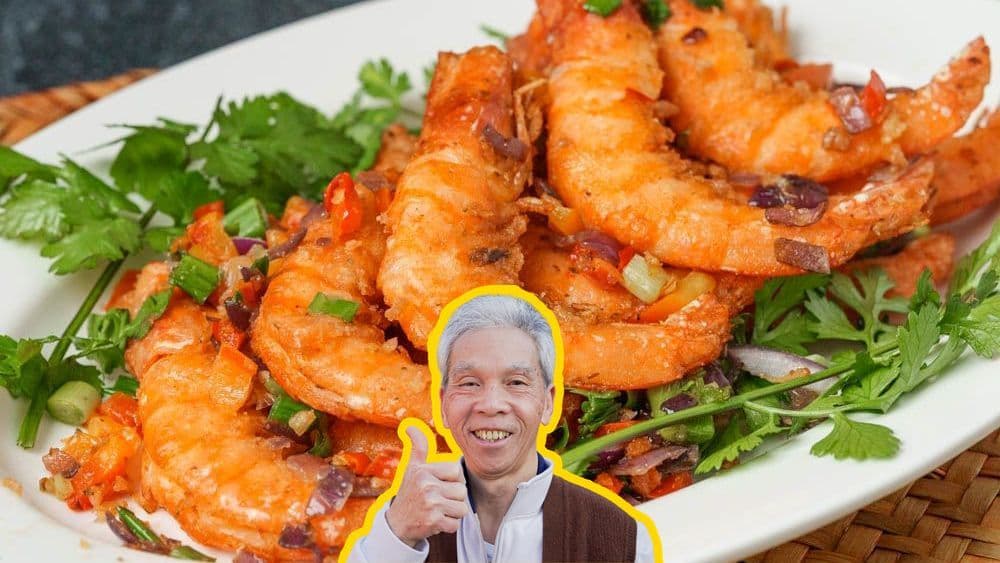
Most salt & pepper shrimp recipes online are tested only a handful of times. My dad used to make this dish multiple times a day, every day, for 60+ years and can make this in his sleep.
I know you'll love it as much as our community does! This recipe has over 433.1K views, 7.8K likes on YouTube.
Ingredients
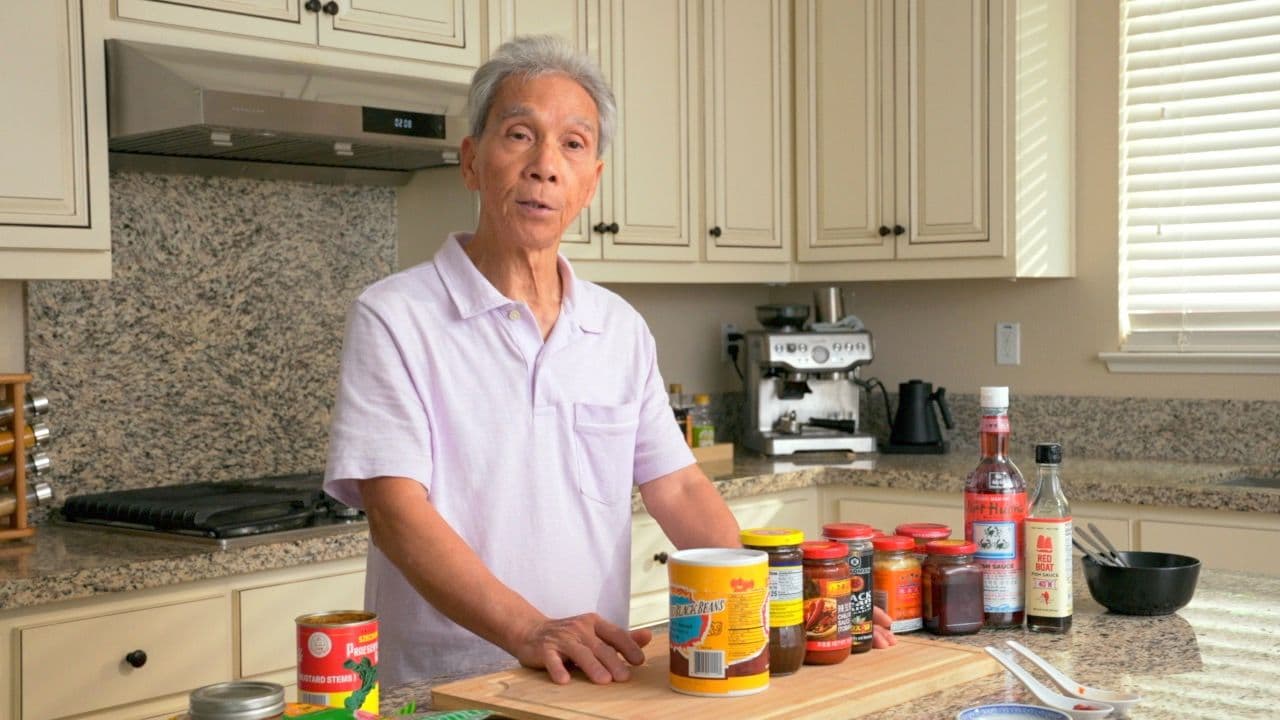
Choosing a cooking oil to fry in
The reason we’re using corn oil here instead of something like olive oil is because olive oil has what is called a lower smoke point which is the temperature at which the oil stops shimmering or rippling and starts smoking or burning.
Smoking oil isn't always a problem and is sometimes even desired for getting that perfect “Wok Hei” in your stir fry but it's a sign that the oil is breaking down which can release burnt or bitter flavors or even harmful free radicals.
There are a few other factors that go into selecting oils like whether they're neutral or flavored or refined or unrefined. Most cooking oil is created by extracting and compressing seeds and nuts and oils that are “unrefined”, “raw”, or “virgin” are usually bottled almost immediately. They generally have more nutrients but a lower smoke point and shorter shelf life.
Refined oils go through more processing for a higher smoke point, longer shelf life, and a more neutral flavor. For simplicity's sake, for frying, you generally want to use neutral, refined oils, like vegetable oil, refined olive oil, or corn oil.
Chili peppers- hot or not?
Salt and pepper dishes are generally made with a gentle, friendly amount of heat. Restaurants have to keep their guests coming back, right? When cooking at home, you have the freedom to tailor the flavor to your liking. We use only two spicy chili peppers because our family prefers a warming sensation rather than, well, pain. You can always switch it up!
If you want to turn up the heat level, you can use more spicy chili peppers, or opt for a spicier variety, or both. If you don’t want any heat at all, omit them entirely.
How to make Salt & Pepper Shrimp
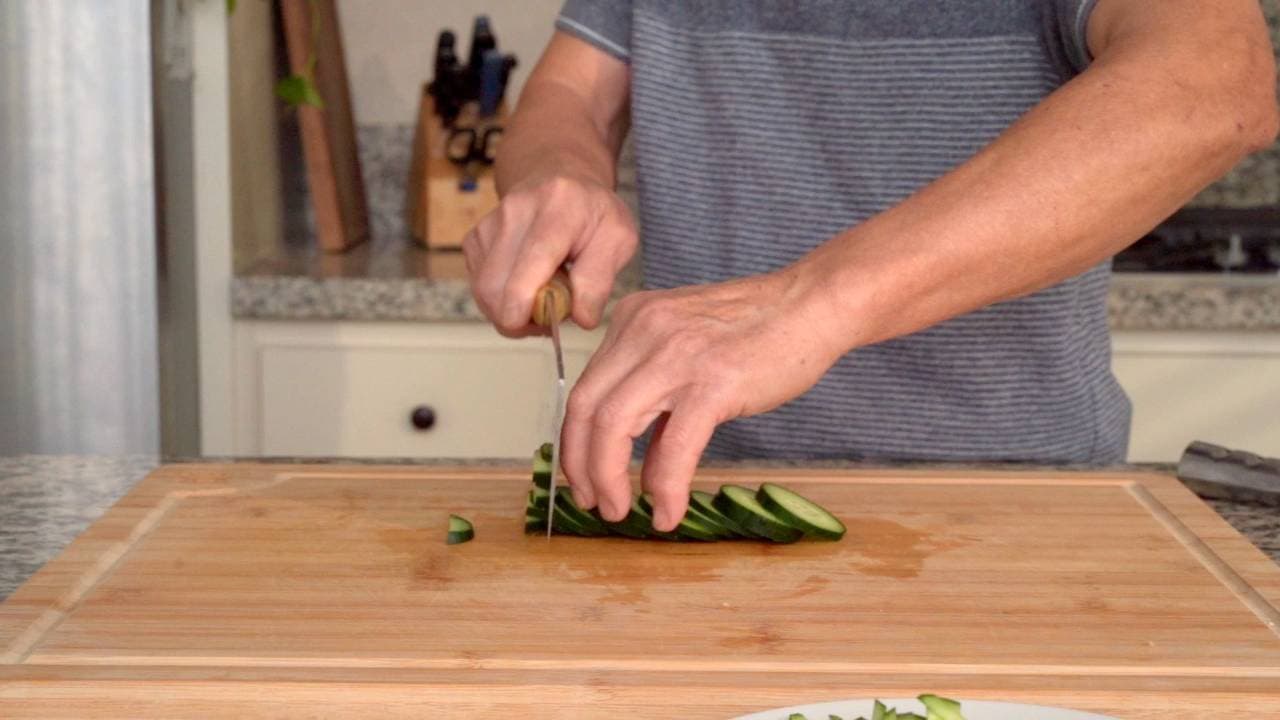
We’ll start with the aromatics and vegetables.
Although we usually cut the onion in half to create a flat, stable base to cut into, we’re not using the whole onion for this recipe. So instead of cutting through the onion, we’ll cut into the onion just enough to get the amount we need from the full outer layers. That way, the inner layers are undisturbed and will keep better for the next time you need the rest of the onion!
Cut the red onion (½ oz) into thin strips, then rotate 90 degrees to dice it into small cubes.
We will also use just some of the red bell pepper, so cut out the amount you need. In our video, we only took about 1/4 of the whole pepper. Like the onion, cut the red bell pepper (½ oz) into strips, then rotate 90 degrees to dice it into small cubes.
Trim and discard the ends of the green onions (2 stalk), then dice the rest. Set all these aromatics aside for later.
Smash and peel the garlic (2 clove). Trim off the hard ends, smash again to get it even more broken up, then mince.
Because our family prefers our food more on the mild side, we tend to use fewer spicy chili peppers. If you want to turn up the heat level, you can use more spicy chili peppers, or opt for a spicier variety, or both. If you don’t want any heat at all, omit them entirely.
Remove the stems from the Thai chili peppers (2 piece), then cut in half lengthwise. Rotate to dice into small pieces.
Create the dry seasoning by combining garlic salt (1 tsp), salt (0.2 tsp), and white pepper (¼ tsp) in a separate bowl. Mix well.
Devein the shrimp (14 oz) by using a toothpick to jab into and across the middle of its back, between segments. Lift directly out, and the vein will come out with the toothpick. Then, cut off the legs and antennae. We use kitchen shears, but you can use a knife if you don’t have kitchen shears handy.
Then, cut off the front of its head, below the eyes, to make the shrimp pretty and a little less stabby when you’re eating.
Optionally, snip a triangle out of the shrimp’s tail, creating a beautiful fishtail or phoenix-tail shape.
Of course, if you buy pre-cleaned or head-off shrimp, you can skip some or all of these preparation steps. Lucky you!
For large shrimp, cut a shallow slit down the shrimp’s back to make it cook more quickly, to help the flavor penetrate more, and to make it easier to peel while eating.
Pat the shrimp dry with a paper towel. This simple step goes a long way in reducing splatter later!
Toss the shrimp with garlic salt (½ tsp) to season. Then toss the seasoned shrimp in cornstarch (2 Tbsp). The coating of cornstarch will make the shrimp crispier. To ensure an even coating, add a bit of cornstarch at a time while tossing the shrimp.
Heat your wok over high heat, then add oil (5 oz). Get the oil up to 375° F (190° C). You can either check with a thermometer or wooden chopsticks (you’ll want to see small bubbles coming out).
When the oil has reached 375° F, add the first batch of shrimp. Avoid overcrowding the pot, which will make the oil temperature drop. We recommend frying a batch of 8 large shrimp. If your shrimp are smaller, you can fry more pieces at a time.
Move the shrimp around as they fry to ensure each one is frying evenly. After 40-50 seconds, take the shrimp out. Wait for the oil to come back up to 375° F, then add the second batch and continue frying the rest of your shrimp.
When you’re done frying all the shrimp, turn off the heat. For safety reasons, wait for the oil to cool down a bit before handling. Set a strainer or sieve over a large bowl, and pour the oil out from the wok and into the bowl. You can use the strained, shrimp-infused oil for cooking other dishes. In fact, we’ll use a bit for the stir-frying step of this dish.
Wipe the edge of the wok with a paper towel in case there’s any oil dripping down the outside.
Turn the stove on to low heat. Add oil (1 tsp) and when it’s hot, add garlic. Fry the garlic until it’s aromatic, or 15-20 seconds. Then, add the onion, bell pepper, and Thai chili peppers. Add the white parts of the green onion. Stir-fry until fragrant. If you see the ingredients start to brown or burn, lower the heat.
After 30-40 seconds of stir-frying the onion and peppers, add the fried shrimp back in. Stir-fry quickly, mixing the ingredients thoroughly, so the shrimp can absorb the flavor from the aromatics.
Then, add the rest of the chopped green onion and mix it in.
Start sprinkling in the dry seasoning mix as you stir-fry everything in the wok. Monitor how well everything is coated, as you may not want to use all the seasoning mix. My dad rarely uses up all the seasoning mix.
When the shrimp is seasoned to perfection, turn off the heat and plate. Make sure you get all the tasty, crunchy bits out of the wok, and enjoy!
Top 3 Mistakes
- Crowding everything at once:
Cook in manageable batches rather than adding everything at once. Follow the recipe’s batch sizes so you can control the timing and keep the pieces from sticking together.
- Leaving ingredients too wet:
Drain and dry the ingredients as directed before they reach the pan. Extra water changes how they cook, making it harder to get the browning and texture the recipe calls for.
- Scorching the final aromatics:
Use low heat when you start the garlic and chopped peppers for the finishing toss. This is a gentler stage than deep-frying the shrimp, so lower the heat before the aromatics go in.
Frequently Asked Questions
How do you buy shrimp?
Our general rule is that you should always buy frozen, unpeeled, and untreated shrimp. Since most shrimp is frozen at sea, frozen deveined or peeled shrimp in stores have been defrosted at least once, then refrozen. This back and forth process of freezing and thawing and freezing causes the shrimp's natural flavor to deteriorate.
Also, check the ingredient list to ensure that shrimp is the only ingredient since additives that are often used create an unpleasant texture.
How do you devein shrimp?
There are several methods for deveining shrimp! In this video, we show you how to use a toothpick to jab into the shrimp's back and pull the vein straight out.
You can also cut down the shrimp's back with a knife to expose the entire vein, then either scrape it out with the knife or wipe it out with a paper towel.
Another method is to cut down the shrimp's back to expose the vein, then to dunk and swish the shrimp in a bowl of water to wash the vein out of the shrimp. Of course, this will make the shrimp pretty wet, so you'll have a little of extra work to dry the shrimp off again.
Do you have to cook the shrimp with the shell on?
We definitely recommend cooking with the shell on! We love the crispy texture and the juiciness from shell-on shrimp. In this recipe, we show you how to prepare the shrimp so it's easy to peel at the table as you eat.
However, if you really don't prefer shell-on shrimp or cannot find it, you can definitely still make this Salt & Pepper recipe with peeled shrimp!
Pairs well with
View all →

Made with love ❤️
We started Made With Lau to celebrate Cantonese culture and honor the legacy of our wonderful parents, Jenny and Chung Sun Lau.
Our hope is that these recipes and stories help you spread the joy, love, and nostalgia that I felt growing up.