Fried Oysters
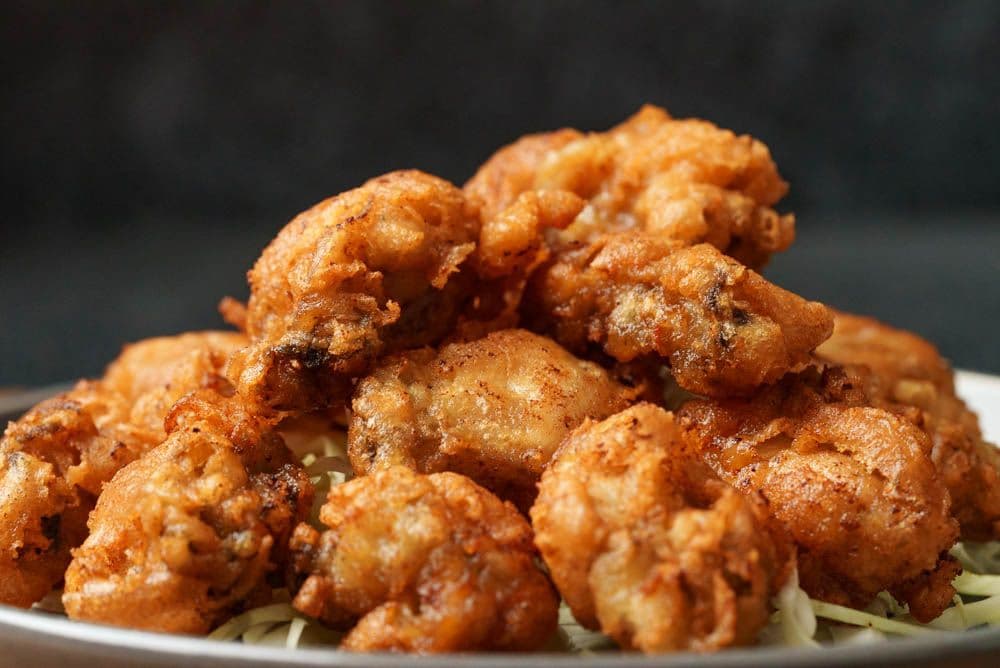
This Chinese twist on a classic fried seafood dish is crunchy, juicy and full of oyster flavor.

Cooking Summary
Ingredients: (detailed list)
- Main Ingredients: oyster, cornstarch, cabbage, corn oil
- Batter Ingredients: flour, cornstarch, baking powder, garlic salt, fish sauce, white pepper, water, oil
Jump To Section
Overview
There's no question that the Cantonese love seafood. From fish to lobster, we've shared many of our favorite traditional Cantonese seafood dishes and this Fried Oysters (酥炸生蠔) recipe is yet another to add to the collection. Learn how to make fried oysters with tips from a professional chef and you'll be able to whip up a unique, crowd-pleasing appetizer anytime.
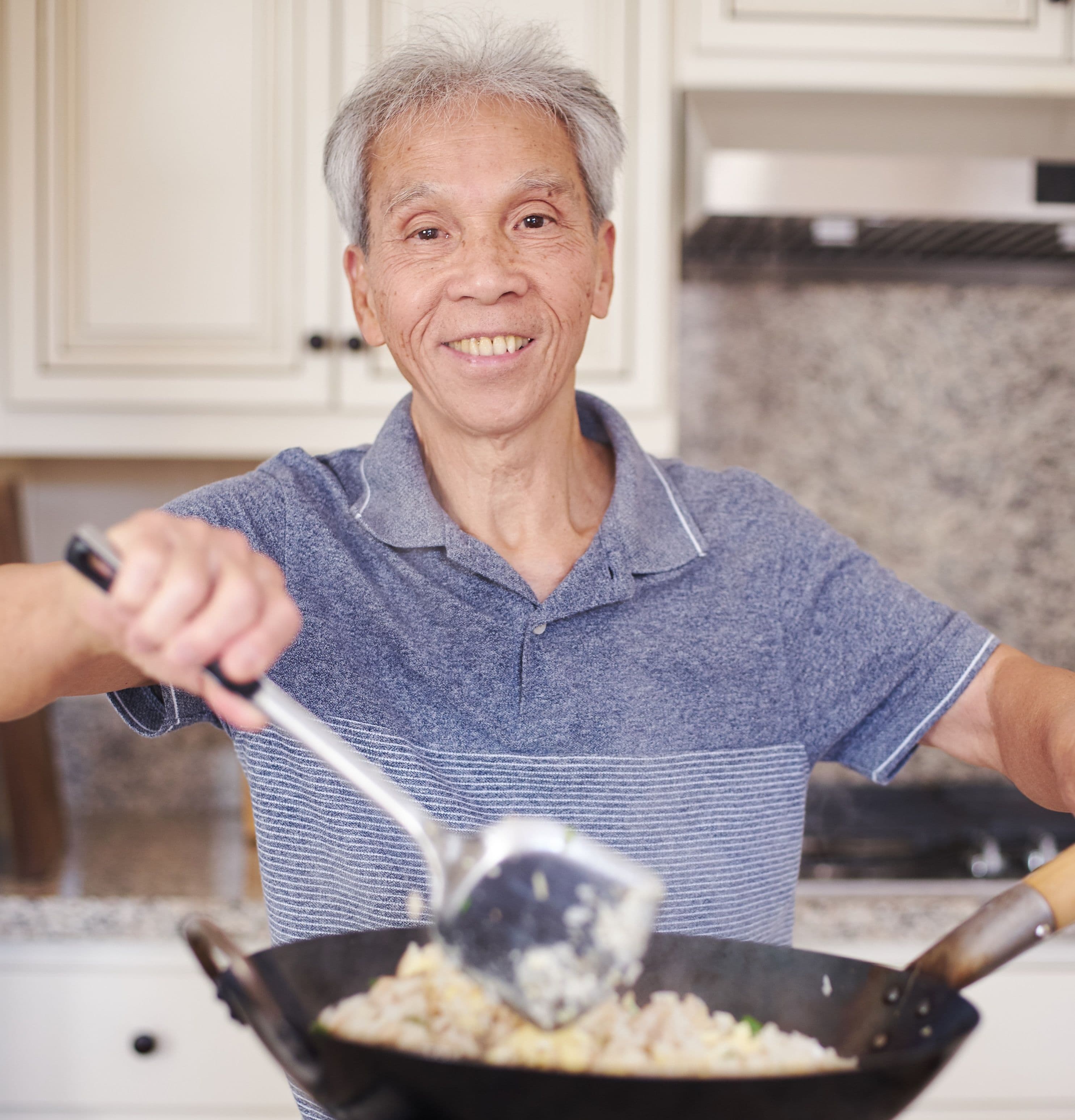
My dad's version includes a batter lightly seasoned with white pepper and fish sauce to help bring out the oyster's natural sea flavors. Thanks to a double fry, they come out beautifully golden and crunchy and, while they're delicious all on their own, you can also serve them with a dipping sauce. Pro tip: We discovered they pair very nicely with our Peking Pork Chop sauce!
Why this recipe
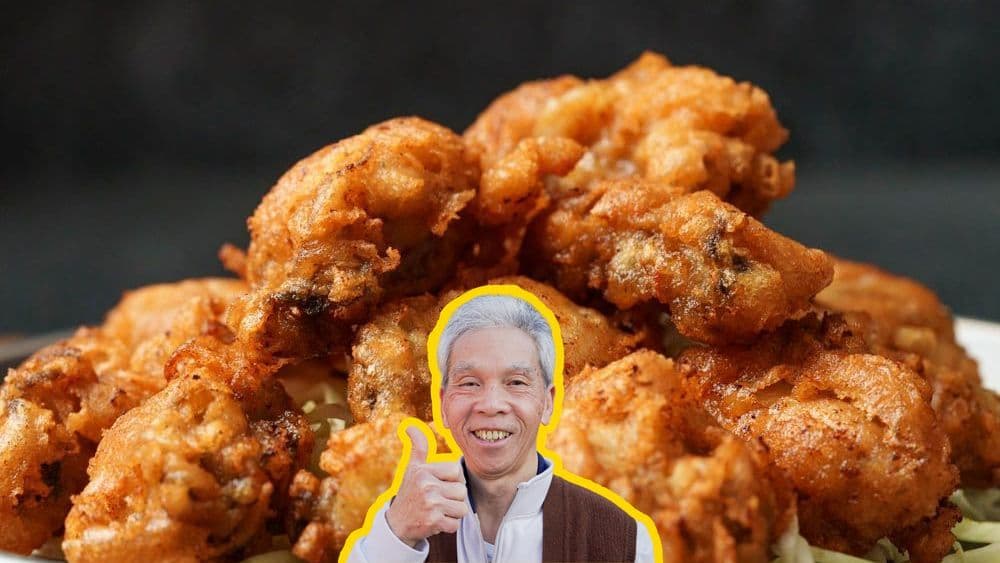
Most fried oysters recipes online are tested only a handful of times. My dad used to make this dish multiple times a day, every day, for 60+ years and can make this in his sleep.
I know you'll love it as much as our community does! This recipe has over 80.2K views, 2.1K likes on YouTube.
Ingredients
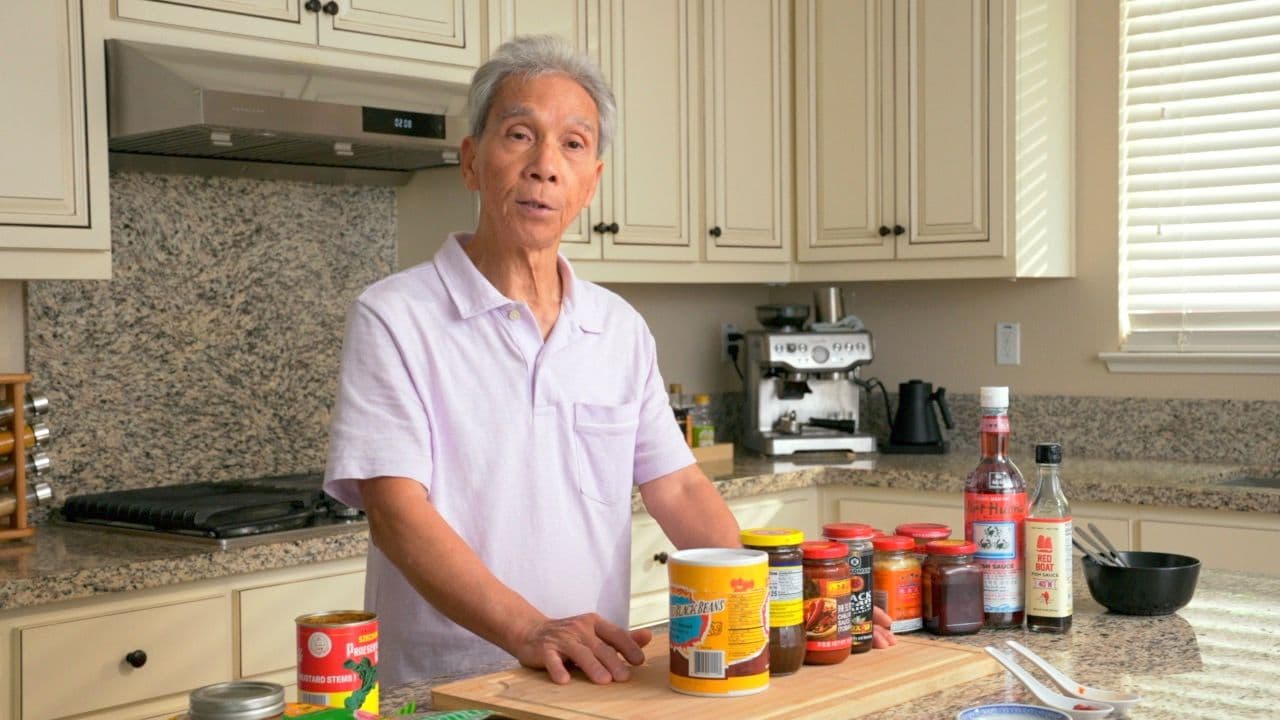
On oysters
Oysters have been eaten around the world for thousands of years. It was once considered a poor man's food since it was abundant and somewhat strange-tasting. In modern times, oysters have become a delicacy that's enjoyed freshly shucked and raw, but deep-fried oysters are a specialty that can be found in many coastal communities, including ones in Japan and the American South.
If buying oysters in the shell, my dad recommends selecting ones without any odor, which is an indication that they're spoiled. When it doubt, ask an expert like a fishmonger to help. Restaurants typically use jarred oysters, but my dad opts for previously frozen bagged oysters that are easier to find. These are great for deep frying or adding to pancakes.
How to make Fried Oysters
Place the oysters (10 oz) in a bowl. Sprinkle in the cornstarch (2 Tbsp) and gently mix it into the oysters, being careful not to break up them up.
Pour clean cold water into the bowl, gently swirl the oysters around to wash off the cornstarch and pour out the dirty water. Rinse the oysters two more times and place the oysters in a colander to drain.
To a bowl, add the flour (4 Tbsp), cornstarch (1½ Tbsp), baking powder (½ tsp), garlic salt (1 tsp), white pepper (⅓ tsp), fish sauce (1 Tbsp) and water (4½ Tbsp). Stir until it becomes a smooth batter (it should flow in a steady stream when poured) and set aside.
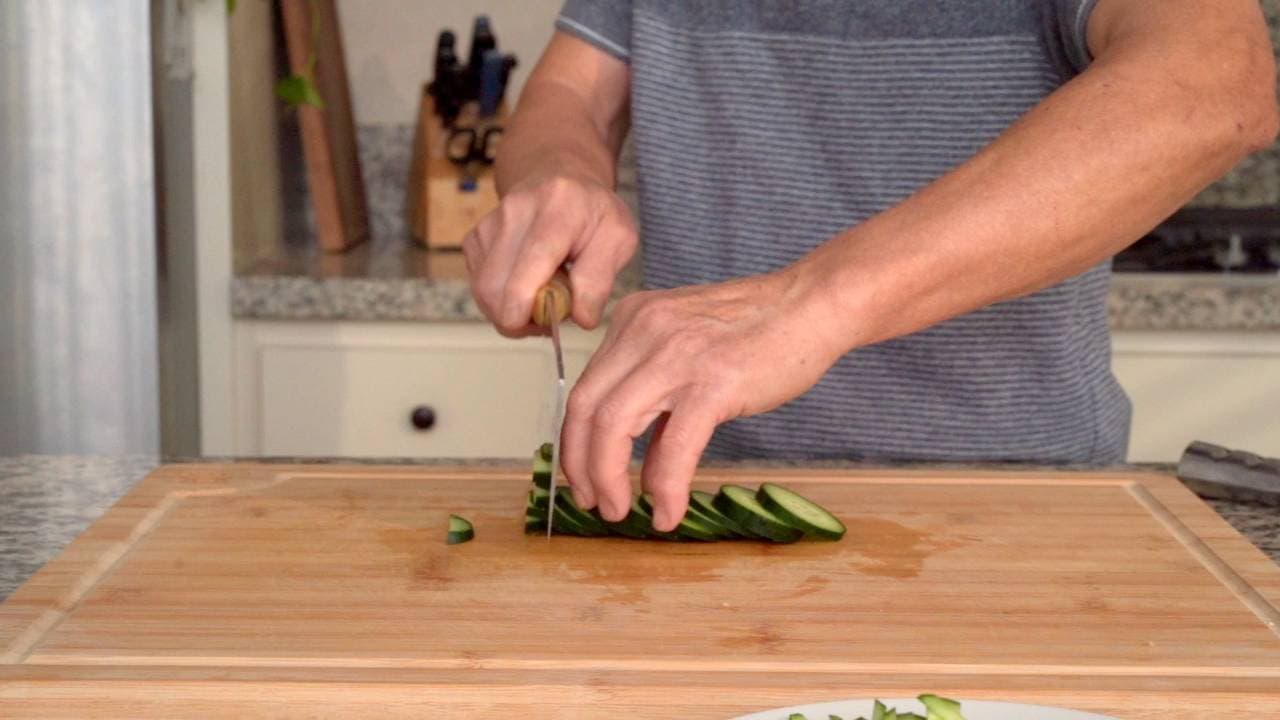
Slice off the amount of cabbage (2 oz) needed and cut it into thin shreds. Pull them apart by hand and place on your serving plate.
Lay clean paper towels on a cutting board, place oysters on top and layer another piece of paper towel on top. Gently pat the oysters dry. This will help the batter better adhere to the oysters.
While the excess moisture is getting soaked up, add the oil (1 Tbsp) to the batter and stir to combine.
Heat a wok on high. When the wok is hot enough, pour in the oil (10 oz) and wait for it to reach 330°F (165°C).
Place the oysters into a mixing bowl and pour in batter. Use your hands to gently coat the oysters with the batter.
When the oil has come up to temperature, reduce the heat to medium.
(Chef's Tip: If you don't have a thermometer, you can use the following trick to gauge the temperature of the oil. Dip a chopstick in a small amount of batter, drip some into the oil and if it floats, then the oil is ready for frying.)
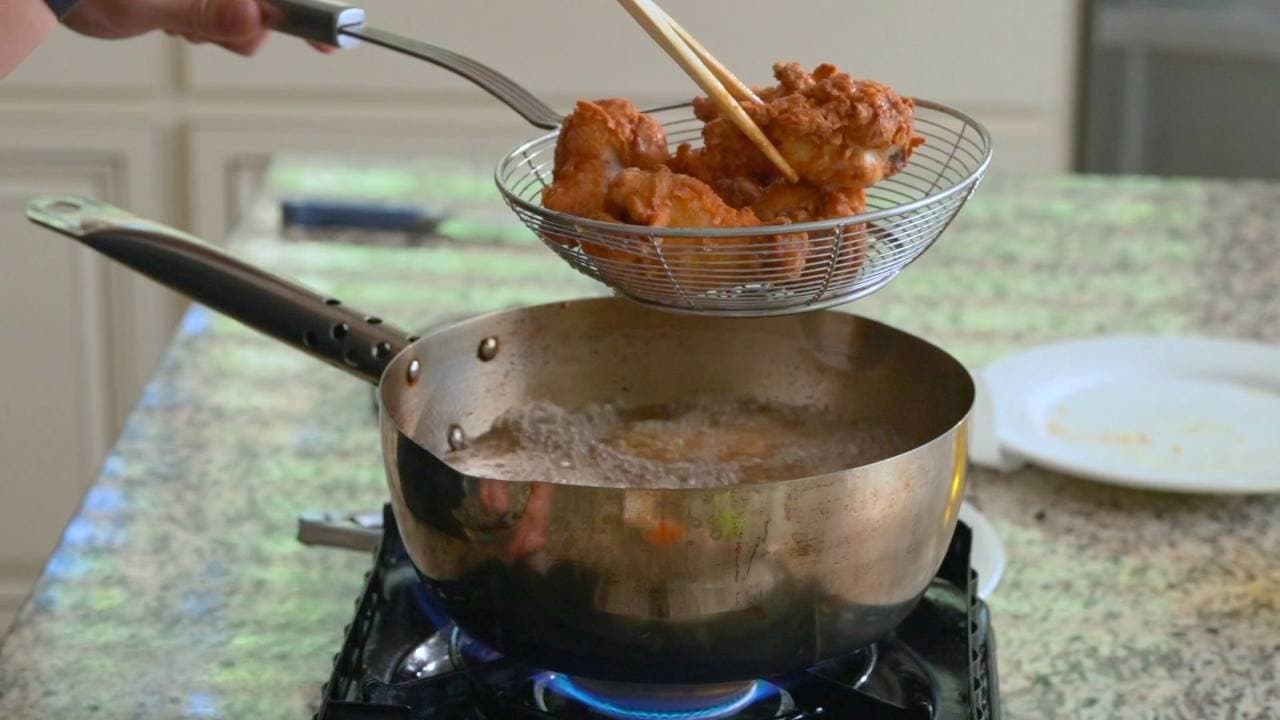
Carefully lower the oysters into wok one at a time and deep fry until golden brown, about 1 minute.
Use a spider strainer to remove the fried oysters from the wok. If your wok is smaller, fry in batches and repeat the same steps until you've cooked all of the oysters.
Use a mesh strainer to remove any small fried bits in the hot oil.
Increase the heat to high to bring the oil up to a temp of 390°F (199°C).
Once it reaches temperature, lower the oysters into the wok and fry until golden brown, about 20 seconds.
Use a spider to take out the oysters and let the excess oil drip back into the wok.
Transfer to the plate, nestling them on the pile of shredded cabbage.
Top 3 Mistakes
- Skipping the second fry:
Keep the two frying stages separate as the recipe directs. The final fry is part of building the crisp exterior, so skipping it changes the texture even if the food is cooked.
- Ignoring the oil temperature:
Check the oil using the recipe’s heat guidance before adding the ingredients. Oil that is too cool or too hot changes how quickly the food cooks and how evenly the surface browns.
- Crowding everything at once:
Cook in manageable batches rather than adding everything at once. Follow the recipe’s batch sizes so you can control the timing and keep the pieces from sticking together.
Frequently Asked Questions
What is the best way to fry oysters?
Using the double fry method guarantees a crispy, yet juicy oyster. The first fry cooks the oyster, while the second gives the exterior its beautiful golden brown color.
Should oysters be rinsed before frying?
Yes, it's important to rinse oysters before frying, which will remove some of their natural slimy texture and excess moisture. It's also important to thoroughly dry the oysters before frying so the batter can better adhere to them.
What is the best oil for frying oysters?
As with any frying—whether it's for shellfish, chicken, pork and so one—the best cooking oil is one with a high smoke point and neutral flavor. Options include vegetable oil (such as the corn oil my dad uses in this recipe), canola oil, peanut oil and avocado oil.
Pairs well with
View all →

Made with love ❤️
We started Made With Lau to celebrate Cantonese culture and honor the legacy of our wonderful parents, Jenny and Chung Sun Lau.
Our hope is that these recipes and stories help you spread the joy, love, and nostalgia that I felt growing up.