Char Siu Pork
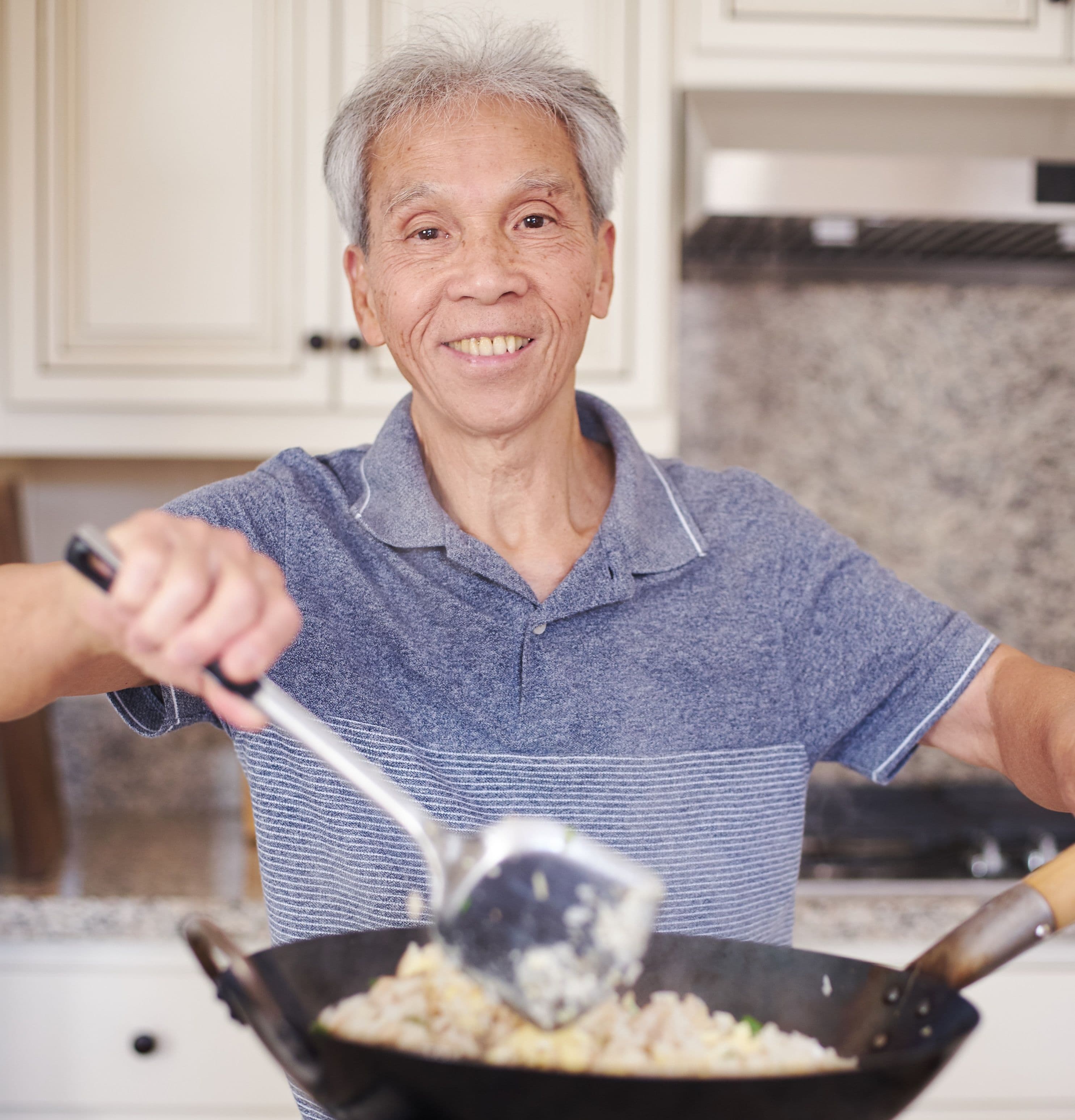
A time-tested recipe for perfect, juicy, tender char siu, a classic Cantonese favorite!

Cooking Summary
Ingredients: (detailed list)
- Main Ingredients: pork shoulder
- Char Siu Sauce Ingredients: garlic salt, brown sugar, oyster sauce, light soy sauce, hoisin sauce, red wine, Shaoxing wine, red fermented bean curd, five spice powder
- Basting Ingredients: honey, water, red food coloring
Steps:
Jump To Section
Overview
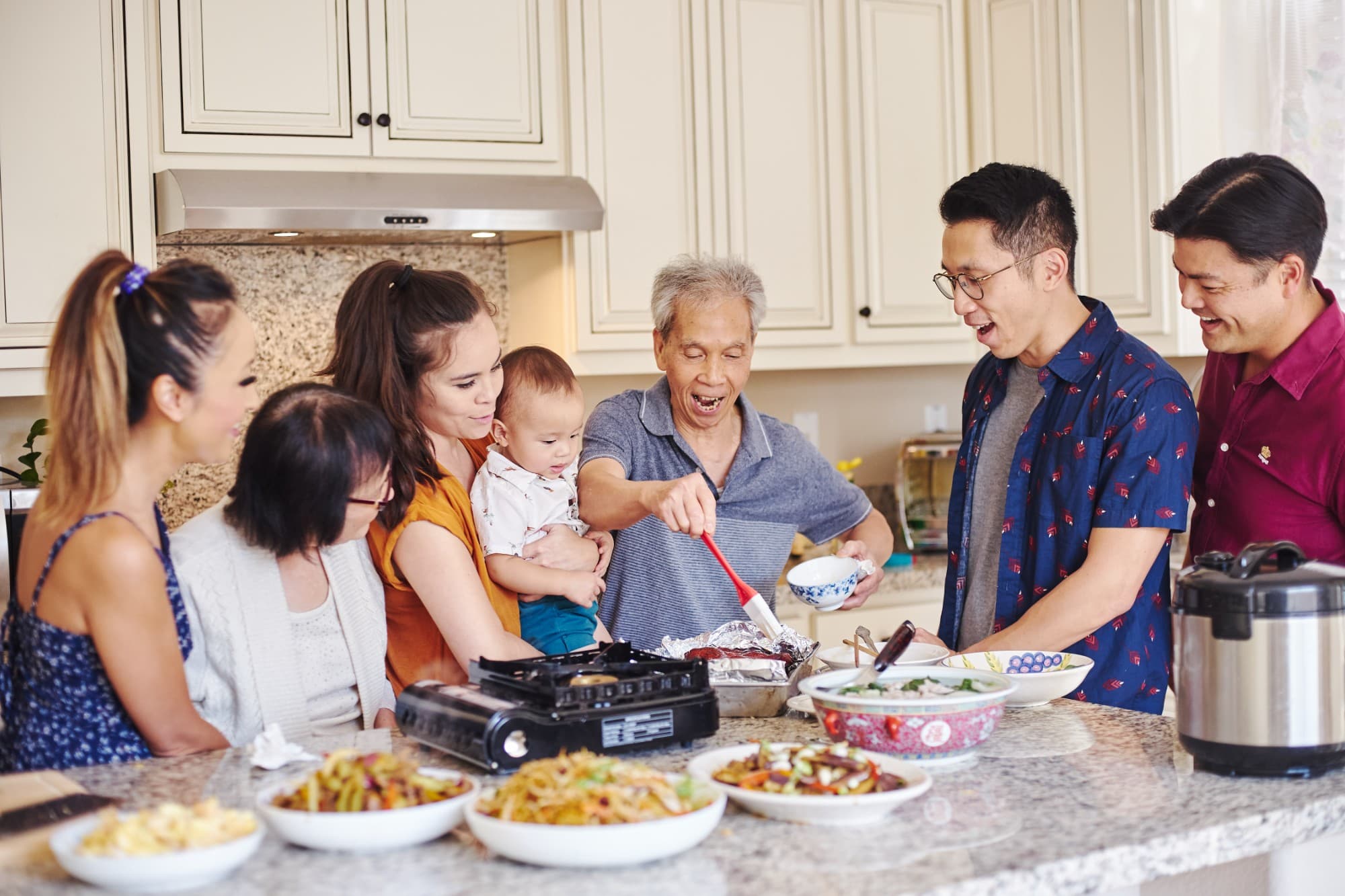
By my estimates, my dad has made char siu — Chinese BBQ pork — at least 10,000 times over his 50 years as a professional Chinese chef, so it’s a recipe I’ve been really excited to document to share it with you, and to pass it on to our kids one day. Today, Daddy Lau will finally teach us how to make Chinese BBQ Pork!
If you’re new to char siu, it’s an extremely juicy, sweet, and savory pork dish that’s a popular entree on its own — and a pleasant addition to many different types of noodles, rice dishes, and pastries like char siu bao.
For our gigantic Lunar New Year feast this year, my dad made char siu because it has a few tie-ins to Chinese traditions and superstitions, which you’ll learn about later on. My dad’s recipe results in juicy, flavorful char siu without having to make a mess in your kitchen! It's also very adaptable to smaller cuts of pork if you want to make a smaller amount. In our video, you'll see my dad make his char siu pork recipe on a tabletop toaster oven.
What you'll be learning:
- My dad’s spin on this traditional recipe!
- The best cuts of pork to use for this recipe, and how to craft the perfect, juicy bite
- Context on the key ingredients, and the equipment you'll need to make this dish (and alternative swaps)
- Why this dish is often on the dinner table for Lunar New Year
Thank you, Kikkoman!
This recipe is brought to you in part by Kikkoman. My dad has been using Kikkoman flavors throughout his 50-year career as a chef, and it's a privilege to get to partner with them on such an iconic recipe, Beef Chow Fun with Gravy!
- Kikkoman products are a major flavor enhancer and bring out the “umami” taste, and help balance and round out flavors
- Kikkoman® Less Sodium Soy Sauce is perfect for home cooks who are looking to cut down on their sodium levels, without sacrificing flavor
- Kikkoman offers a wide range of Gluten-Free Asian sauces, including Gluten-Free Oyster Sauce and Gluten-Free Hoisin Sauce
- The KikkomanUSA.com Chinese site offers easy Asian recipes that home cooks can enjoy any night of the week
You can learn more about Kikkoman and follow them on social media here:
- Website: https://www.KikkomanUSA.com
- Facebook: https://www.facebook.com/KikkomanChineseUSA (Kikkoman 萬字在美)
- Instagram: https://www.instagram.com/kikkomanusa_chinese/ (Kikkoman 萬字在美)
What is char siu?
A sweet and savory roasted pork, char siu is probably the most popular roasted meat preparation in Cantonese cuisine. If you walk by a Chinese BBQ restaurant, every single one will always have char siu hanging on its hooks by the window.
Origins of char siu
Char siu originally comes from Cantonese cuisine, and the word chā sīu 叉烧 literally means “fork roasted,” which is a nod to the traditional cooking method of skewering seasoned pork with long forks, and placing them in an oven or over a fire.
Although it’s considered a Chinese dish, many other Asian cuisines have integrated char siu into their own dishes — Thailand makes its own version of Chinese BBQ pork called kao moo dang and Japanese chashu gets its name from the dish, too.
In ancient times, char siu used to be made with boar or other available meats, but nowadays it’s almost always made with a fatty cut of pork.
Char siu: The most flavorful BBQ pork
When made right, char siu is one of the most tender, juiciest pieces of savory, sweet pork you might ever have.
It's got umami from ingredients like fermented bean curd, hoisin, and oyster sauce, a bit of zest from wines, and sweetness from brown sugar and honey. Five spice powder, a popular Chinese ingredient, ties it all together with a distinctive blend of spices.
It's absolutely delicious.
An expert chef’s tip for the best ever char siu
To make restaurant-quality char siu at home, my dad uses this trick: Roast the pork on a baking rack above a pan of water, which creates steam to help keep the meat moist as it cooks.
Why this recipe
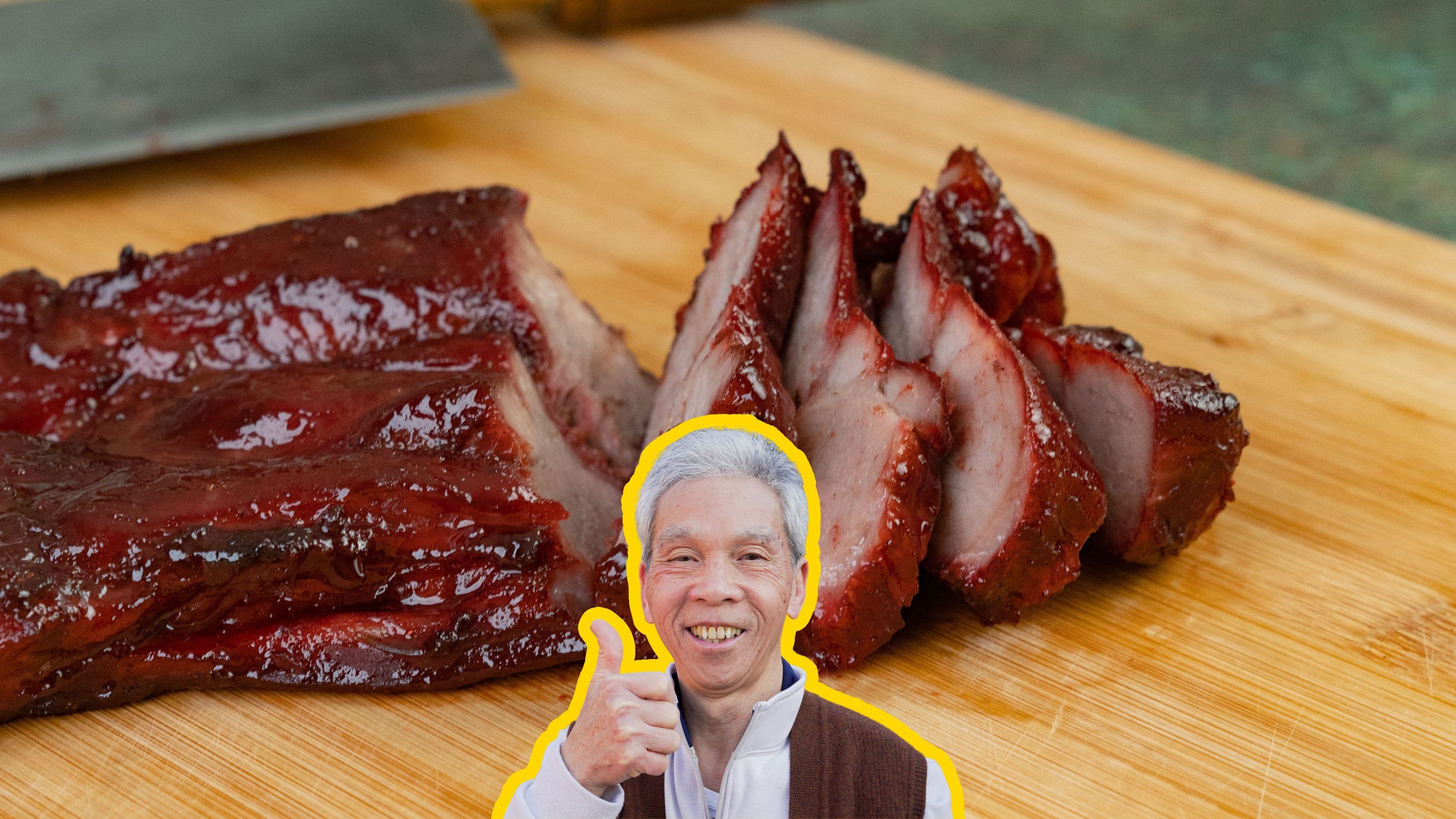
Most char siu pork recipes online are tested only a handful of times. My dad used to make this dish multiple times a day, every day, for 60+ years and can make this in his sleep.
I know you'll love it as much as our community does! This recipe has over 5.4M views, 110K likes on YouTube.
Ingredients
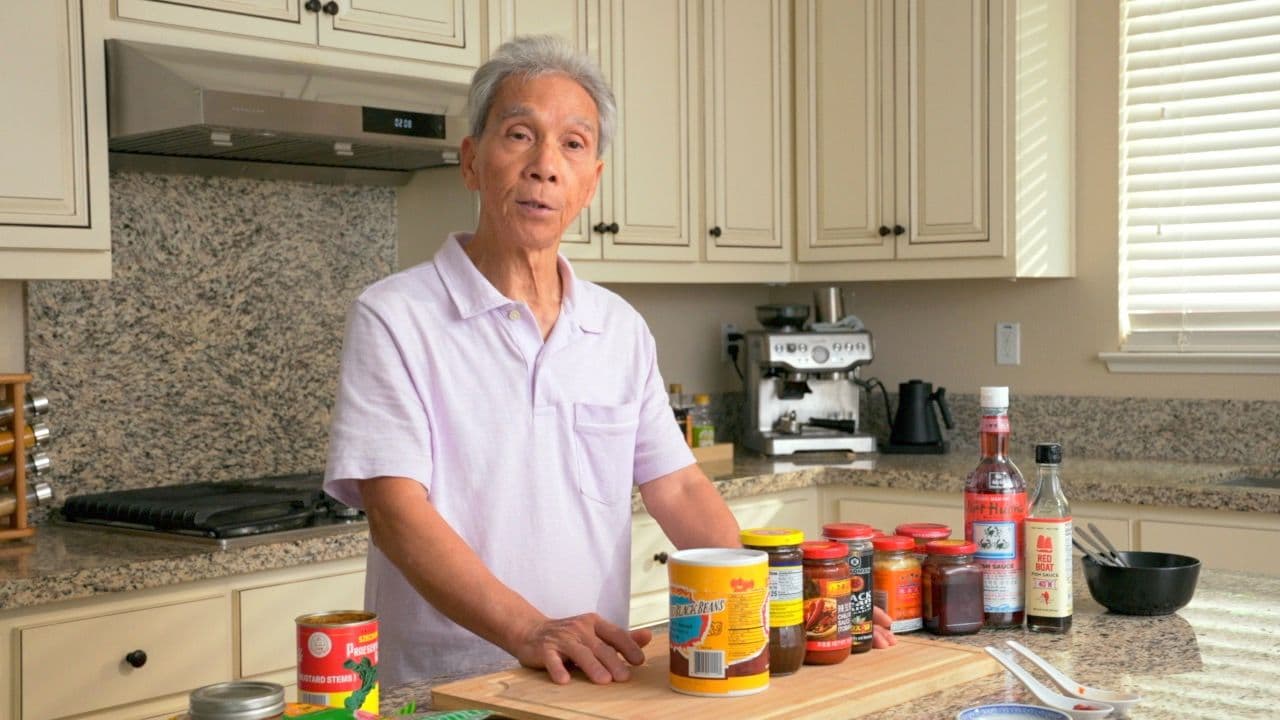
Char siu ingredient notes
What are the best cuts of pork for char siu?
My dad uses pork butt, also known as "Boston butt” or "pork shoulder,” and this seems to be among the most popular cuts for char siu. It’s ideal to use more fatty cuts, so some other options would be the pork neck end or pork belly.
Why my dad uses fermented bean curd
Also known as "lam yuh" in Cantonese, this ingredient can seem a little exotic and off-putting if you're not familiar with it (like me.) My dad uses it in a lot of dishes, such as in this cooked lettuce dish, and it's one of the core ingredients in this particular char siu recipe. If you don't have this at home, it's okay to skip. It does help give the char siu more of a natural red color, and also provides a ton of umami flavoring. Woks of Life has a great write up on this.
If you're interested, we'll also be including a link to buy it on Amazon below!
What is five spice powder?
The last ingredient to highlight is our five spice powder, or ńgh hēung fán 五香粉 in Cantonese, which is an umbrella for the popular Chinese blends of spices that usually consist of cinnamon, fennel seeds, star anise, cloves, and peppers.
The number five doesn’t necessarily literally mean that it has five ingredients, as some blends use less spices, and some blends use way more than five ingredients.
Five spice powder is actually a nod to the five traditional Chinese elements (earth, fire, water, wood, metal) and a balancing act of the five traditional flavors of Chinese cuisine (salty, spicy, sour, sweet, and bitter).
Should you use red food coloring?
If you’re committed to getting that vibrant red exterior, a lot of traditional recipes will use ingredients like red fermented bean curd or red yeast rice powder. An easy alternative is just to use red food coloring, which doesn’t affect the taste.
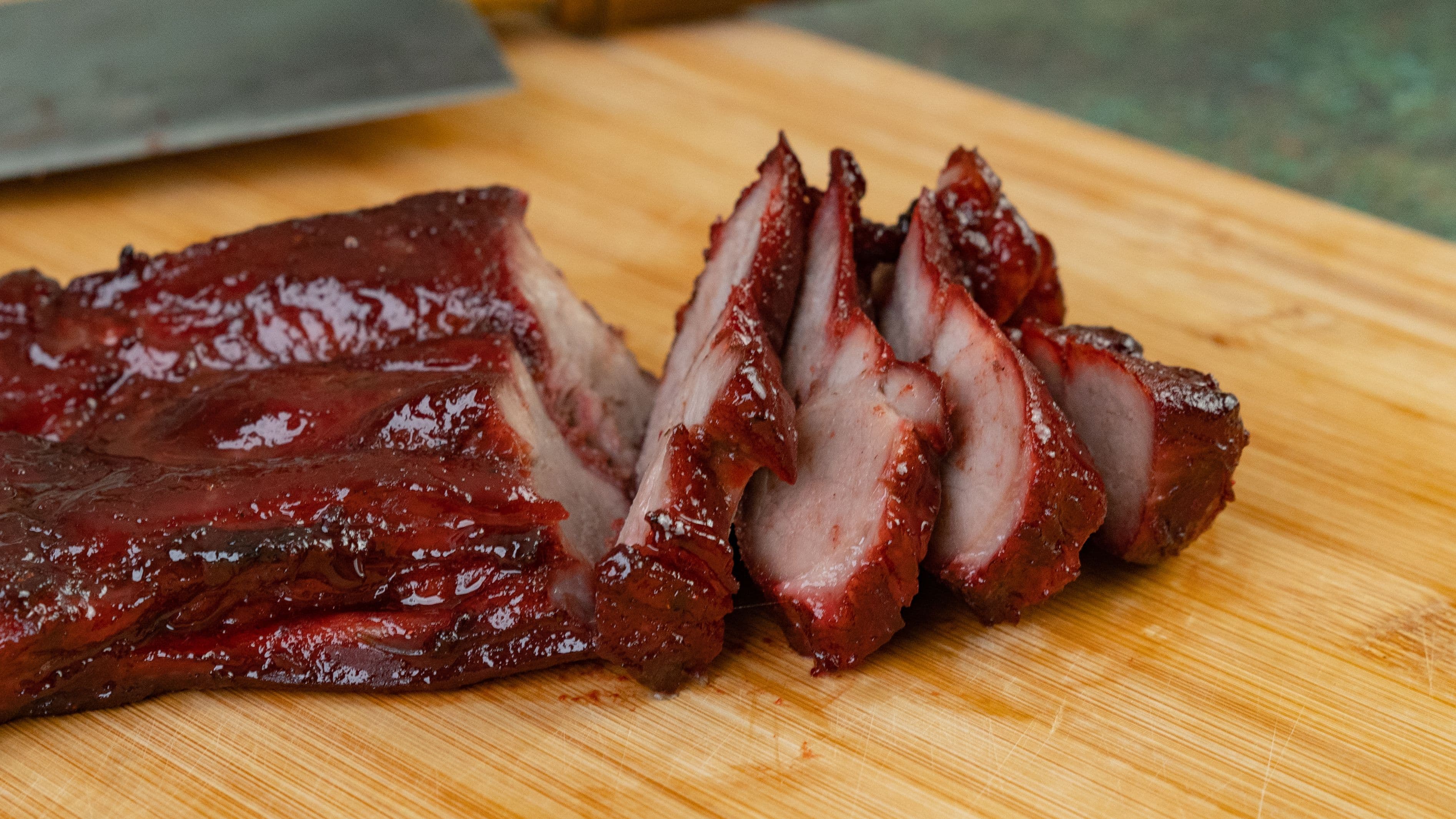
For almost all of our recipes, we film everything twice just to have more camera angles, so for this one, we made a batch with half a teaspoon of red food coloring and a batch without it. For comparison, you can see what both versions look like after they’ve been cooked and chopped. They both taste the exact same — which is to say, they’re absolutely amazing.
Finding Asian ingredients
Some of these ingredients are hard to find in a typical grocery store.
If you don't live near an Asian market, most or all of what my dad uses in this recipe can be found on Amazon:
- Shaoxing Cooking Wine
- Ground Bean Sauce
- Dried Shiitake Mushrooms (soak for 15-20 minutes in warm water before slicing)
- Kikkoman Sesame Oil - https://geni.us/kkmsesameoil
- Kikkoman Soy Sauce - https://geni.us/kkmsoysauce
- Kikkoman Tamari - https://geni.us/kkmtamari
- Kikkoman Oyster Sauce - https://geni.us/kkmoystersauce
- Koon Chun Hoisin Sauce - https://amzn.to/2RYiFO0
- Shaoxing Cooking Wine - https://amzn.to/3hY9rMA
- Five Spice Powder - https://amzn.to/2O2TtHH
- Red Fermented Bean Curd - https://amzn.to/37MjZfa
These links are affiliate links, which means that if you use our links to purchase these ingredients, Amazon pays my family a small amount for the sale - at no extra cost to you. If you use these links, we really appreciate the support!
Equipment you'll need
To make char siu, you’ll need a few things:
- a baking pan and baking rack - https://amzn.to/37OrAKs
- tongs - https://amzn.to/3bEKi8v
- aluminum foil - https://amzn.to/2NwJxX3
- basting brush - https://amzn.to/3suYDew
You may also want to use a meat thermometer that allows you to monitor the internal temperature of the pork as it’s cooking.
My dad literally chuckled at me when I asked him about this and said, “We don’t cook this way,” but since I haven’t yet acquired my dad’s intuition in the kitchen, I like to use a thermometer whenever I cook big pieces of meat.
The importance of Sāam Sāang (三牲)
Before we started Made With Lau, I started noticing this specific pattern of chicken, fish, and pork always showing up on the dinner table as well as the prayer table when we bai sun during Chinese New Year.
In our video on bak chit gai (white cut chicken with ginger scallion sauce), my parents also alluded to sāam sāang (三牲), which refers to an ancient Chinese practice involving a sacrifice of three animals to ancestral spirits.
Around 3000 years ago during the Shang dynasty, animals like cattle, sheep, and pigs were often sacrificed. Over time, the sacrifices became less literal, and society eventually gravitated towards honoring the sāam sāang tradition through cooking chicken, fish, and pork dishes.
Unlike fish and chicken, there aren't really any specific sayings or superstitions about eating pork. As my mom explains in the video, it's just a good omen to have it on the dinner table during Lunar New Year in hopes that we'll have much more tasty pork and food to eat in the coming year.
Celebrating traditions!
As I mentioned, my dad usually makes this dish to celebrate Lunar New Year. I've been really excited to document his char siu recipe, among many things, so I can pass it down to our son and our future kids.
My wife and I recently got to connect with Hanna from Habbi Habbi, an amazing company that's creating a wonderful experience for kids through bilingual books and their magical reading wand.
We're really excited for Cameron to grow up learning Chinese (Cantonese and Mandarin!), being able to communicate with his grandparents, and to understand his heritage.
If you have a small kiddo(s) and you're interested in a fun way to expose them to different languages, you can see the book in action in our video and also learn more on their website!
The link to Habbi Habbi is an affiliate link, which means that if you use our links to purchase these ingredients, our family earns a small amount for the sale — at no extra cost to you. If you use these links, we really appreciate the support!
How to make Char Siu Pork
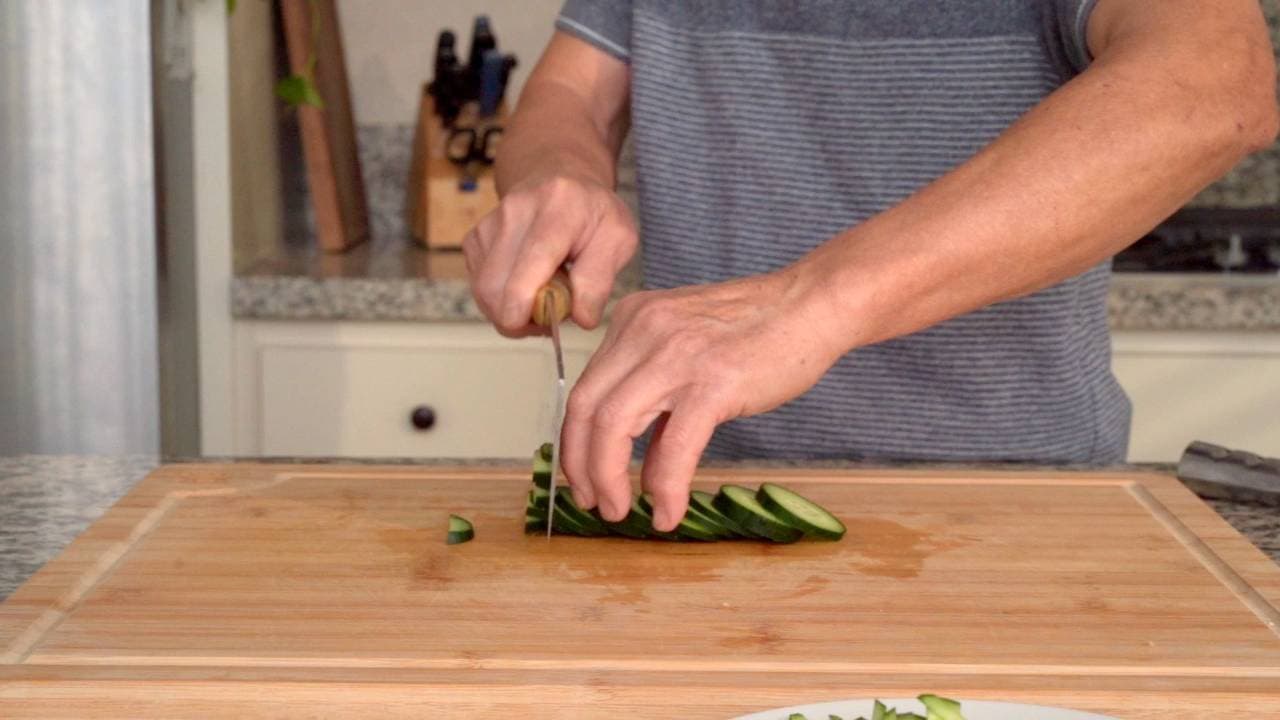
Cut the pork shoulder (2 lb) into long slices, roughly about 1 inch thick. We'll aim to cut each slice with uniform thickness so they cook at the same rate.
Afterwards, we'll repeatedly poke each side of each slice with a fork to help the pork absorb our marinade more effectively.
To a bowl, we'll add:
- garlic salt (1 Tbsp)
- brown sugar (4 Tbsp)
- oyster sauce (2 Tbsp)
- light soy sauce (2 Tbsp)
- hoisin sauce (1 Tbsp)
- red wine (2 Tbsp)
- Shaoxing wine (1 Tbsp)
- red fermented bean curd (1 cube)
- five spice powder (1 tsp)
This amount can be adjusted based on the amount of pork you'll be making.
Mix the marinade until it's evenly distributed and smooth.
If you'd like a more rich, red color, you can add a few drops of red food coloring (¼ tsp).
Place the meat into a zip-top bag, pour the sauce in, and massage the pork for about 2 minutes so that the sauce is able to finesse its way into the meat. Afterwards, we’ll push all the air out of the bag and seal it.
Place the bag in the refrigerator, and let the pork marinate overnight, or at least for around 6 to 8 hours.
Chef’s Tip: My dad says to not let it marinate for over 24 hours, or else it will affect the tenderness of the meat. If you refrigerate the pork, let it sit for about 1 hour to bring it to room temperature before starting to cook it.
Preheat the oven to 425° F or 218° C.
Set up the baking pan by lining the bottom with aluminum foil (so it's easier to clean!), and place the baking rack on top of the foil.
Using tongs, start laying out the pork on the baking rack and pan.
Add 1 to 2 tbsp of water to the bottom of the pan to help generate some steam as the char siu cooks, and to help prevent the drippings from burning and smoking.
Carefully place it in the oven.
Now, we’ll be removing the char siu periodically to baste it again with either our leftover pork marinade, or honey (2 Tbsp) diluted with water (2 tsp).
Here’s how my dad split up the cooking time:
- Cook for 15 minutes and baste both sides with the pork marinade
- Cook for another 15 minutes and baste both sides with pork marinade again
- Cook for 10 minutes and baste both sides with the diluted honey
- And finally, we’ll turn the heat up to 450° F, cook for another 5 minutes, baste both sides with honey, and let it cool for a few minutes before cutting into it.
In total, this is about 50 minutes in the oven.
Once the char siu has finished its last cycle in the oven, we'll baste each side with our diluted honey.
Let the char siu cool for about 5 minutes before cutting into it.
And finally... enjoy!
Top 3 Mistakes
- Cutting uneven pork strips:
Cut the pork into strips of roughly uniform thickness before marinating. Thick and thin sections finish at different rates, making an evenly cooked batch harder to achieve.
- Letting the drippings burn:
Add the small amount of water specified to the bottom of the roasting pan. It helps keep the falling drippings from burning and smoking while the char siu cooks above them.
- Skipping the meat marinade:
Mix the meat thoroughly with its marinade and give it the time the recipe calls for. This preparation helps the seasoning coat the pieces before the fast cooking stage begins.
Frequently Asked Questions
How do you pronounce char siu?
Char siu is the Cantonese word spelled out in English. "Char" is pronounced "cha," as in the beautiful cha-cha-cha dance. "Siu" starts with the "s" sound and the vowel in the word few.
How do you make char siu sauce?
Our recipe for char siu marinade calls for garlic salt, brown sugar, oyster sauce, light soy sauce, hoisin sauce, red wine, Shaoxing wine, red fermented bean curd, and five spice powder. Check the instructions above for specific amounts. Don't forget to use our tool to help you scale the amounts up or down to match the amount of char siu you're making.
What makes char siu red?
The red color of char siu traditionally comes from red fermented bean curd, or lam yuh. It doesn't give a very bright, vibrant red, but more of a natural redwood-looking hue. To get a very vibrant red color, most Chinese BBQ stalls add red food coloring.
How long do you cook char siu for?
It takes about 1 hour to roast two pounds of pork. During this hour, we remove the pork from the oven several times to baste it with marinade and glaze with honey. Check the instructions above for more specific times. It will take more time for larger pieces, and less time for smaller pieces of meat. To make sure the pork is cooked through, use a meat thermometer.
Pairs well with
View all →
Made with love ❤️
We started Made With Lau to celebrate Cantonese culture and honor the legacy of our wonderful parents, Jenny and Chung Sun Lau.
Our hope is that these recipes and stories help you spread the joy, love, and nostalgia that I felt growing up.