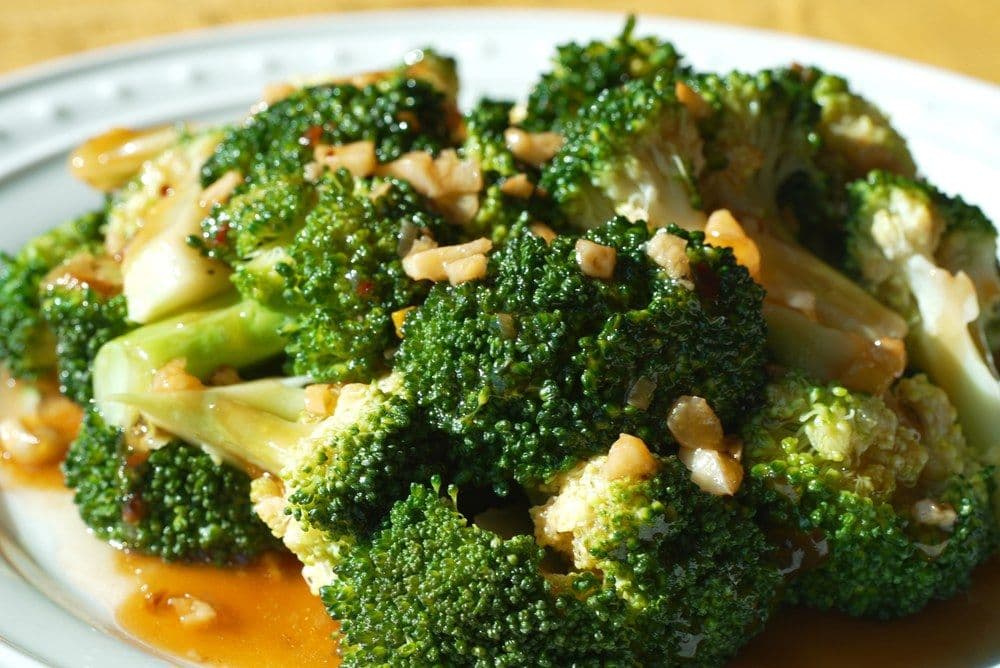
Homestyle Stir-Fried Broccoli

How a master Chinese chef stir fries broccoli to perfection in under 10 minutes, start to finish!

Cooking Summary
Ingredients: (detailed list)
- Broccoli: broccoli, salt, water
- White Sauce: salt, sugar, cooking wine, chicken bouillon, cornstarch, water
- Water & Wine Solution: water, cooking wine
- Stir-Fry: corn oil
Jump To Section
Overview
My dad has cooked broccoli hundreds of thousands of times over his 50 years as a Chinese chef, and his secret isn't expensive equipment or some complicated technique. It's just water and 2 tablespoons of ingredients that are already in your kitchen.
This is part of a larger series where my dad teaches 3 different techniques (steaming, blanching, and stir-frying broccoli) along with 3 different interchangeable sauces (Yuxiang sauce, black sauce, and white sauce).
We're also breaking down the science behind what makes broccoli dramatically crunchier and tastier: from why you should never buy pre-cut broccoli, to the 2 ingredients my dad never skips, and the best way to cook broccoli!
What's the best way to cook broccoli?
The prevailing belief is that steaming broccoli is the healthiest way to cook it because it preserves more of its nutrients than a method like boiling (which studies say is the worst method). One of my gripes is that this is kinda blown out of proportion and it's based on studies that don't reflect how a chef would actually cook broccoli. For instance, none of the studies added salt or oil to the boiling water, which is something that all Chinese restaurants do. As you'll see, these make a big difference.
In Chinese restaurants, blanching broccoli is the default step before every broccoli stir-fry. It's boiled in water with salt and oil for 2 to 3 minutes, sometimes soaked in ice water, and stir-fried either by itself or with beef, chicken, or pork. This method leads to the most visually appealing and crunchy broccoli.
In our video, I cooked 5 batches of broccoli and put it through a bunch of tests, and this is what I found:
- In line with the major studies, the leftover steaming water comes out more colorless than leftover blanching water. BUT, adding salt to the blanching water seems to reduce the amount of color that leaches into the water. This salt effect is supported by a study in 1974 funded by the UK that suggests that salt plays a role in preserving color when you boil vegetables. That study focused on color, but MAYBE, salt helps preserve nutrients too.
- All of the blanched batches of broccoli gained around 17% in water weight after cooking, whereas the steamed broccoli barely gained any weight at all. I'm guessing it's more so that broccoli buds are like sponges and water got trapped inside, but in any case, the added water makes the broccoli feel more juicy, the salt almost acts like a marinade, and the oil gives it a more slippery mouthfeel, or "waat" in Cantonese.
- Fresh steamed broccoli was instantly more dull than the blanched broccoli that had been sitting out for an hour. This is even more exaggerated if we compare the leftovers after 3 days in the fridge - the blanched broccoli still looks somewhat fresh whereas the steamed broccoli is way more dull. And if you look at the stems, salt and oil do seem to help slow down the dulling in the core.
- All in all, I'm not here to disagree with decades of research, but I feel like boiling vegetables gets such a bad rap and I just want to give it more nuance. And ultimately, broccoli is only healthy if you eat it.
Our pick: the stir-fry simmer.
Whether you're a busy parent short on time or you live in a rural village and you're short on fuel, the stir-fry simmer is the most straightforward and efficient method of all. And from a health perspective: a 2007 study from the University of Warwick showed that stir-frying led to no significant loss of glucosinolates (the anti-cancer nutrients). And a separate study found that nutrients lost during boiling aren't destroyed, they're still in the water. And with this method, you're consuming all the water you used to cook with.
Why this recipe
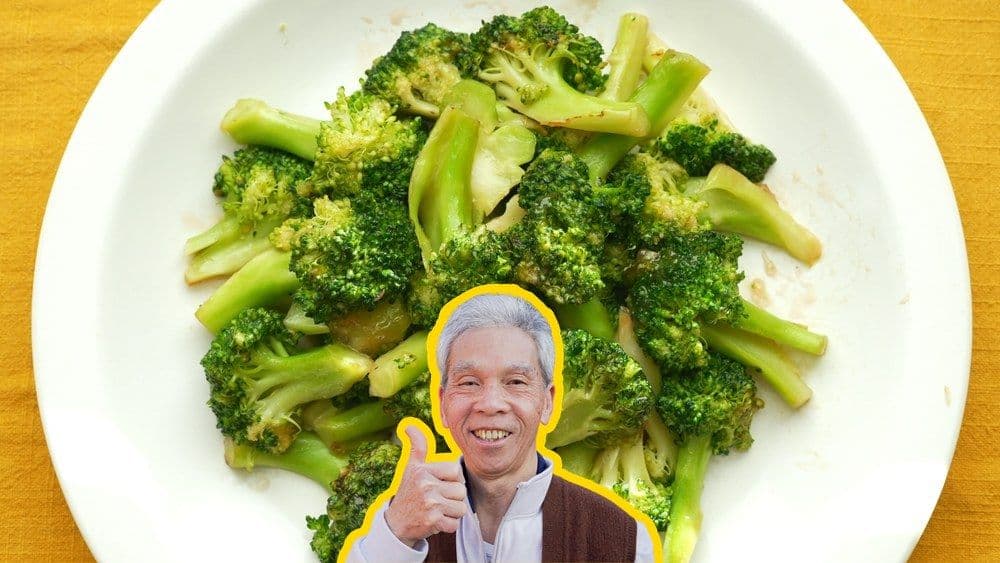
Most homestyle stir-fried broccoli recipes online are tested only a handful of times. My dad used to make this dish multiple times a day, every day, for 60+ years and can make this in his sleep.
I know you'll love it as much as our community does! This recipe has over 416.2K views, 5.4K likes on YouTube.
Ingredients

How to tell if broccoli is fresh:
Broccoli heads are immature flower buds, and the head should be firm and dense, and the buds should be dark green or purple. Yellow buds mean that the plant is flowering and no longer at peak freshness. The stalk should be moist and a pale greenish-white. However, since we often don't cook broccoli right away, it's critical to understand how to store it properly in the fridge.
The 3 rules for storing broccoli:
1) Put a paper towel on the bottom of the inside of a bag
2) Tie the bag tight and poke a few holes in it
3) Keep the florets upright
Broccoli is constantly losing moisture, which is why they go limp. The bag traps the moisture so it can stay crisp, but trapped moisture has to go somewhere, so it condenses into water droplets and falls down to the stem. The paper towel prevents standing water from pooling and rotting the stem. But never seal the bag completely: the broccoli is still breathing. A sealed bag is like trying to sleep with a blanket over your head, and stale air builds up with nowhere to go and speeds up rotting. But in a bag with a few holes, the air can circulate while still trapping enough moisture to keep the broccoli crisp.
Storing the broccoli upright keeps the florets out of water and protects the delicate crown from getting crushed, which causes bruising and rotting.
This might sound like an old-wives tale, but if you take nothing else from this post, this single idea will make you a better shopper and home cook: vegetables breathe.
All vegetables, including broccoli, are still alive after you buy them. In the ground, broccoli pulls water through its roots and creates new sugar through its leaves and photosynthesis. Once it's cut, nothing comes in anymore, but it's still breathing. So, it starts burning its own reserves of sugar and eating the sweetness you paid for. Every vegetable does this, but at vastly different speeds. Onions and potatoes last for months. But as a flower bud, broccoli has one of the highest respiration rates of all and only lasts for a few days.
Why you should avoid buying pre-cut broccoli
1) It's usually machine cut, which doesn't care if it cuts through florets. This leads to severed crowns and a bag full of small green buds.
2) It triggers an instant defense response. Broccoli keeps a harmless chemical weapon in two separate compartments, like a glowstick before you snap it. When a bug chews through the cells, those compartments break, and the two chemicals combine into sharp, spicy compounds that drive the bug off. These same compounds happen to be the healthiest thing in broccoli. A knife triggers the same glowstick defense response. Every cut spends more and more of those healthy compounds, and once it's spent, the broccoli can't make any more unless it's growing in the ground.
This is totally fine at home, but pre-cut broccoli gets processed in a factory days before it arrives at grocery stores, so by the time you buy it, the glowsticks are already dark. Furthermore, pre-cut broccoli "breathes" faster, so it loses sweetness, vitamin C and a bunch of other nutrients we wanted in the first place.
How to make Homestyle Stir-Fried Broccoli
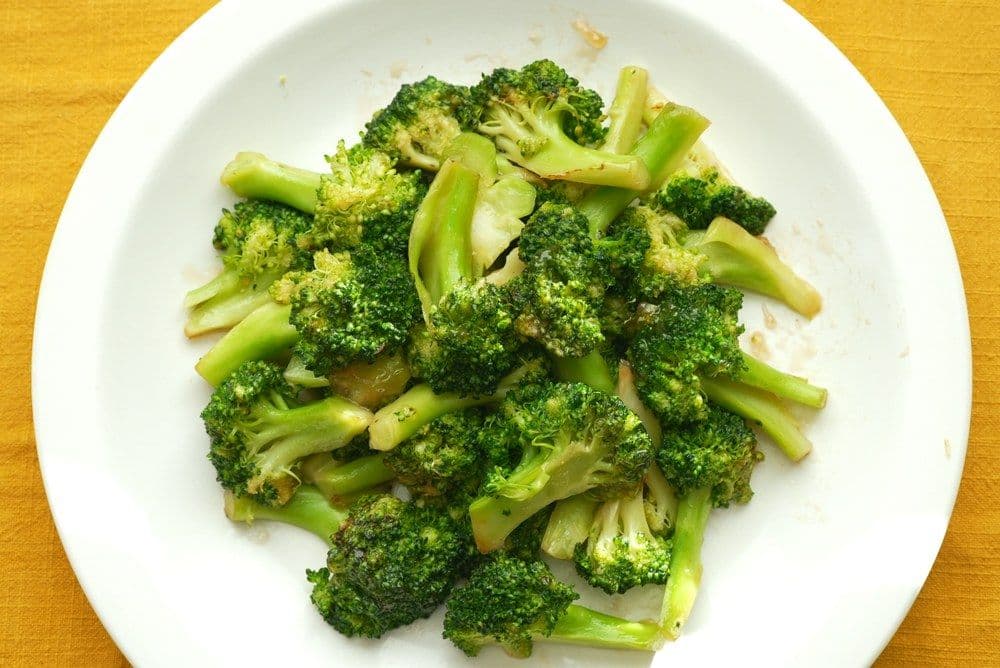
Add salt (2 tsp) to a bowl of water (1 basin) and soak the broccoli (12 oz) for 2-3 minutes to clean it. Place the broccoli floret side down and move them around. Rinse and drain.
In a small bowl, combine the salt (½ tsp), sugar (1 tsp), cooking wine (1 tsp), chicken bouillon (1 tsp), cornstarch (1 tsp), and water. Stir until the cornstarch is fully dissolved and set aside.
White sauce is a universal stir-fry sauce, generally employed with seafood and shrimp dishes, or dishes that should stay ligher in color.
In a separate bowl or cup, mix the water (½ cup) and cooking wine (1 Tbsp). Set aside within easy reach of the stove.
Alcohol in a hot wok acts like perfume hitting hot skin, enhancing the flavors and smells of everything it touches in the wok.
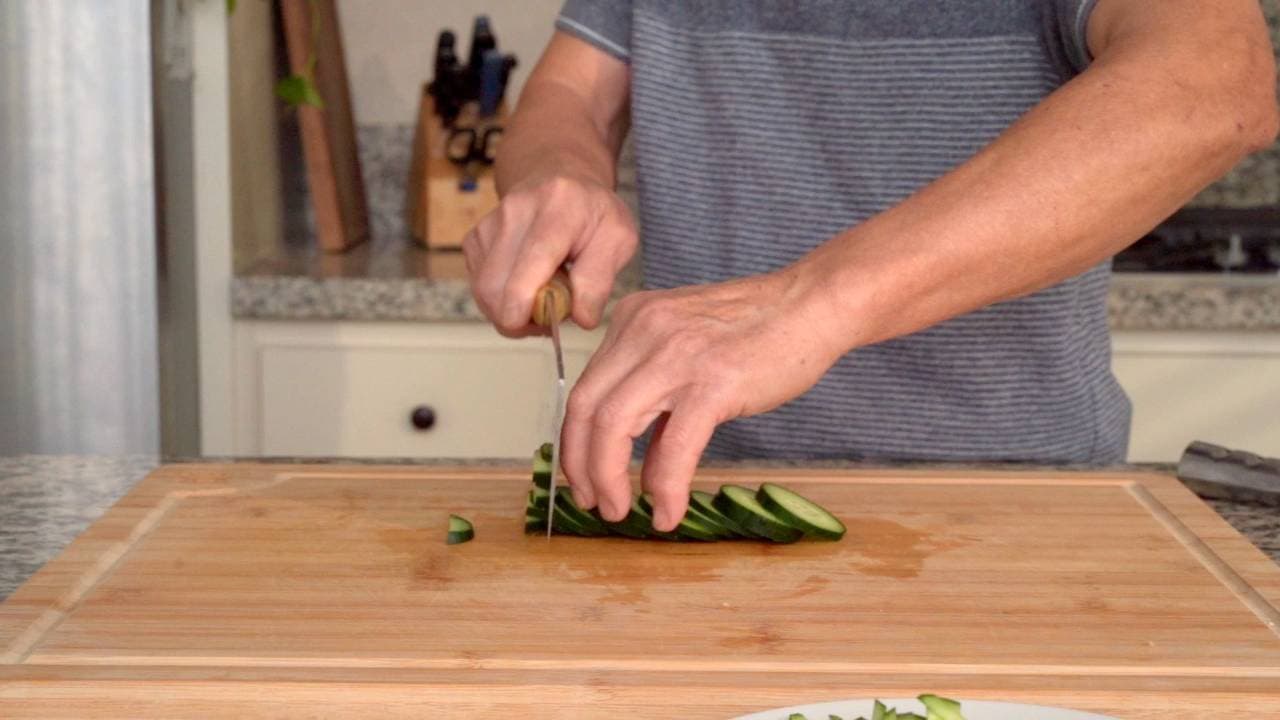
Trim and cut the broccoli by slicing only through the stems. Do not cut through the florets. Pry in half any large pieces through the stem so they are evenly sized.
Prying is a pretty subtle and common knife technique, where you gently twist and tilt the blade after making an incision to pry whatever you're cutting open. This helps break open the floret without cutting through it and prevents the buds from shattering everywhere. Sometimes my dad also just cuts without prying if the piece is small enough.
First, we'll heat the wok on high heat.
Add and heat oil (2 Tbsp) until it's shimmering. Then, turn down the heat to medium.
On medium heat, we'll add the broccoli and stir-fry it for a few seconds. Then turn the heat up to high and stir-fry for about 20-30 seconds.
With the wok lid in one hand and the water-wine mix in the other, pour the mix in and quickly cover the wok. We'll let it cook, covered, on high heat for 4 minutes.
After boiling for 4 minutes, we'll uncover the wok.
Turn down the heat to medium-low and add the white sauce.
On high heat, we'll mix the sauce with the broccoli for about 20-30 seconds, and turn off the heat.
Top 3 Mistakes
- Letting the steam escape:
Have the lid ready when you add the water and wine, then cover the wok promptly. The enclosed cooking stage is part of this method, rather than a brief splash into an open pan.
- Adding white sauce too early:
Wait until the covered cooking stage is finished before adding the white sauce. Lower the heat for that addition, then briefly toss everything together to finish the broccoli.
- Cutting mismatched pieces:
Cut the vegetables into the sizes and shapes shown in the recipe. Consistent pieces are easier to cook evenly, rather than leaving some hard while smaller pieces become too soft.
Frequently Asked Questions
How do you store broccoli?
The 3 rules for storing broccoli:
1) Put a paper towel on the bottom of the inside of a bag
2) Tie the bag tight and poke a few holes in it
3) Keep the florets upright
Broccoli is constantly losing moisture, which is why they go limp. The bag traps the moisture so it can stay crisp, but trapped moisture has to go somewhere, so it condenses into water droplets and falls down to the stem. The paper towel prevents standing water from pooling and rotting the stem. But never seal the bag completely: the broccoli is still breathing. A sealed bag is like trying to sleep with a blanket over your head, and stale air builds up with nowhere to go and speeds up rotting. But in a bag with a few holes, the air can circulate while still trapping enough moisture to keep the broccoli crisp.
Storing the broccoli upright keeps the florets out of water and protects the delicate crown from getting crushed, which causes bruising and rotting.
This might sound like an old-wives tale, but if you take nothing else from this post, this single idea will make you a better shopper and home cook. Vegetables breathe. All vegetables, including broccoli, are still alive after you buy them. In the ground, broccoli pulls water through its roots and creates new sugar through its leaves and photosynthesis. Once it's cut, nothing comes in anymore, but it's still breathing. So, it starts burning its own reserves of sugar and eating the sweetness you paid for. Every vegetable does this, but at vastly different speeds. Onions and potatoes last for months. But as a flower bud, broccoli has one of the highest respiration rates of all and only lasts for a few days.
How can you tell if broccoli is fresh?
Broccoli heads are immature flower buds, and the head should be firm and dense, and the buds should be dark green or purple. Yellow buds mean that the plant is flowering and no longer at peak freshness. The stalk should be moist and a pale greenish-white. However, since we often don't cook broccoli right away, it's critical to understand how to store it properly in the fridge.
Why should you never buy pre-cut broccoli?
1) It's usually machine cut, which doesn't care if it cuts through florets. This leads to severed crowns and a bag full of small green buds.
2) It triggers an instant defense response. Broccoli keeps a harmless chemical weapon in two separate compartments, like a glowstick before you snap it. When a bug chews through the cells, those compartments break, and the two chemicals combine into sharp, spicy compounds that drive the bug off. These same compounds happen to be the healthiest thing in broccoli. A knife triggers the same glowstick defense response. Every cut spends more and more of those healthy compounds, and once it's spent, the broccoli can't make any more unless it's growing in the ground. This is totally fine at home, but pre-cut broccoli gets processed in a factory days before it arrives at grocery stores, so by the time you buy it, the glowsticks are already dark. Furthermore, pre-cut broccoli "breathes" faster, so it loses sweetness, vitamin C and a bunch of other nutrients we wanted in the first place.
Pairs well with
View all →

Made with love ❤️
We started Made With Lau to celebrate Cantonese culture and honor the legacy of our wonderful parents, Jenny and Chung Sun Lau.
Our hope is that these recipes and stories help you spread the joy, love, and nostalgia that I felt growing up.