Salt Baked Chicken
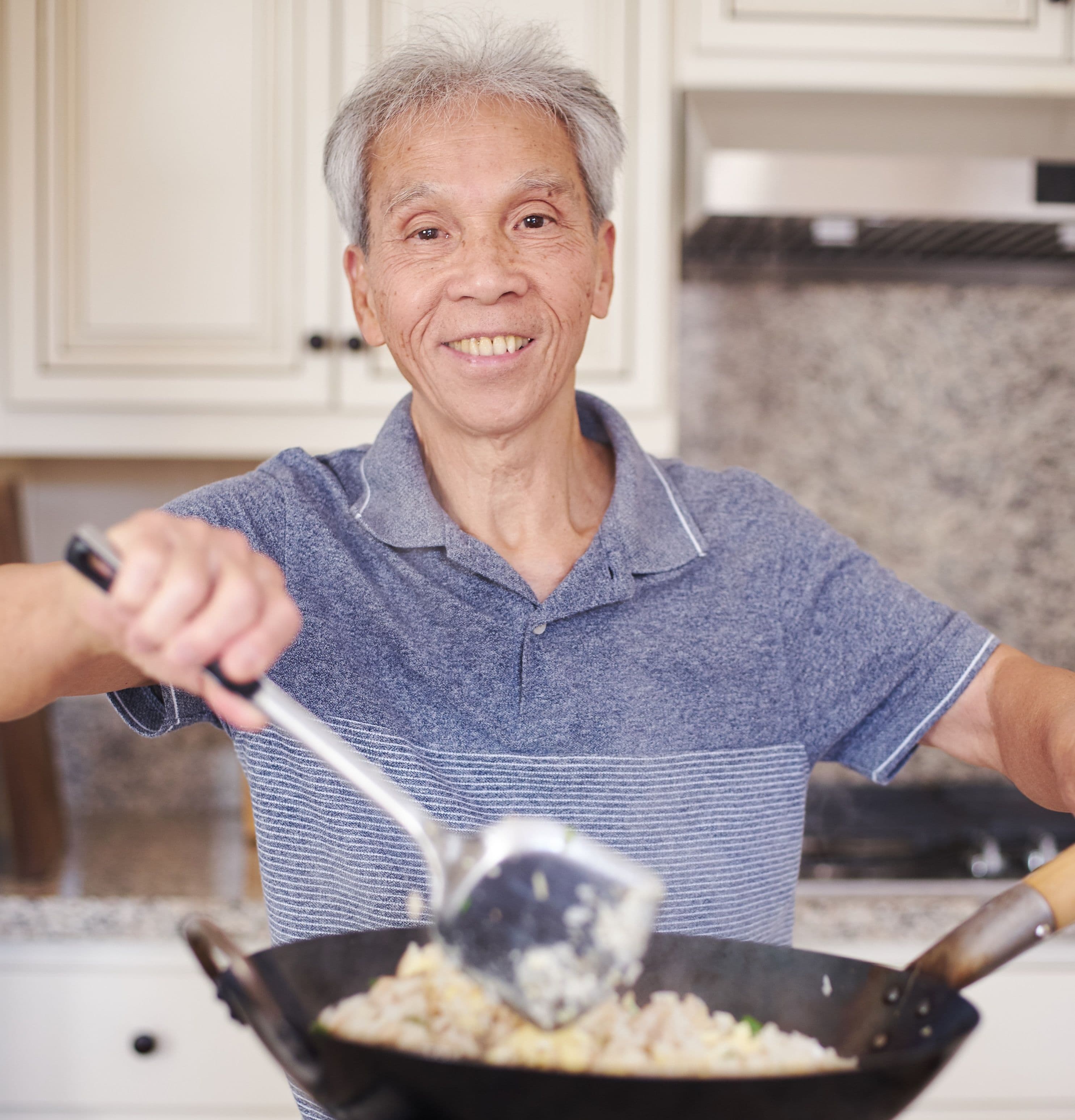
Learn how to make this easy alternative to a classic Cantonese chicken dish!

Cooking Summary
Ingredients: (detailed list)
- Main Ingredients: whole chicken
- Flavors: salt, sand ginger powder, sesame oil, lard
Jump To Section
Overview
The name of this dish is Salt Baked Chicken, a direct translation of the Chinese, Jim Guk Gai (鹽焗雞). This is not the traditional way to make this dish, which is to completely cover a whole chicken with a large amount of stir-fried salt then bake it.
Instead, this recipe is an alternate and simpler method of preparing the classic dish. It's called the East River Salt Baked Chicken. According to my dad, it comes from the East River restaurant in Guangzhou.
There are only a few restaurants that specialize in making it at scale. They cater to outside visitors and they changed its cooking process to this method that we are using.
Is one tastier than the other or does it taste the same? According to my dad, each one has its strengths. This recipe is juicier. The one that is baked in a layer of salt is drier but is more fragrant.
This recipe is all about the sauce and results in a tender perfectly cooked chicken with a smoky salty flavor, which you can pull apart by hand.
Why this recipe
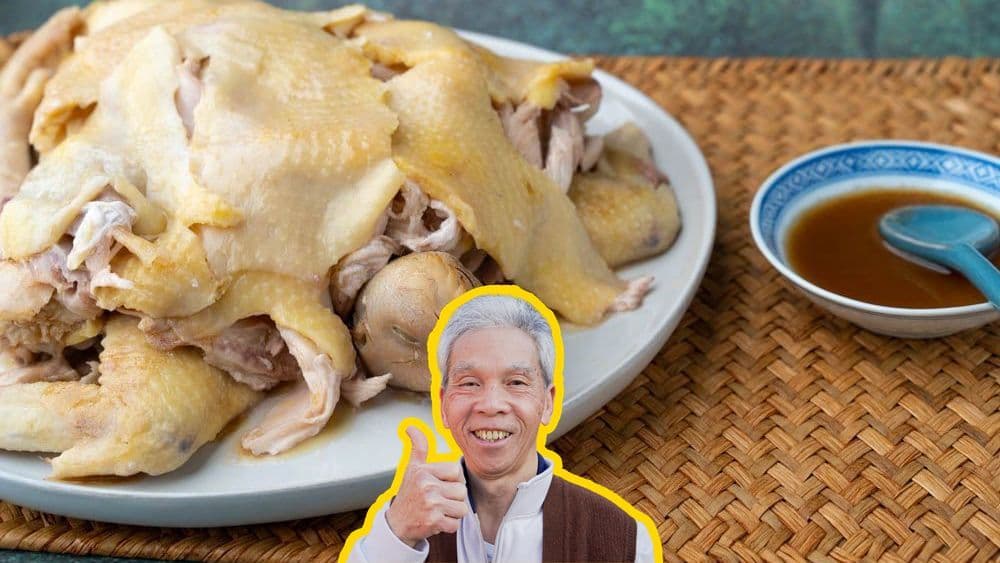
Most salt baked chicken recipes online are tested only a handful of times. My dad used to make this dish multiple times a day, every day, for 60+ years and can make this in his sleep.
I know you'll love it as much as our community does! This recipe has over 127K views, 2.9K likes on YouTube.
Ingredients
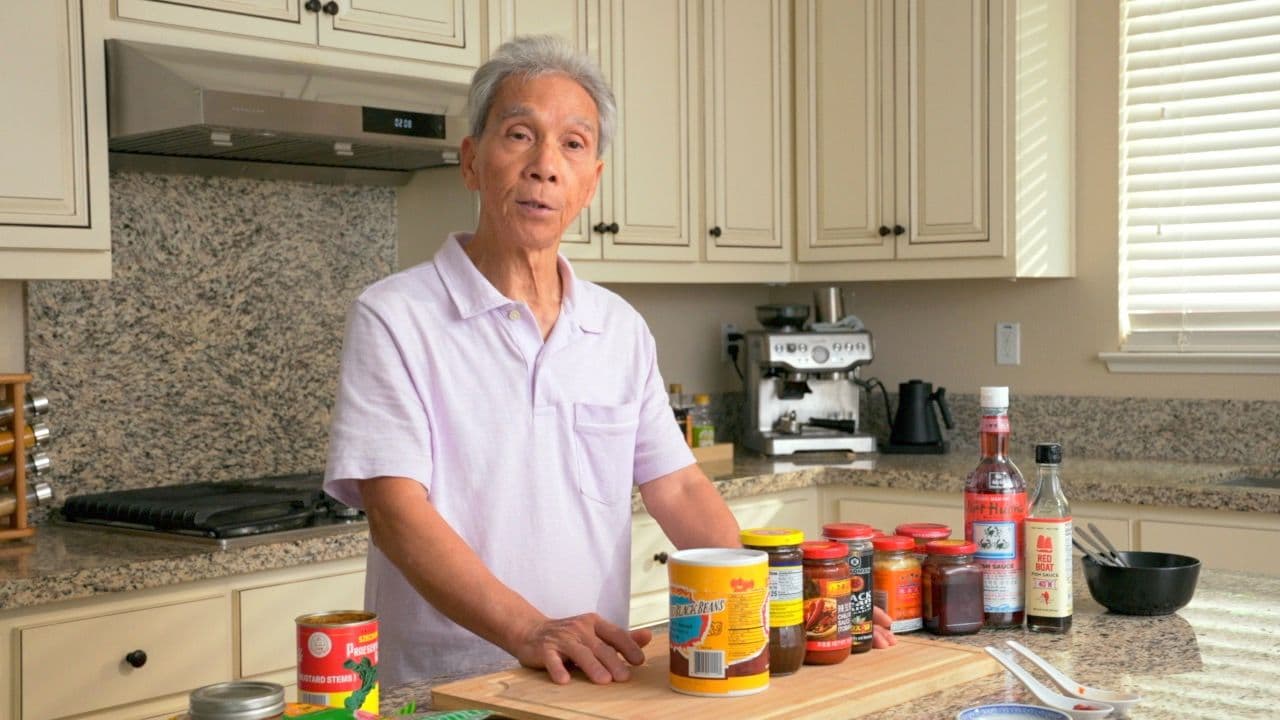
Is Sand Ginger... ginger?
An essential ingredient in this dish, sand ginger, or saa1 goeng1 (沙薑), is actually not a type of ginger at all. Though closely related, it is actually a variety of galangal, a plant that has many variants that are used throughout Southeast Asian cuisines such as in Thai and Lao tom yum soups.
Sand ginger, also known by its scientific name, kaempferia galanga, and other common names such as kencur or aromatic ginger, is also used in Asian herbal medicine and of course used in certain dishes for its distinct peppery and aromatic taste. It can be found in many forms at your local Asian market: fresh, dried and sliced, or like we have here, powdered.
How to make Salt Baked Chicken
To prepare the chicken (3 lb), pull the drumsticks down, away from the body to loosen the joints up. This way, everything will cook more easily when poaching it.
Make a hole at the base of the neck that penetrates the chicken's cavity. This lets the water flow through the chicken to cook the meat better and to drain the water from the chicken once finished.
Boil a large pot of water. Make sure to have a large enough pot and water to cover the whole chicken (3 lb).
While placing the chicken feet first into the water, dip the chicken into the water several times to allow the water to go through the inside. This helps get the water into the chicken and have it flow through the cavity.
Place the lid over the pot and turn the heat down to the lowest setting. Poach the chicken for 35 minutes or until cooked.
Prepare an ice-water bath in a large bowl.
Poke the chicken thigh to see if it's cooked. The meat is the thicket there, so if the juice isn't bloody, it's done.
Remove the chicken from the pot and submerge it into an ice-water bath. Allow it to cool for five minutes.
This way, the chicken will retain its moisture.
The distinctiveness of the dish is to stir-fry the salt to make it fragrant. Stir-fried salt is called "wai jim" or spiced salt. And that's the base of this sauce.
Heat a wok on high heat, pour the salt (2 Tbsp) into wok and stir for several minutes.
Remove salt (2 Tbsp) from wok after stirring for 1 minute and place into a small bowl.
Add the sand ginger powder (1 tsp), sesame oil (2 Tbsp), lard (1 Tbsp) and mix well.
Make sure to not add the ginger powder into the wok when you're stir-frying salt. The sand ginger powder will burn very easily from direct heat. The heat from the salt will be enough to make the sand ginger very fragrant.
Set aside.
Remove the chicken from the ice-water bath.
Break apart the chicken and shred the meat by hand. Using your hands to rip the chicken is important because it preserves the soft and juicy texture of the meat and also prevents you from cutting across the grain incorrectly. My dad thinks it's just easier this way.
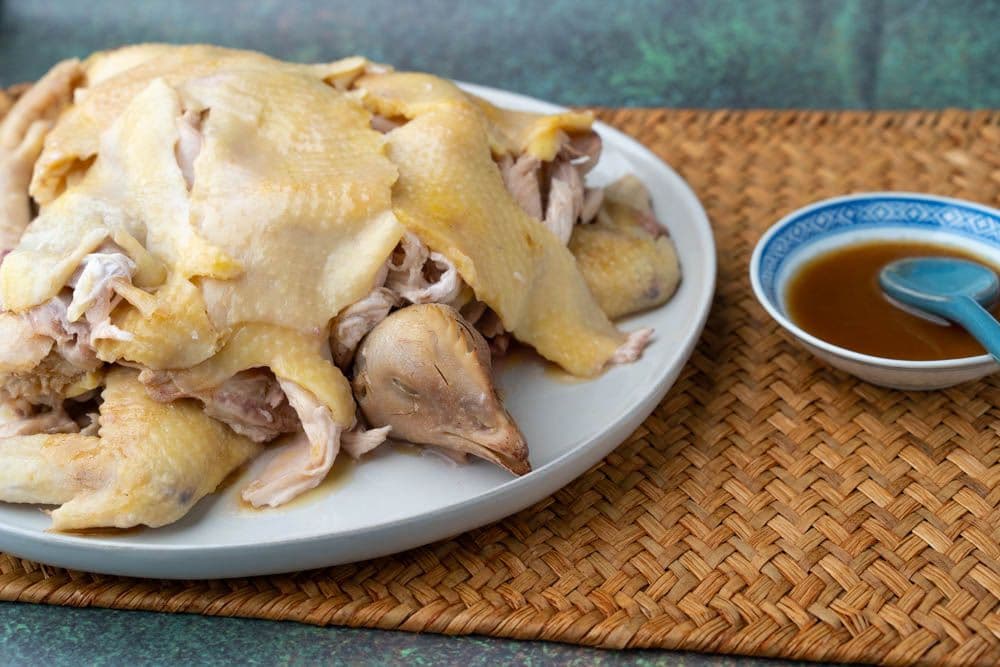
Start by taking off the head and placing it at the front of the plate. Remove the wings, drumsticks, and thighs from the body of the chicken.
Break the chicken into two (length-wise). Remove as much meat and skin from the back of the chicken as you can. Make sure to try to keep the skin intact.
Do the same for the meat and skin on the drum stick and thighs.
You can save the bones to make a flavorful broth for another dish if you'd like.
Pour some of the sauce onto the shredded chicken and mix until the meat is evenly coated. Please note that the sauce is very salty. It's best to start with a small amount and add more later to taste.
Place all parts of the chicken on the plate in the shape of the chicken. In Chinese culture, a whole chicken symbolizes prosperity and perfection, which in Cantonese is "Jyun Mei" so it's important to plate the dish to show completeness and the shape of the chicken.
Serve plated chicken with the remaining sauce
Top 3 Mistakes
- Chopping instead of shredding:
Pull the cooked chicken apart by hand as the recipe directs. This keeps the pieces in the soft, shredded style Dad prefers rather than turning them into knife-cut chunks.
- Heating ginger powder directly:
Stir-fry the salt by itself and keep the sand ginger powder out of the direct heat. The hot salt is enough to warm the powder, which can burn easily if fried in the wok.
- Leaving chicken joints tight:
Loosen the drumstick joints as shown before poaching the whole chicken. Opening that area is part of the preparation for more even cooking, rather than leaving the bird tightly tucked.
Frequently Asked Questions
How long does it take to make Salt Baked Chicken?
The original, traditional method of making Salt Baked Chicken is to encase an entire chicken in a thick layer of stir-fried salt and baking the entire thing. The salt casing prevents moisture loss while releasing flavor, resulting in juicy meat imbued with smoky, salty flavor.
However, it's a big, messy project. First, it's a whole maneuver to stir-fry enough salt to cover the entire bird, then you have to pack it all onto the bird, and then you have to bake the whole affair.
Our way of poaching the chicken by itself and making the sauce to mix into the cooked chicken saves a lot of time, effort, and mess, not to mention a ton of salt. Put aside just 60 minutes of your day to complete our Salt Baked Chicken recipe. You'll love it!
What type of chicken do you use for Salt Baked Chicken?
My dad always gets a free range chicken that's about 3 lbs. Any chicken is okay, just make sure it's not much bigger than 3 lbs.
Are there alternatives to sand ginger?
Sand ginger has a pretty distinctive flavor, and if you can't find it in a local Asian store, then we recommend buying it online.
However, if that's not an option, there are some substitutes for sand ginger. It won't taste the same, and to be honest, we haven't tried the recipe with these, so if you try the recipe with these alternatives, you'll have to let us know how it goes!
Spiceography recommends these ingredients as alternatives to sand ginger:
- galangal
- regular ginger
- cinnamon and mace
Is it possible to make just one serving of Salt Baked Chicken?
Yes, absolutely! When an entire chicken is just too much food, you can definitely poach just a chicken thigh or leg. Remember to scale the amount of sauce down as well!
How do you keep the chicken juicy when poaching it?
Take the chicken out once it's cooked through--don't overcook it. Also, the ice bath is essential! It will stop the cooking process so that the chicken doesn't keep cooking in its own residual heat.
Can I use scissors to cut the cooked chicken when making Salt Baked Chicken?
We wouldn't say no, you can't use scissors, but we don't recommend it for two reasons.
First, tearing it by hand preserves the soft and juicy texture of the meat, since you can't accidentally cut against the grain. When you're pulling it apart manually, the meat will naturally tear along the grain.
Second, it's easier to pull the meat by hand, and kind of fun!
Is Salt Baked Chicken healthy?
Yes, it is! You can make sure that you make the healthiest version possible by choosing good quality chicken and other ingredients. If you study the ingredient list, you'll see that it's super simple.
If you prefer not to use lard, you can use any cooking oil that you prefer. We don't recommend reducing the ingredients, as the ratio of the sauce is really important. If you have low-sodium restrictions, you can make or mix in less of the sauce for your own portion.
Pairs well with
View all →

Made with love ❤️
We started Made With Lau to celebrate Cantonese culture and honor the legacy of our wonderful parents, Jenny and Chung Sun Lau.
Our hope is that these recipes and stories help you spread the joy, love, and nostalgia that I felt growing up.