Homemade Chili Oil

Give your dishes a kiss of warmth with this mild, simple, and highly customizable homemade condiment!

Cooking Summary
Ingredients: (detailed list)
- Main Ingredients: Sichuan dried chili flakes, ginger, red onion, shallot, garlic, star anise, sesame seeds, neutral oil, sesame oil
- Chili Mix: salt, sugar, white pepper, paprika, neutral oil
Jump To Section
Top 3 Mistakes
- Dipping in with a wet spoon:
Use a clean, dry spoon every time you scoop out the chili oil. Keeping water and food residue out of the jar is part of the recipe's storage guidance, not just a serving detail.
- Scorching the chili flakes:
Follow the recipe’s oil-temperature guidance before combining it with the chili. Overheated oil can scorch the flakes, so do not assume the hottest possible oil gives the best flavor.
- Ignoring the oil temperature:
Check the oil using the recipe’s heat guidance before adding the ingredients. Oil that is too cool or too hot changes how quickly the food cooks and how evenly the surface browns.
Overview
Chili oil is a thrill, and depending on your eating habits and personal preference for spice, that can be a great thing... or a scary risk. Cantonese cuisine is not particularly known for spice, so our recipe for homemade chili oil is on the gentler, milder side. It's the best condiment to drizzle over noodles, rice dishes, soups, and more, just to warm the flavor up.
If you want to really give it a kick, use this recipe with stronger chili flakes and heavier spices. The best part of making chili oil from scratch is the customization! Add what you like, omit what you don't.
Ingredients
Why this recipe
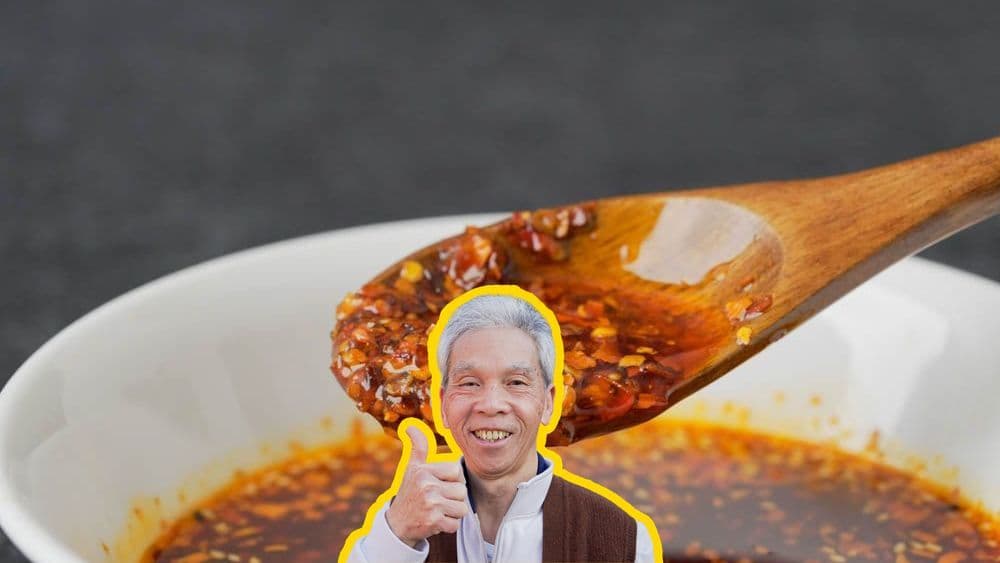
Most homemade chili oil recipes online are tested only a handful of times. My dad used to make this dish multiple times a day, every day, for 60+ years and can make this in his sleep.
I know you'll love it as much as our community does! This recipe has over 2.5M views, 48.3K likes on YouTube.
The best chili flakes for making chili oil
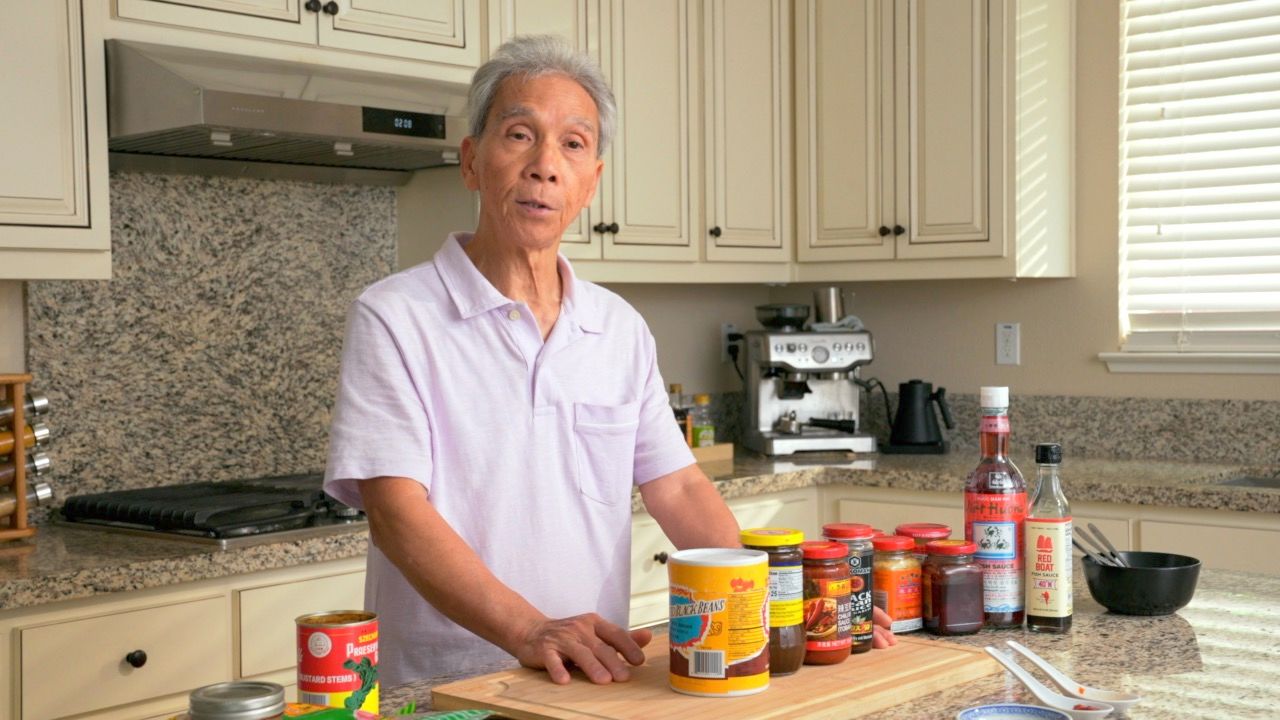
For a tinge of Sichuan flavor (just a tinge!), we use Sichuan chili flakes (you can get it here on Amazon). We balance the heat with some sugar, add depth to it with white pepper, and complement it with star anise and other aromatics.
Red pepper flakes are usually a mix of different types of chili flakes. If that's what is in your kitchen, you can give that a try.
We'd recommend against using the jar labeled "chili powder" though; sometimes it's pepper flakes in powdered form, but sometimes it's a spice mix that can include oregano, garlic powder, cumin, which is delicious but not ideal for a chili oil.
The best oil for making chili oil
Since you’re cooking the oil at high temperature, you can use oils such as corn oil, canola oil, teaseed oil, or peanut oil. These oils are also known as neutral oils, which means they don’t impart strong flavors.
Neutral flavor is important for making chili oil because you’re infusing the flavors of all the ingredients into the oil, and those ingredients, not the oil itself, are the flavors you want to taste. Making sure those flavors stand out will help enhance the chili flavor.
How to make Homemade Chili Oil
Prepare chili mix
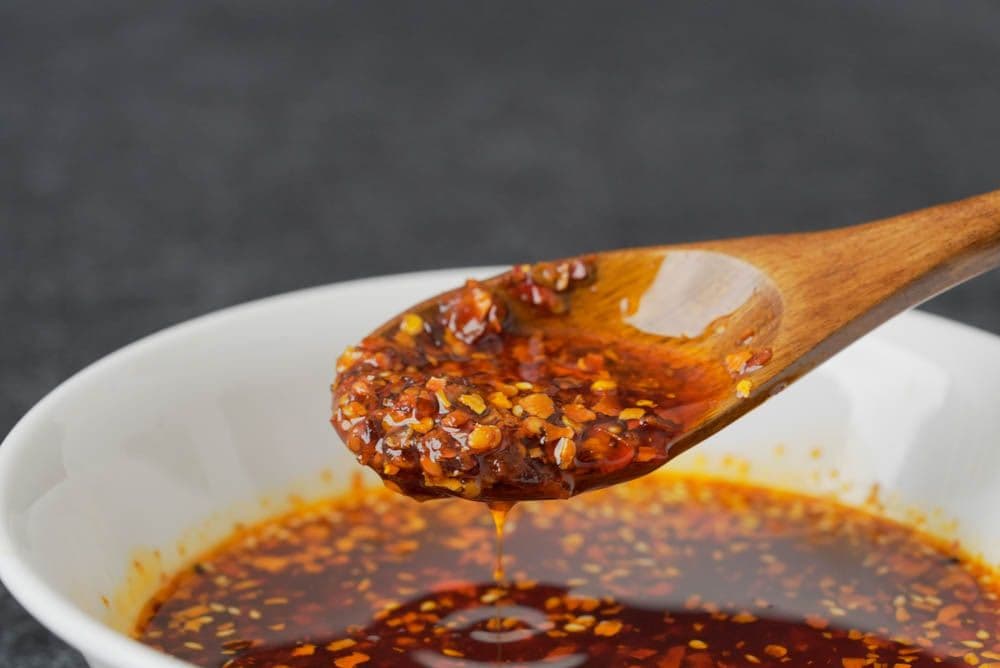
First, we'll create a flavorful chili mix as the seasoning base for the chili oil. In a medium, heat-safe bowl, mix together chili flakes (1.5 oz), salt (0.50 tsp), sugar (0.50 tsp), and white pepper (0.50 tsp).
To these dry ingredients, add some oil (1 tbsp) and mix it in. This small amount of room temperature oil prevents the dry ingredients from burning when we pour the hot oil over them later on.
Optionally, you can add paprika (1 tbsp) for a color boost. It won't drastically change the flavor but will help give the chili oil a nice, bright red color.
Prepare aromatics
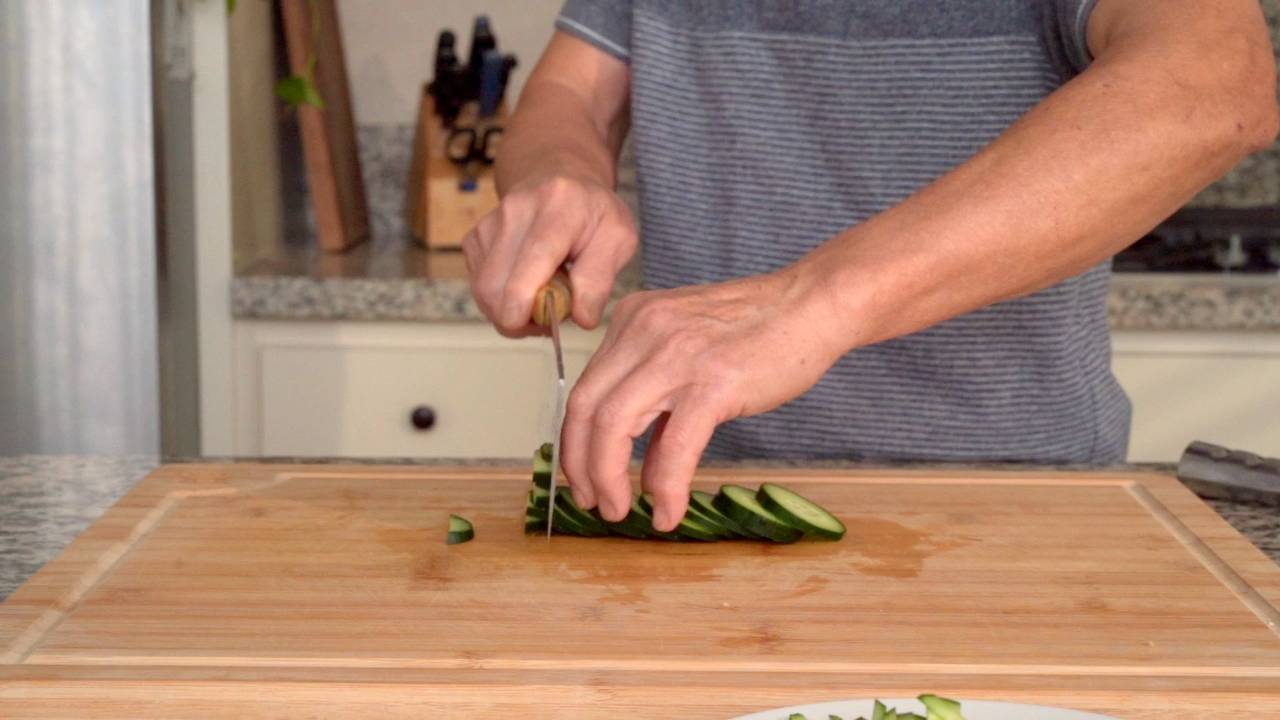
Cut the ginger (0.50 oz) and red onion (1 oz) into slices. They'll be frying in hot oil, so don't fuss over getting them too paper-thin.
Smash the shallot (1 oz) with the side of your knife, then smash, peel, and roughly mince the garlic (3 clove).
Smash the star anise (2 piece) into smaller pieces, and rinse and wet the pieces in a bit of cold water. This will help keep them from burning during the frying step.
Keep everything separate, but close at hand.
Fry aromatics
Heat up your wok over high heat for about 30 seconds, and pour the oil (4 oz) in.
Once the oil reaches 300°F (150°C), or hot enough to bubble around a spare piece of onion, it's time to add the aromatics. While you're frying the aromatics, you'll likely need to lower the heat to medium so that the oil doesn't get too much higher than 300°F (150°C).
Add the sliced ginger first and fry for 15 seconds.
Add the garlic and fry for about 5 seconds (basically, the amount of time you may need to track down the next ingredient on your counter).
Add the shallots and fry for about 30 seconds.
Add the red onion and fry for about 15 seconds.
Add the star anise and continue to fry, stirring constantly for 2.5-3 minutes or until the ingredients are well-browned (not burnt!). Then turn the heat down or off completely.
With a mesh strainer or sieve, scoop out all the solid pieces. You can push on them in the strainer a little to squeeze out the oil back into the wok.
Once you have removed all the solids, heat the oil back up to 300°F (150°C). If you accidentally go too far and the oil gets too hot, bring the temperature down by lowering the heat and adding a tbsp or so of room temperature oil.
Pour oil over chili mix
When the aromatic oil has come back up to 300°F (149°C), turn off the heat; it's time for the (somewhat) dramatic pour-over. Don't pour it all at once! Dumping a huge volume of hot oil at once will scorch and burn the chili mix.
Bring the chili mix close to the oil to minimize risk of dripping and bumping into obstacles.
Pour just one ladle of hot oil slowly over the chili mix. It should sizzle gently. Stir it in.
Add a second ladle of hot oil, again pouring slowly, and stir it in, and repeat with a third ladle of hot oil.
Add sesame seeds (1 dash) and stir those in.
Heat up the rest of the oil a little more. At this point, the batch of chili oil and chili mix have been brought up to a temperature where pouring in even hotter oil won't burn the solids anymore.
Add the final ladle of the hot oil (this should just about finish all the oil, though if you have more, feel free to use up the rest) and stir it in. Add a quick drizzle of sesame oil (1 tsp) to intensify the aromas of all the ingredients.
Store this amazing chili oil in the fridge, and enjoy for several months!
Pairs well with
View all →
Made with love ❤️

We started Made With Lau to celebrate Cantonese culture and honor the legacy of our wonderful parents, Jenny and Chung Sun Lau.
Our hope is that these recipes and stories help you spread the joy, love, and nostalgia that I felt growing up.
