Buddha's Delight
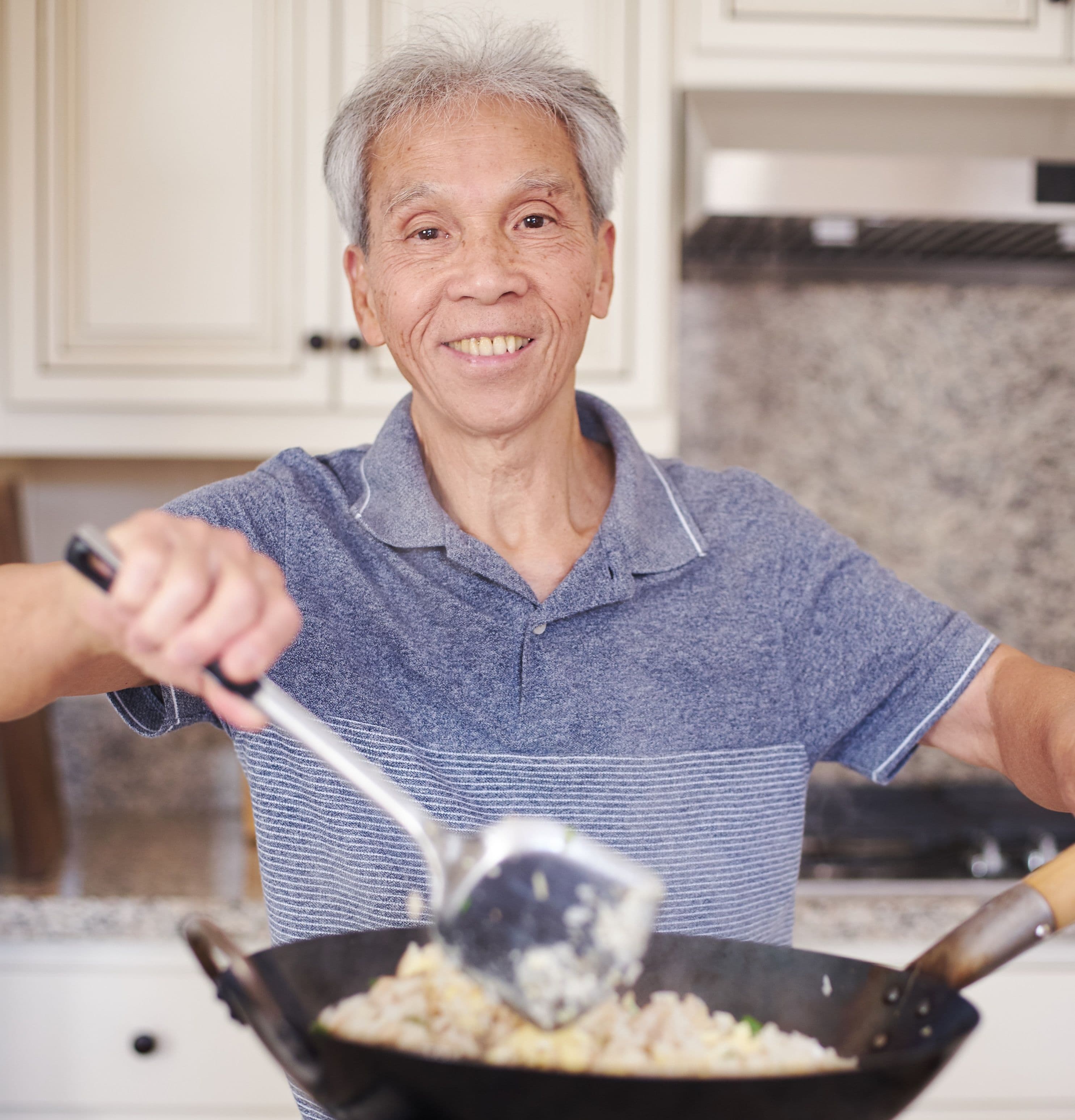
This meaningful New Year's vegetarian dish is a fan favorite!

Cooking Summary
Ingredients: (detailed list)
- Main Ingredients: bamboo fungus, vermicelli noodle, dried shiitake mushroom, cloud ear fungus, seafood mushroom, king oyster mushroom, celery, napa cabbage, carrot, whole baby corn, sugar snap peas, dried beancurd sheet
- Sauce: Kikkoman® Vegetarian Oyster Sauce, Kikkoman® Soy Sauce, Kikkoman® Tamari Soy Sauce, cooking wine, sugar, salt, white pepper powder, red fermented bean curd
- Cooking: garlic, ginger, corn oil, Kikkoman® Sesame Oil, water, cornstarch
Steps:
Jump To Section
Overview
The origin story of Buddha's Delight
How did a plate full of vegetables, delicious as they may be, get named after Buddha? A clue lies in the other Chinese name for the dish, 羅漢齋 (lo4 hon3 zaai1), which means arhat vegetarian dish.
The story goes, on the bodhisattva Guanyin's lunar calendar birthday, the 18 arhats (the 18 original followers of Buddha) stopped at a Guanyin temple to test her. They shouted loudly, "We are SO hungry right now!" Guanyin heard them and a hot, fresh meal appeared before the arhats.
The arhats dug in, and after they were full, took the rest of the temple's food and fabrics with them. Later, they realized that it had been pretty rude of them to do that, so they decided to repay Guanyin with a gift.
The 18 arhats went door to door, begging for alms and collecting vegetarian ingredients, which they then put together to create this dish for her! The 18 ingredients of Buddha's Delight represents each of these 18 arhats.
Do I have to use 18 ingredients?
The 18 is symbolic, so no, you don't have to! The one rule you "have to" follow is no meat in this dish, which is why we use Kikkoman® Vegetarian Oyster Sauce instead of the original version.
Thank you, Kikkoman!
This recipe is brought to you in part by Kikkoman. My dad has been using Kikkoman flavors throughout his 50-year career as a chef, and it's a privilege to get to partner with them on such an iconic recipe, Buddha's Delight!
- Kikkoman products are a major flavor enhancer and bring out the “umami” taste, and helps balance and round out flavors
- Kikkoman® Less Sodium Soy Sauce is perfect for home cooks who are looking to cut down on their sodium levels, without sacrificing flavor
- Kikkoman offers wide range of Gluten-Free Asian sauces, including Gluten-Free Oyster Sauce and Gluten-Free Hoisin Sauce
- The KikkomanUSA.com Chinese site offers easy Asian recipes that home cooks can enjoy any night of the week
You can learn more about Kikkoman and follow them on social media here:
- Website: https://www.KikkomanUSA.com
- Facebook: https://www.facebook.com/KikkomanChineseUSA (Kikkoman 萬字在美)
- Instagram: https://www.instagram.com/kikkomanusa_chinese/ (Kikkoman 萬字在美)
Why this recipe
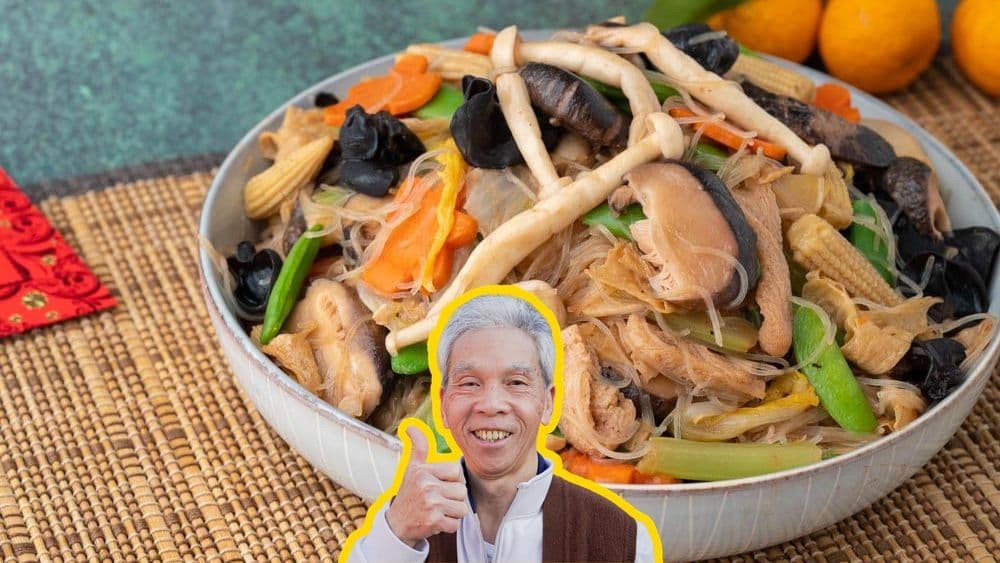
Most buddha's delight recipes online are tested only a handful of times. My dad used to make this dish multiple times a day, every day, for 60+ years and can make this in his sleep.
I know you'll love it as much as our community does! This recipe has over 768.4K views, 11.7K likes on YouTube.
Ingredients
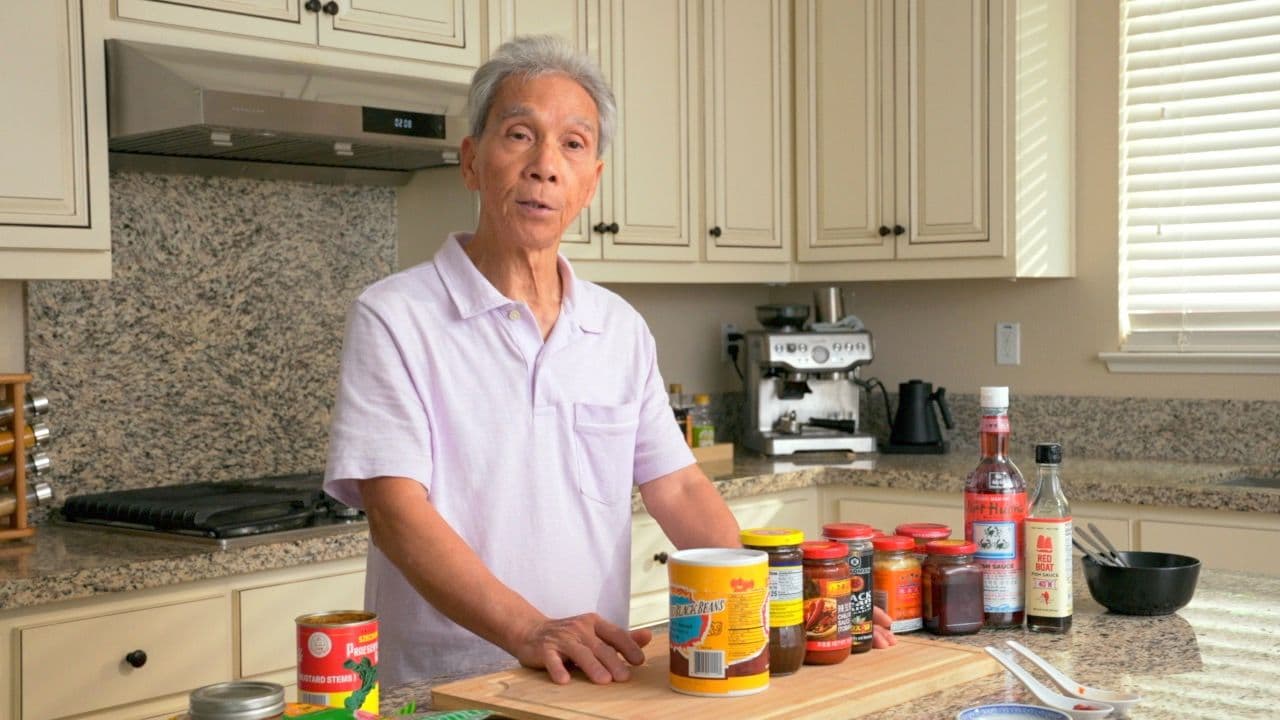
What is red fermented bean curd?
If the word "bean curd" sounds familiar, that's because it's the other way to say tofu!
Red fermented bean curd is tofu that has been fermented with red yeast rice, which gives it the characteristic red color, as well as some sort of rice wine. The fermentation results in a distinctive umami flavor.
We've previously used this ingredient in our Char Siu and Chinese BBQ Spare Ribs recipes, so check them out!
If you can't find it locally, you can get it on Amazon:
Red Fermented Bean Curd - https://amzn.to/37MjZfa
What other ingredients can be used for Buddha's Delight?
There are so many options! As long as you don't use meat in the dish, you're officially making "Buddha's Delight"!
My parents say that for the best-tasting result, the absolute must-haves are dried shiitake mushrooms, vermicelli noodles, beancurd sheets, snow peas (or sugar snap peas), and cloud ear fungus.
Choose your own favorites from the list and put a star next to your family's must-haves! Once the delicious sauce soaks into the food, we guarantee a good time.
- Arrowhead
- Baby corn
- Bamboo fungus
- Bamboo shoots
- Bean sprouts
- Black moss (fat choy)
- Bok choy
- Carrot
- Cauliflower
- Celery
- Chinese celery
- Cloud ear fungus
- Daylily buds
- Dried beancurd sheets
- Gingko nuts
- Lotus root
- Lotus seeds
- Mushrooms (all types, fresh and dried, such as shiitake mushrooms, straw mushrooms, oyster mushrooms, etc)
- Napa cabbage
- Peanuts
- Potatoes
- Red jujubes
- Snow fungus
- Snow peas
- Tofu (fresh or fried)
- Vermicelli noodles
- Water chestnuts
- Wheat gluten (fried or braised)
- Wood ear fungus (make sure to trim off the hard stem)
How to make Buddha's Delight
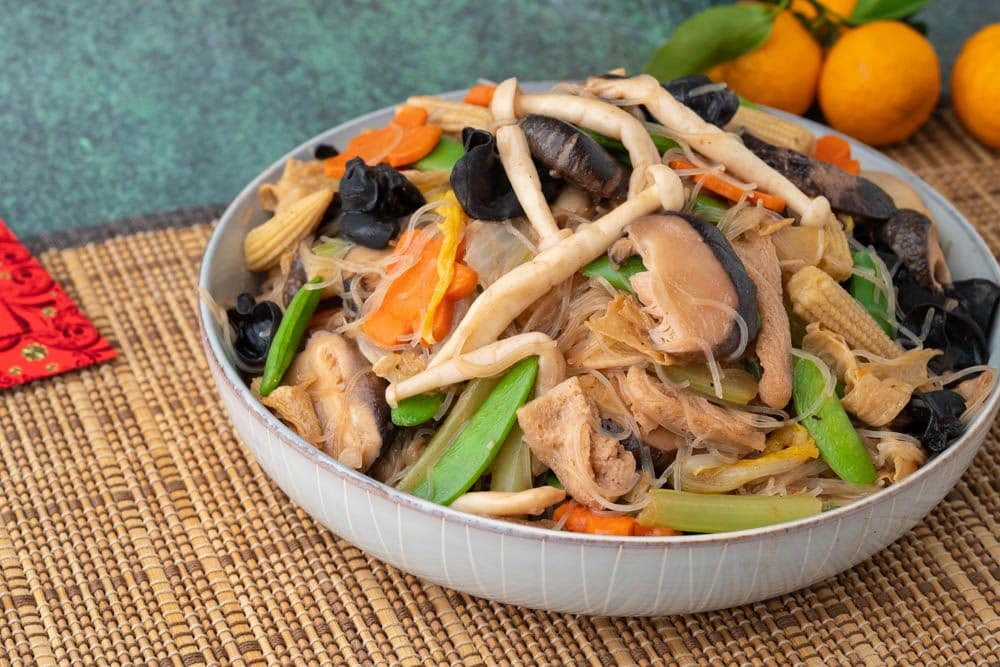
Start with soaking the dried ingredients, so that they'll be hydrated enough to chop later.
Mix hot and cold water to get the ideal water for soaking, about 40-50°C (104-122°F).
Soak the bamboo fungus (1 oz), vermicelli noodles (1½ oz), and cloud ear fungus (½ oz) in separate bowls.
Soak the dried shiitake mushrooms (1 oz) in warm water as well, and remember that we'll be using this soaking liquid later on.
It should take about 10 minutes for everything to rehydrate and soften up enough for chopping.
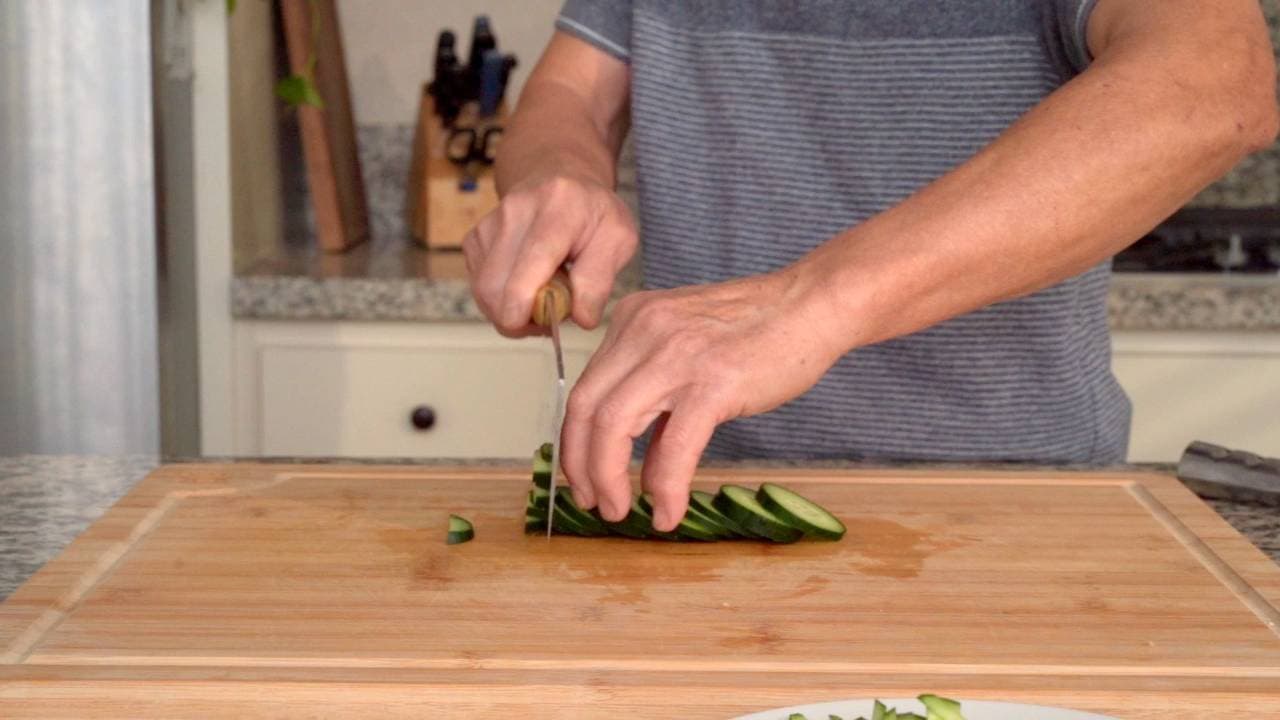
Trim the ends off of the seafood mushrooms (2 oz), and soak them quickly or run them through some water to clean any debris off.
Cut the king oyster mushrooms (4 oz) in half, and then into slices.
Cut the celery (3 oz) into sections of more manageable lengths, about 2 inches long, and then thinly cut lengthwise to create thin strips.
Cut napa cabbage (10 oz) into bite-sized pieces, separating the stem parts, which take longer to cook, and the leafy parts, which cook more quickly. Alternatively, the leafy parts can be torn by hand instead of cut by knife for a different texture.
Cut the carrot (2 oz) into slices, either in a nice flower pattern by notching the sides before slicing, or in simple circles.
Remove the stems from the rehydrated shiitake mushrooms. If the mushrooms are rather big and too unwieldy to eat as is, cut them in half at an angle.
Peel, smash, and mince the garlic (3 clove).
Slice the ginger (1 Tbsp) into larger pieces. They'll be easier to fish out, or eat around, at the end.
Squeeze the excess water out of the bamboo fungus and trim off the ends. Dunk and wash the bamboo fungus in cold water until it's clean and the water runs clear. Then, cut it into bite-sized pieces, about 1-2 inches.
Cut the dried beancurd sheet (1 oz) into smaller pieces, about 1-2 square inch pieces, so it'll be easier to fry later.
The baby corn and snow peas don't need any particular preparation as long as they're clean and ready to cook.
In a small bowl, smash the red fermented bean curd (1½ oz) down into a rough paste, so it'll be easier to incorporate with everything else later, and you won't bite into a big salty piece of it when you're eating.
In another bowl, mix together the stir-fry sauce, which is vegetarian oyster sauce (1 Tbsp), light soy sauce (1 Tbsp), dark soy sauce (1 tsp), cooking wine (1 Tbsp), sugar (2 tsp), salt (½ tsp), and white pepper powder (¼ tsp).
The salt is a rather small amount so that you can add more to your taste later.
To fry the dried beancurd sheets, heat up a wok or a pan with oil (4 oz) on high heat. When the oil reaches 160°C (320°F), it's hot enough to start frying the beancurd sheets.
In small batches so they don't crowd together, fry the cut-up beancurd sheets until they float to the surface, which should take about 8 seconds. When they're done, you can set aside the frying oil to use in your other cooking. We'll need some for the next stir-frying step.
If you'd rather not fry them, then you can soak them in warm water for 10 minutes.
Next, we'll heat up a pot of water on high heat. When it's at a rolling boil, add the cloud ear fungus and the baby corn (3 oz).
After 20-30 seconds, add the bamboo fungus. After another 30-40 seconds, scoop them all out with a spider or slotted spoon.
Then, blanch the celery and carrot pieces for about 90 seconds. Take them out of the water when they're done, too.
Heat your wok on high heat for about a minute. When the wok has heated up, add the oil (2 Tbsp) that you set aside from frying the dried beancurd sheets.
The oil will heat up immediately, so turn the heat down to medium.
Add the garlic, ginger, and red fermented bean curd, and fry them to release their aroma, for about 20-30 seconds.
Add the shiitake mushrooms, the napa cabbage stems, and the king oyster mushrooms. Continue stir-frying for about 30-40 seconds.
Then, add the cooking wine (1 Tbsp) to the wok, and let it simmer and soak in.
Add water (8 oz), which includes the water that the shiitake mushrooms were soaking in, so we can take advantage of their fragrant mushroom flavor and make the dish even tastier.
Next, toss in all of the ingredients that we blanched earlier: cloud ear fungus, baby corn, bamboo fungus, carrot, and celery. Add the napa cabbage leaves and the fried beancurd sheets.
Cover with a lid, and let it continue to cook for 4-5 minutes, until you see steam coming out, which will signal that the beancurd sheets have softened up. Then, add the seafood mushrooms.
Add all of the sauce that we mixed earlier. To get every bit of flavor out, use some of the liquid from the wok to rinse any last bits of sauce or red fermented bean curd out of their bowls.
Give it a taste to check for salt, and add a little bit at a time if you need to adjust.
Next, add your hydrated vermicelli noodles straight into the center of the wok, so that it can soak up all the sauce pooling at the bottom. Position the other ingredients to cover the noodles, weighing them down and pushing them down towards the sauce.
Put the lid on the wok to help it cook through, for about a minute and a half.
Prepare a thickening cornstarch slurry by mixing cornstarch (1 Tbsp) and water (1 Tbsp) in a small bowl. To save a dish, use the now-empty sauce bowl!
Add the sugar snap peas (2 oz) to the wok.
Add the slurry a little bit at a time, checking to see if it's thick enough to your preference before adding more. You may not need to use all of it, but if you feel like the dish is still too wet, you can keep adding more.
Finally, add sesame oil (1 Tbsp) and turn the heat off.
Taste to adjust the flavors and plate once it's to your taste! This is usually served in a large serving bowl or plate and everyone can take the amount they want.
Top 3 Mistakes
- Rushing the mushroom soak:
Give the dried mushrooms time to soften before cooking. A quick rinse is not a substitute for rehydration; follow the soaking step so the centers are ready along with the edges.
- Leaving bean curd in chunks:
Mash the red fermented bean curd into a rough paste before cooking. It will blend into the vegetables and sauce more evenly, instead of leaving large, intensely salty pieces in each bite.
- Ignoring the oil temperature:
Check the oil using the recipe’s heat guidance before adding the ingredients. Oil that is too cool or too hot changes how quickly the food cooks and how evenly the surface browns.
Frequently Asked Questions
What is the Lunar New Year tradition with Buddha's Delight?
When my parents were growing up in China, they had this every year for New Years... and it came with rules! They had to eat this vegetarian Buddha's Delight dish first, before they were allowed to go on to enjoy the rest of the food, especially any meat.
My mom even clarified that in some places, families wouldn't eat meat at all on New Year's Day. Different regions have different customs, and her family didn't eat any meat that day.
She also explains that in the Buddhist practice, abstaining from meat is equivalent to not killing animals, so by having a vegetarian New Year's Day, they were setting up to have a clean, safe whole new year.
How many ingredients does Buddha's Delight contain?
Other than the seasoning, the most traditional versions of this dish much include 18 main ingredients, to represent the 18 original followers of Buddha, or the 18 arhats.
However, you don't have to have 18! We have a whole list of the most common choices, so you can pick and build your own version.
What is in in Buddha's Delight?
The one unbreakable rule is that there can't be any meat in it. Otherwise, it's any combination of vegetarian ingredients! (And then a savory, slightly sweet sauce, too. Check the ingredient list above.)
Basically every version will include vermicelli noodles, as they're meaningful (long noodles, long life), easy to source, and can keep in the pantry just short of forever.
My dad's personal must-haves include rehydrated dried shiitake mushrooms, vermicelli noodles, and beancurd sheets.
My mom's personal favorites include cloud ear fungus, sugar snap peas, vermicelli noodles, and beancurd sheets.
How do you make the sauce for Buddha's Delight?
Our recipe for the sauce for Buddha's Delight contains red fermented bean curd, vegetarian oyster sauce, light soy sauce, dark soy sauce, cooking wine, sugar, salt, and white pepper powder.
Check out the precise amounts in the ingredient list above, and remember to use the tool to scale the amounts up and down as needed.
If you can't find red fermented bean curd, use a little more vegetarian oyster sauce and light soy sauce, and add a touch of sugar to taste.
Do you use black moss (fat choy) in Buddha's Delight?
Very traditional versions of Buddha's Delight do include black moss, black strands of chewy land algae, because the name of it is very meaningful. Fat choy sounds like good fortune, which is very auspicious for Lunar New Year.
However, harvesting black moss is very environmentally damaging, resulting in massive desertification and huge community upheaval. The sale and harvest has been banned in China and is harder to purchase now, much like shark fin and bluefin tuna.
If you end up with black moss and want to use it in your Buddha's Delight, rehydrate it in water just like other dried ingredients, and add it in during the stir-fry step.
Pairs well with
View all →
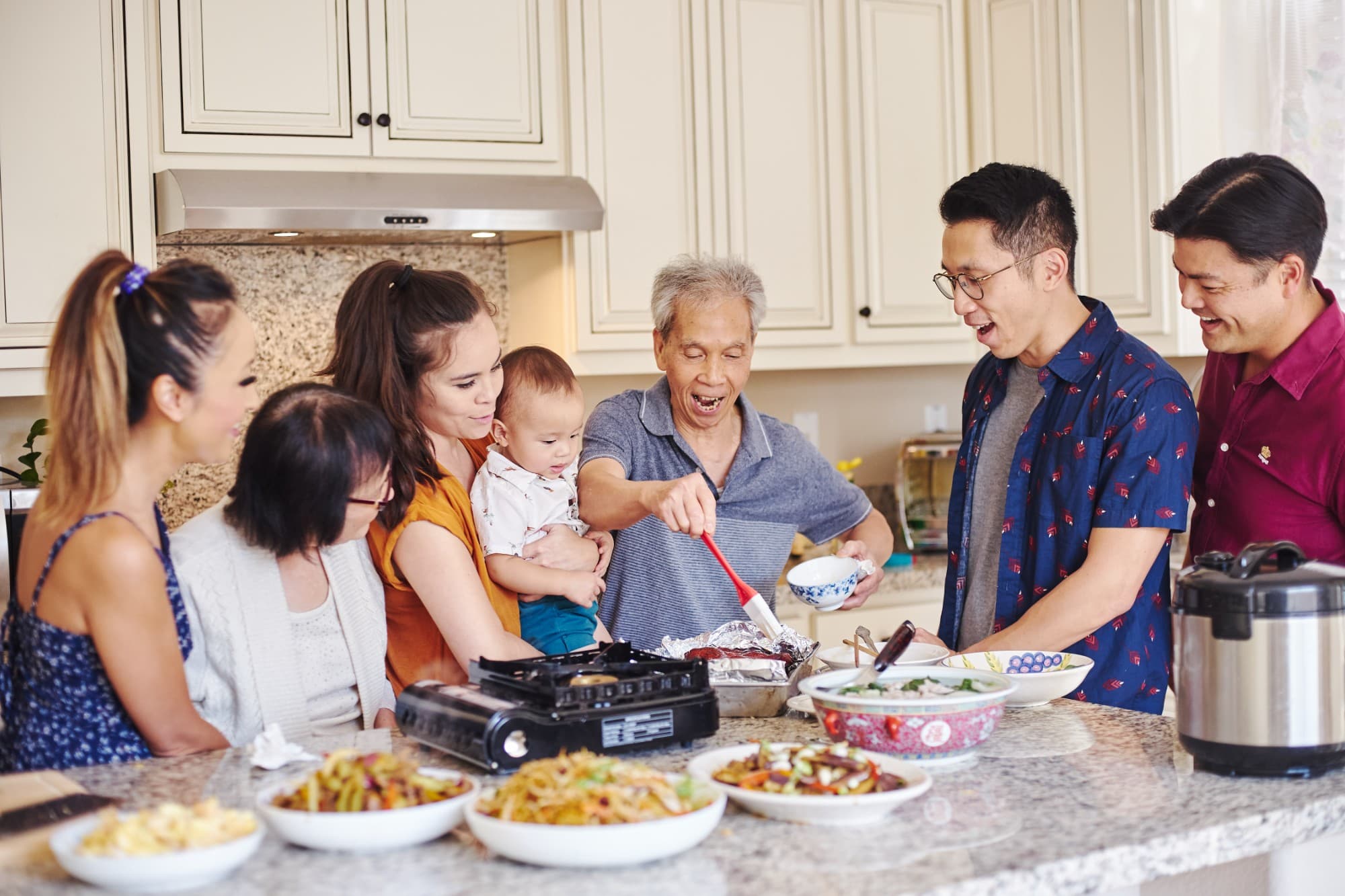
Made with love ❤️
We started Made With Lau to celebrate Cantonese culture and honor the legacy of our wonderful parents, Jenny and Chung Sun Lau.
Our hope is that these recipes and stories help you spread the joy, love, and nostalgia that I felt growing up.