Siu Mai
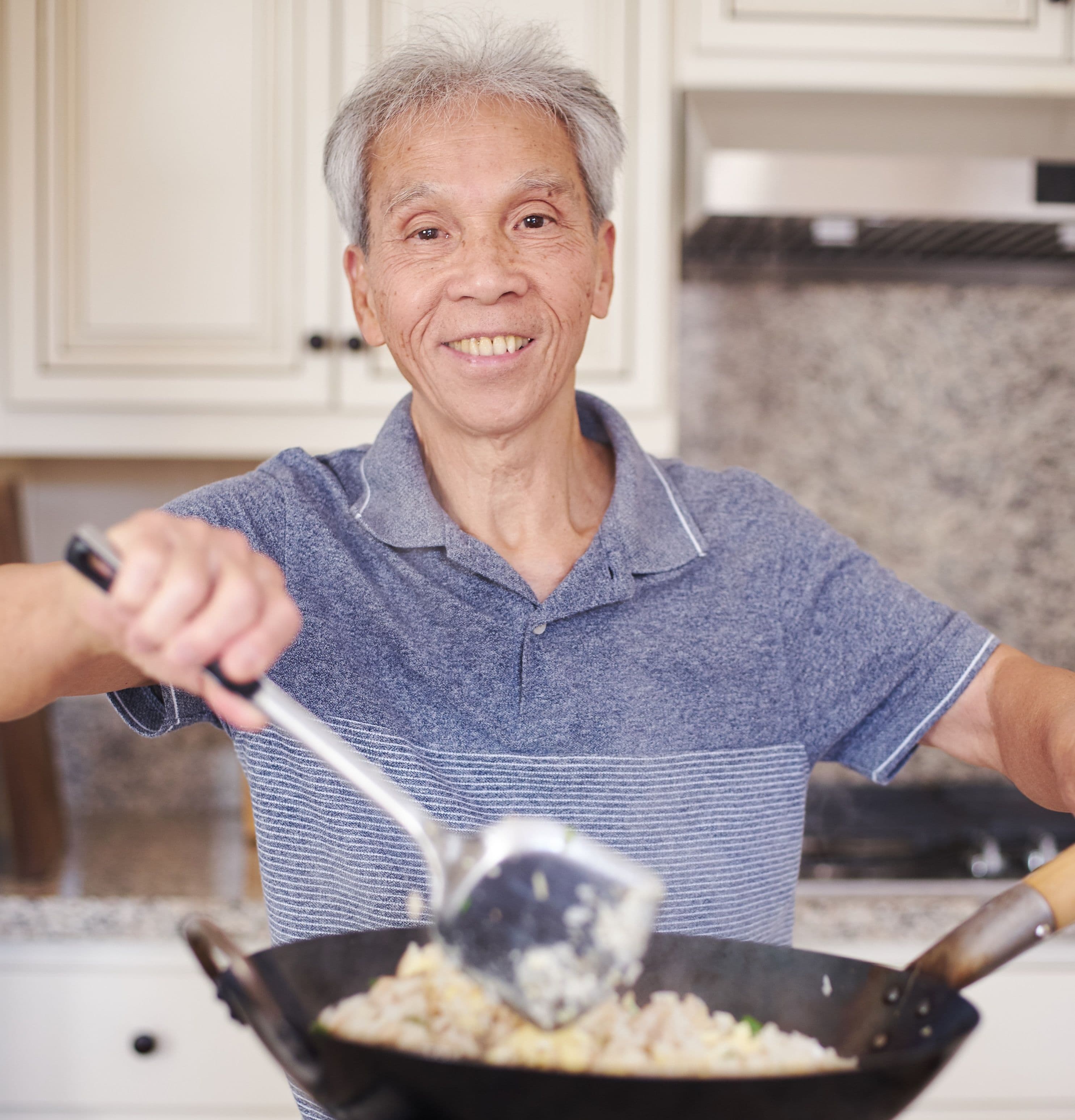
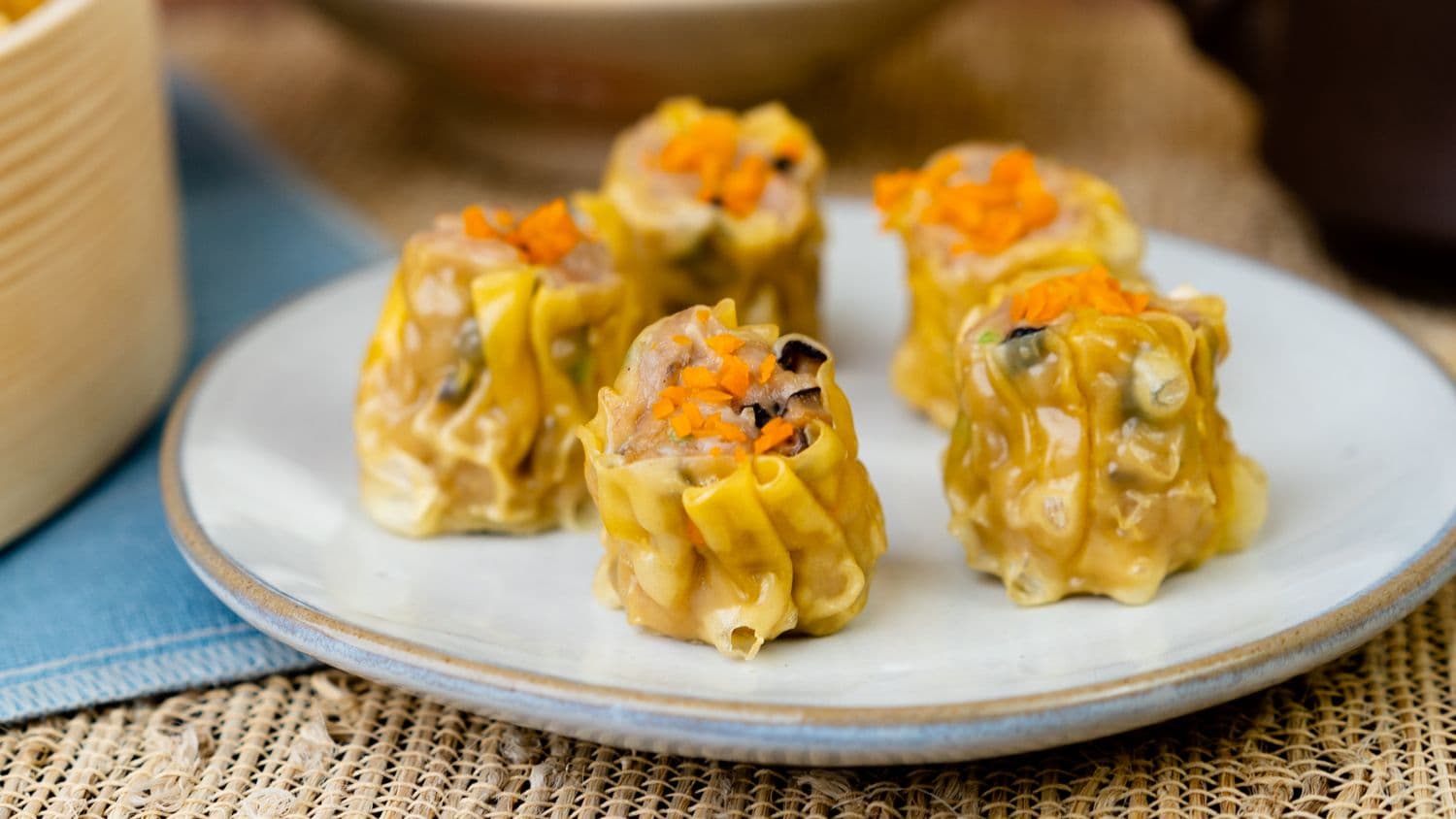
The quintessential dim sum dish, right at home!

Cooking Summary
Ingredients: (detailed list)
- Main Ingredients: pork shoulder butt, shrimp, dried shiitake mushroom, siu mai wrappers, carrot
- Marinade: light soy sauce, oyster sauce, salt, sugar, cornstarch, baking soda, chicken bouillon, water, white pepper, olive oil, sesame oil
Jump To Section
Top 3 Mistakes
- Barely mixing the pork filling:
Mix the pork and sauce for the full interval specified before combining the filling. The recipe treats this as a tenderizing step, not just a quick stir to distribute seasoning.
- Leaving ingredients too wet:
Drain and dry the ingredients as directed before they reach the pan. Extra water changes how they cook, making it harder to get the browning and texture the recipe calls for.
- Starting with cold steam:
Bring the steaming water to the state specified before adding the dish. Starting too early changes the cooking time, so establish the steam before you begin counting minutes.
Overview
Siu mai (燒賣) is one of my all-time favorites!
If you've never had it, it's kind of like a juicy pork meatball held together by a soft and chewy dumpling wrapper. It's extremely popular for good reason!
Originally from Northern China, siu mai (also sometimes written as shu mai or shao mai) spread across China and the rest of the world, taking on many different varieties to adapt to local tastes. You’ve probably tried the extremely popular Cantonese version, as it’s a staple of dim sum restaurants everywhere.
Dim Sum: A touch of heart
The way most of us pronounce "dim sum" in English is very similar to its Cantonese pronunciation, "dím sām," which roughly translates to "a touch of heart."
It's a reference to the delectable snacks that 10th century teahouses would serve to traveling merchants in Guangzhou, one of the largest international ports along the Silk Road.
Even though dim sum is widely considered a classic part of Cantonese cuisine, it evolved from a wide range of influences, largely because Guangzhou was and still is a critical hub for Chinese trade and a melting pot of different cultures.
Preparing siu mai at home
Siu mai are steamed dumplings, so you'll need either a steamer or a steaming setup.
If you have a steamer, fill the bottom of the steamer, or the reservoir, with at least 2 cups of water. Bring the water to a boil, then carefully set the siu mai in the steamer. Cover, and steam.
If you don't have a dedicated steamer or this kind of steamer rack, you can also use a wok/pan with a lid, a wire steamer rack, and a plate.
- Our steamer - https://amzn.to/36i6vah
- Our wok - https://amzn.to/365xFRX
An expert chef’s tip for making juicy, plump siu mai
Do your steamed dumplings always come out soggy? That’s a result of too much moisture in the filling. For plump and juicy (but not soggy!) siu mai, make sure to squeeze out as much liquid as you can from the meat.
Also, if your steaming setup causes water to spill or splash up to the plate holding your food, it'll get wet and soggy, so make sure that the water's not coming from the bottom, too.
On the flip side, dry steamed dumpling wrappers are a result of air exposure. It'll always start to dry out after you remove it from the steamer, so you can just leave it in the steamer and keep it in the humid air until you're ready to eat.
Ingredients
Why this recipe
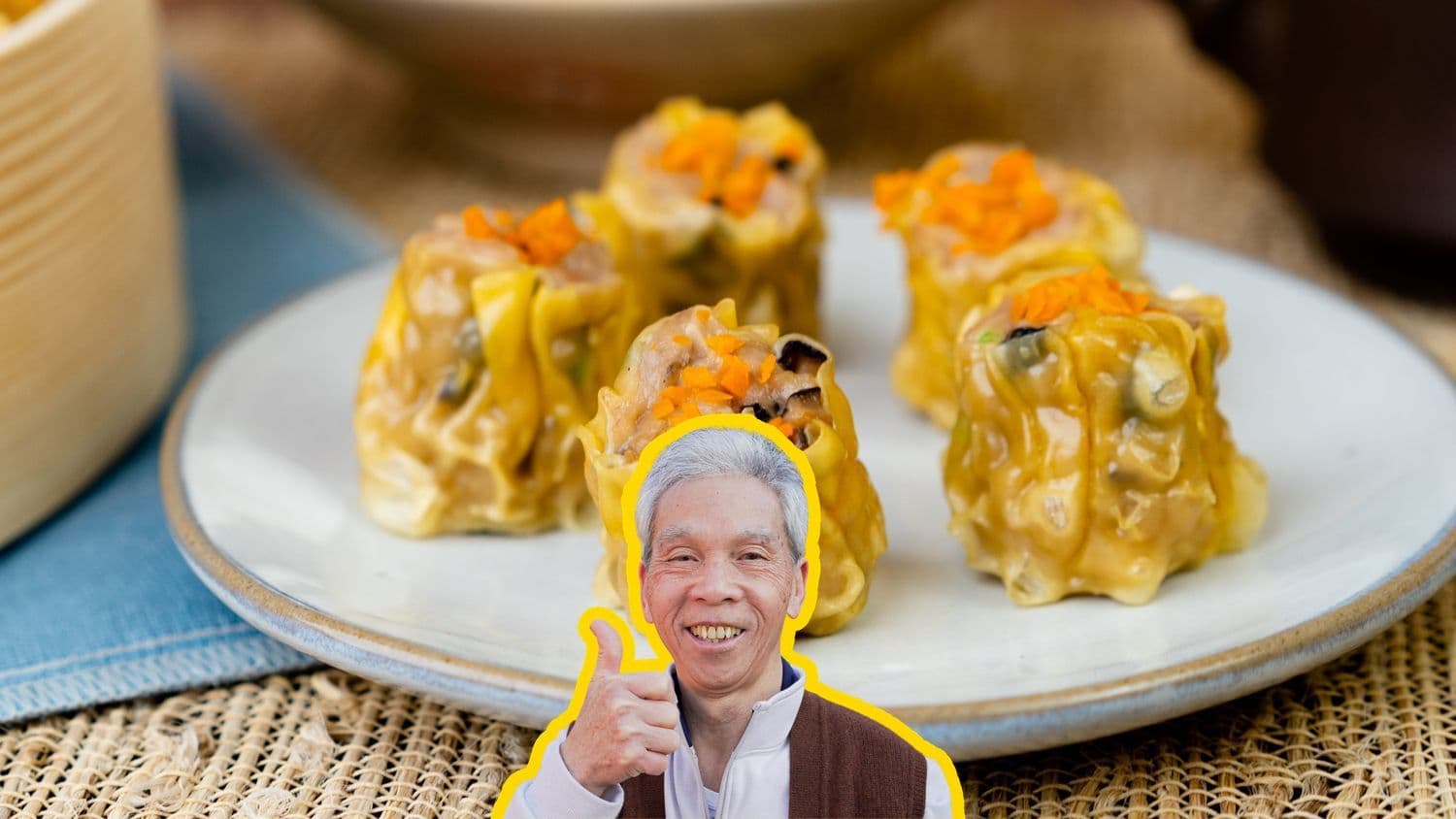
Most siu mai recipes online are tested only a handful of times. My dad used to make this dish multiple times a day, every day, for 60+ years and can make this in his sleep.
I know you'll love it as much as our community does! This recipe has over 2.5M views, 40.6K likes on YouTube.
The best wrappers for siu mai
Most Chinese supermarkets will have siu mai wrappers, which are yellow and round. My dad doesn't look for a particular brand, but in our video, we used "Kim Hong Noodle Co, Siu Mai Skin."
My dad doesn't really recommend making the siu mai wrapper from scratch, as it's pretty difficult to get homemade wrappers both thin and sturdy enough. Machine-rolled dumpling dough is a bit more dependable in this case!
If you're using wonton wrappers (made with the same ingredients, but cut into squares), try to get the thinnest ones possible and cut off the corners (or flip a cup upside down to trace and cut the wrapper into a circle).
On selecting meats
Pick fatty cuts of pork, like pork shoulder butt or pork belly. Lean cuts such as pork loin and pork chop will turn out too dry and tough.
My dad said peeled, deveined shrimp is not only more convenient but is actually preferred for getting the desired chewy texture in this siu mai recipe.
Why do we rinse pork in water?
When dim sum restaurants serve pork (i.e. siu mai, spare ribs), their traditionally preferred look is much lighter in color vs the smoky, charred, dark look of a BBQ rib.
This is mostly an aesthetic choice, made to entice customers to order from the carts of delicious foods.
Rinsing also helps wash away some of the taste of blood.
Be aware that the longer you rinse, you might be reducing the amount of available nutrients in your food (like iron).
Why is pork red?
A common misconception is that the red juice that leaks out from meat is blood, but it’s not. Most of the time, the blood has already been drained by the time you buy it, and the red juice is actually a result of freezing the meat during transport.
When you freeze meat, which is about 75 percent water, the water inside the muscles expands into ice crystals which rupture the muscle cells, and when the ice thaws, it carries some myoglobin with it.
Myoglobin is an iron-rich protein that turns bright red when it’s exposed to oxygen. The purpose of myoglobin is to store extra oxygen in muscles that are used for extended periods of time.
Interestingly enough, this is why not all meats are red or dark. Beef and pork meat are red because cows and pigs stand and roam almost all day. In contrast, fish meat is mostly white, with some red meat around the fins and tail, because fish float in water and aren’t constantly using the bulk of their muscles.
Sources:
Finding Asian ingredients
Some of these ingredients can be hard to find in a typical grocery store.
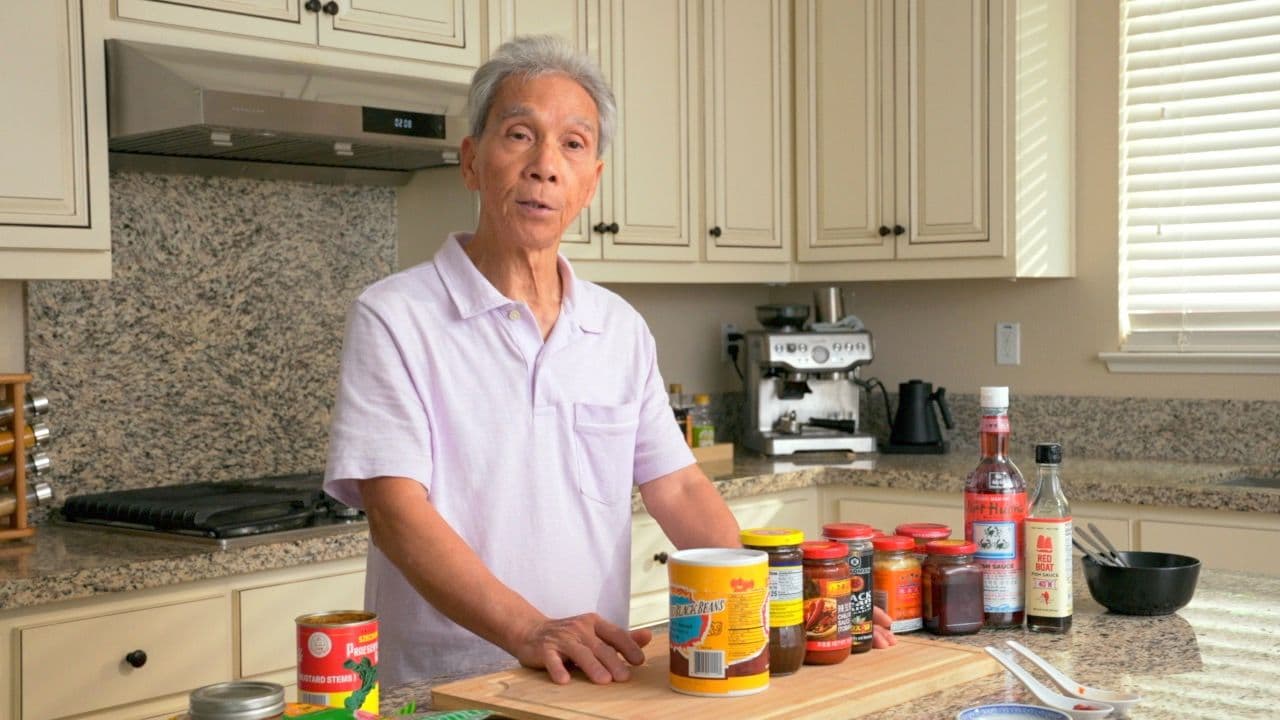
If you don't live near an Asian market, most or all of what my dad uses in this recipe can be found on Amazon:
- Kikkoman Sesame Oil - https://geni.us/kkmsesameoil
- Kikkoman Soy Sauce - https://geni.us/kkmsoysauce
- Kikkoman Oyster Sauce - https://geni.us/kkmoystersauce
- Dried Shiitake Mushrooms (soak for 15 to 20 minutes in warm water before slicing)
These links are affiliate links, which means that if you use our links to purchase these ingredients, Amazon pays my family a small amount for the sale - at no extra cost to you. If you use these links, we really appreciate the support!
How to make Siu Mai
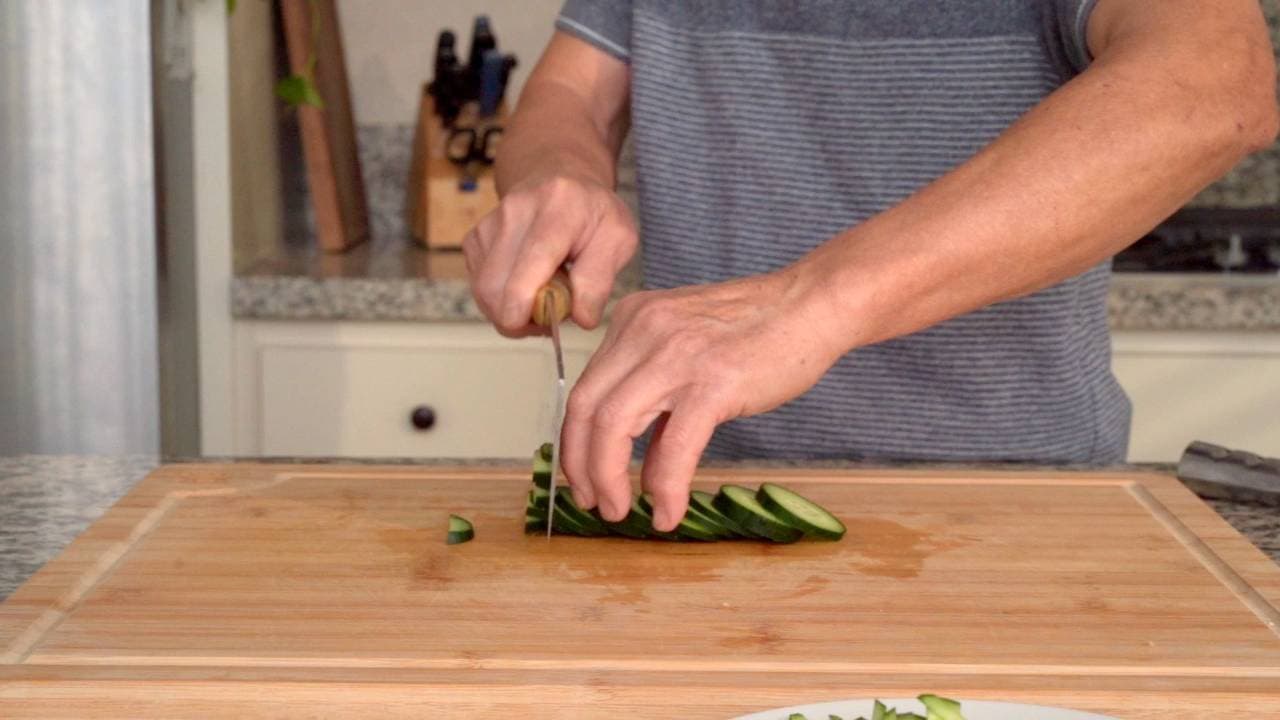
We'll be mincing and preparing:
Pork shoulder butt: (8 oz)
Cut into slices, strips, then into fine bits. Soak in water and massage the pork for 1 to 2 minutes. Let it sit for 10 to 15 minutes. Afterward, drain in a colander and squeeze out as much water as you can.
Shrimp: (4 oz)
Wrap in a paper towel and squeeze out as much moisture as you can. Mince into fine bits.
Dried shiitake mushrooms (4 pieces):
Reconstitute in hot water for 10 to 15 minutes. Then, squeeze out as much water as you can. Slice the mushroom in half, lengthwise. Cut into strips, then mince into fine bits.
Carrot (0.50 oz):
Cut into slices, strips, then very fine bits.
Chef’s Tip: Similar to our Steamed Spare Rib recipe, we want to soak the pork in water to remove some of the redness and pork-y taste by getting rid of some of the myoglobin.
In general, with our meats, to avoid a soggy siu mai, we want to extract as much water as we can before we wrap them.
In a bowl, we'll mix:
- light soy sauce (1 tbsp)
- oyster sauce (2 tbsp)
- salt (0.50 tsp)
- sugar (2 tsp)
- cornstarch (2 tbsp)
- baking soda (0.50 tsp)
- chicken bouillon (1 tsp)
- water (2 tbsp)
- white pepper (0.50 tsp)
We'll be creating our siu mai fillings in a few steps:
- Mix the sauce and pork in a bowl for about 2 to 3 minutes. This is important in helping the pork become more tender.
- Let the pork absorb the sauce for about 10 minutes.
- Then, add in the minced shrimp and mushrooms, along with olive oil (1 tsp) and sesame oil (1 tbsp). Mix again for another 1 to 2 minutes.
- Cover with plastic wrap, and let everything marinate in the refrigerator for 4 to 8 hours.
This is a lot easier to conceptualize by watching our video (and also much easier with practice), but here are the steps to stuff and fold the dumplings:
- Lay out a wrapper in your palm (my dad prefers his left/non-dominant hand).
- Scoop about 1 oz of meat filling onto the wrapper, and loosely flatten it.
- Make a circle by pressing your index finger and thumb together, and place the wrapper over the circle. Make a funnel-like shape with your other fingers.
- With the opposite end of a spoon, push into the center of the wrapper, into the hole you made with your fingers.
- Compress the meat into the dumpling wrapper by pressing with your spoon, squeezing with your fingers on all sides. Rotate the dumpling with your fingers a few times.
- Squeeze the bottom half of the dumpling to force some of the meat to rise, and flatten that with your spoon.
- If there's not enough meat, you can add some more and repeat.
Freezing large batches for later
If you are planning on making a bunch of siu mai at once, you can freeze them to steam for later.
- Lay out the siu mai on a tray, making sure that they're not touching one another.
- Put them in the freezer for 1 tp 2 hours.
- This should dry them enough so that you can place all of them in an airtight ziptop bag.
Definitely DO NOT steam them and then freeze them.
You can freeze them for at least a month. When you're looking to cook them, just let them thaw completely before steaming.
Fill a steamer with about 2 cups of water. Lay out the siu mai on a steamer rack (with holes on the tray) so they're not touching.
Bring the water to a boil, then carefully set the siu mai in the steamer. Cover, and steam for 10 minutes.
If you don't have a dedicated steamer or this kind of steamer rack, you can also use a wok/pan with a lid, a wire steamer rack, and a plate. With this setup, steam for about 12 minutes.
Once they're done, carefully lift the steamer rack out (my dad used chopsticks). Garnish with the minced carrots, and you're ready to eat!
It's best if you eat it immediately at peak moistness and juiciness :)
Frequently Asked Questions
How long do you steam siu mai for?
Generally, our siu mai finish steaming in 10 minutes.
If your set-up creates less steam, your siu mai are colder, or your siu mai are bigger, it may take longer.
If your set-up is hotter, or your siu mai are smaller, they may cook faster.
How do you say siu mai?
Siu starts with the s sound, and then the "ew" vowel as in "few". Mai is like the name "Mike" without the k!
Pairs well with
View all →
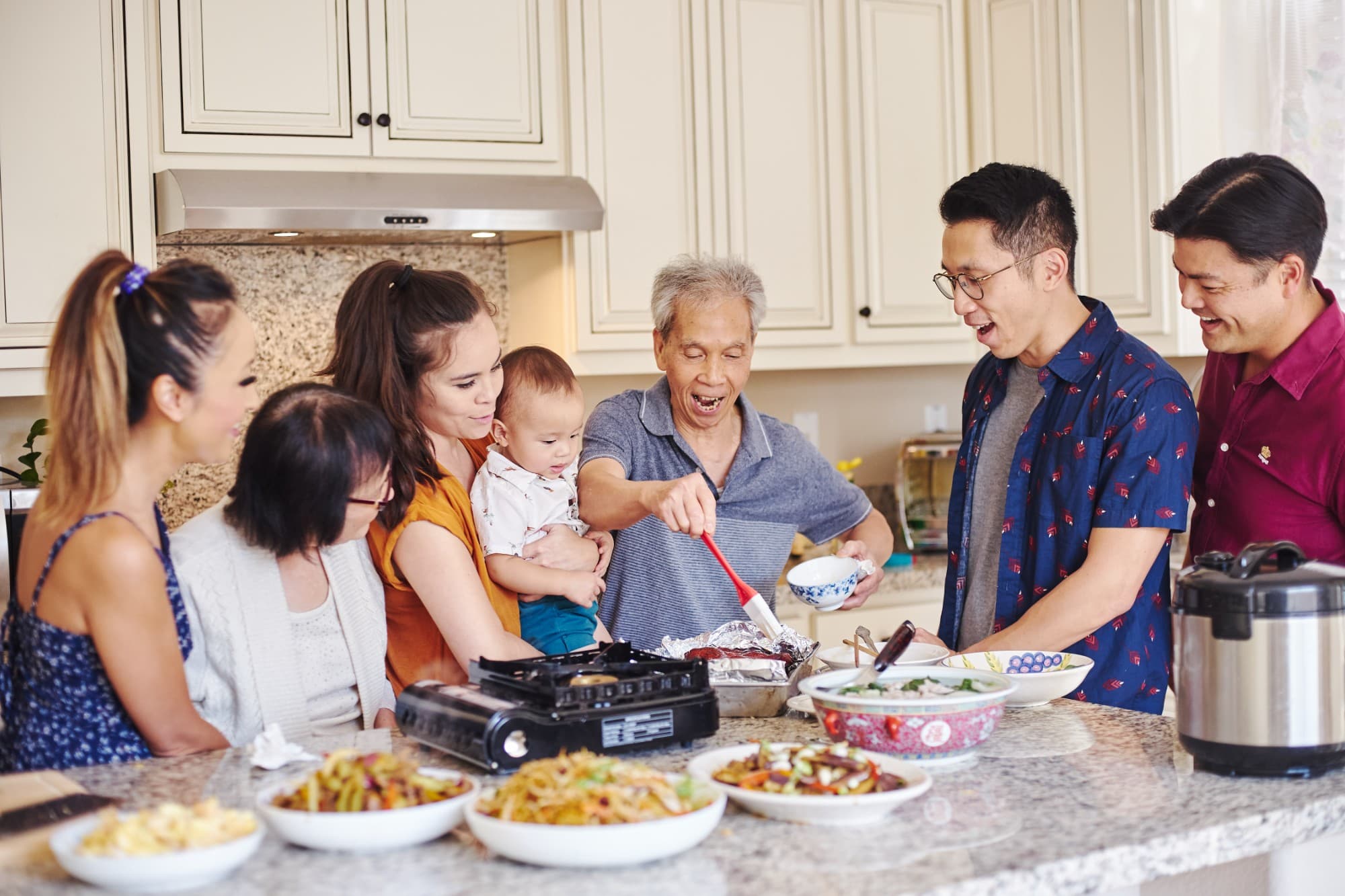
Made with love ❤️
We started Made With Lau to celebrate Cantonese culture and honor the legacy of our wonderful parents, Jenny and Chung Sun Lau.
Our hope is that these recipes and stories help you spread the joy, love, and nostalgia that I felt growing up.