Shrimp Chow Fun
The Chinese chef's secrets to creating this classic Cantonese dish...

Cooking Summary
Ingredients: (detailed list)
- fresh rice noodle, shrimp, bean sprouts, onion, cornstarch, green onion, light soy sauce, chicken bouillon, sesame oil, vegetable oil
Jump To Section
Top 3 Mistakes
- Adding too much sliced onion:
Keep the onion quantity in balance with the noodles. Extra onions release extra water, which can turn the chow fun wet and soggy instead of the texture the recipe is aiming for.
- Adding bean sprouts too early:
Save the bean sprouts for the final part of cooking. They only need a brief time in the wok to keep their crunch, so adding them with the noodles can leave them overly soft.
- Starting with a cool pan:
Heat the wok or pan as directed before adding the ingredients. Starting before it is ready changes the initial cooking stage and makes the intended browning harder to achieve.
Overview
Chow Fun is one of the most well-known Chinese dishes around the world.
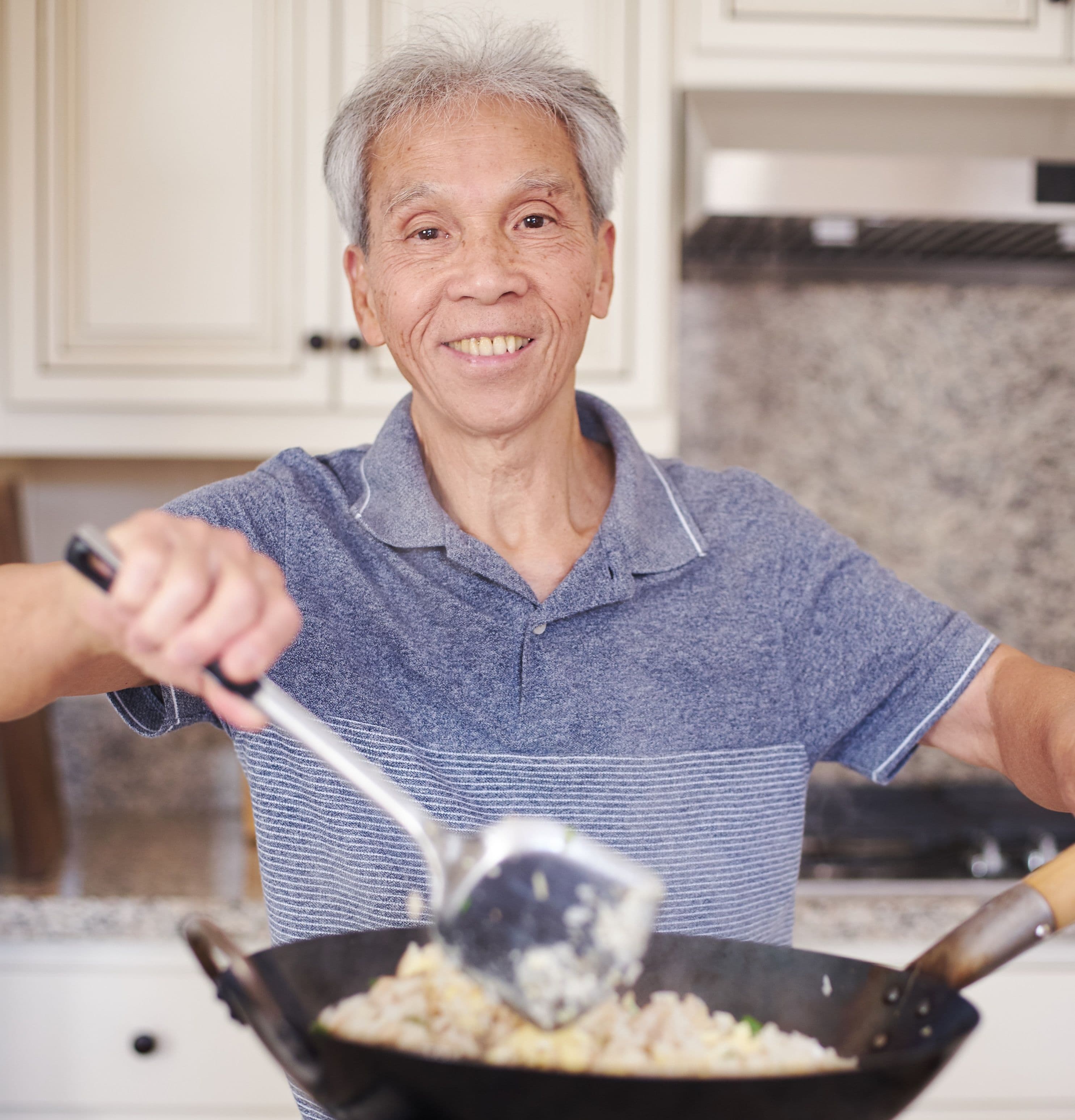
It's a staple menu item for most Chinese restaurants outside of China, and my dad has literally made this dish over 100000 times over the course of his 50 years as a chef.
Sometimes when I order Chow Fun at restaurants, I feel a tinge of regret for eating what can be a pretty greasy (but delicious) dish of noodles.
My dad's at-home version of Chow Fun is a healthier alternative to Chinese take-out, that's just as tasty!
The Rise of Chow Fun
Chow Fun is also known as Chow Ho Fun (cháau hòh fán, 也称为). Literally, it means stir-fried river noodles, named after the river town of Shahe (Sā hòh síh, 沙河市) in Guangzhou where its distinctive style of flat rice noodles were first created.
Throughout 1940-1970, as more Chinese people started coming to America, the great majority of immigrants were from Guangdong. Naturally, the richness of Cantonese food, tradition, and culture traveled with them.
Even as diverse and geographically expansive as China is, up until the 60's and 70's, Chinese food in America was predominantly Cantonese cuisine. That's why today, Cantonese dishes like Chow Fun and Chow Mein are still among the most popular dishes across Chinese restaurants in America.
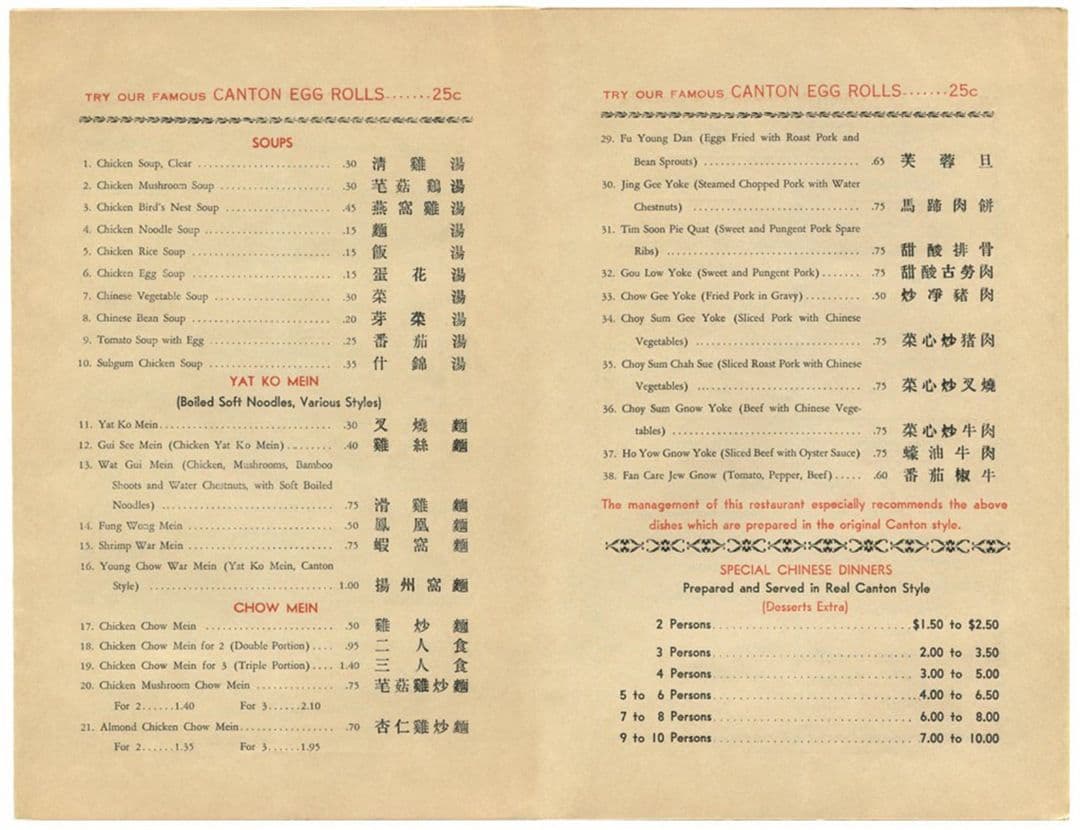
1960s - Chinese American restaurant menu
Eventually, as Chinese immigrants from other regions made their way to the US, Chinese food in America became more diverse.
Fun fact: According to the Chinese American Restaurant Association, there are over 40000 Chinese restaurants in America. This is more than the amount of locations for McDonald's, Burger King, Wendy's, and KFC combined.
Ingredients
Why this recipe
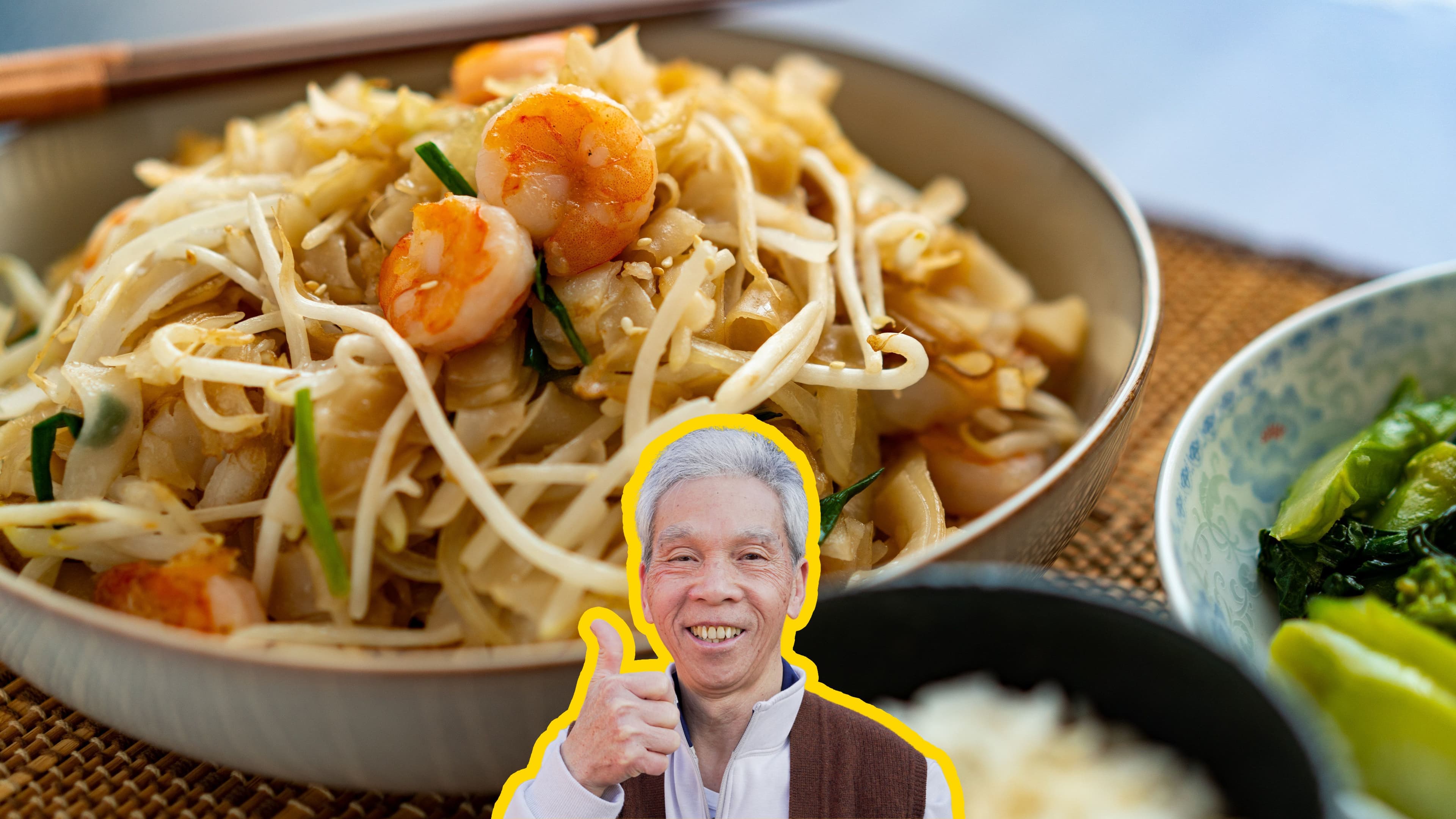
Most shrimp chow fun recipes online are tested only a handful of times. My dad used to make this dish multiple times a day, every day, for 60+ years and can make this in his sleep.
I know you'll love it as much as our community does! This recipe has over 263.5K views, 5.7K likes on YouTube.
Fresh Rice Noodles
Fresh flat-rice noodles (hòh fán, 河粉) are the cornerstone of this dish.
Generally speaking, you can usually only find these at an Asian supermarket, made fresh each day. These typically aren't refrigerated, because refrigerated noodles are much more brittle and less tender.
If you're planning on making this dish, it's ideal to buy the noodles fresh and cook Chow Fun the same day.
If you're not able to cook Chow Fun the same day, check out the video above.
My parents go into great depth about selecting noodles, properly storing them overnight, and prepping them for cooking after refrigeration.
Finding Asian Ingredients
Some of these ingredients are hard to find in a typical grocery store.
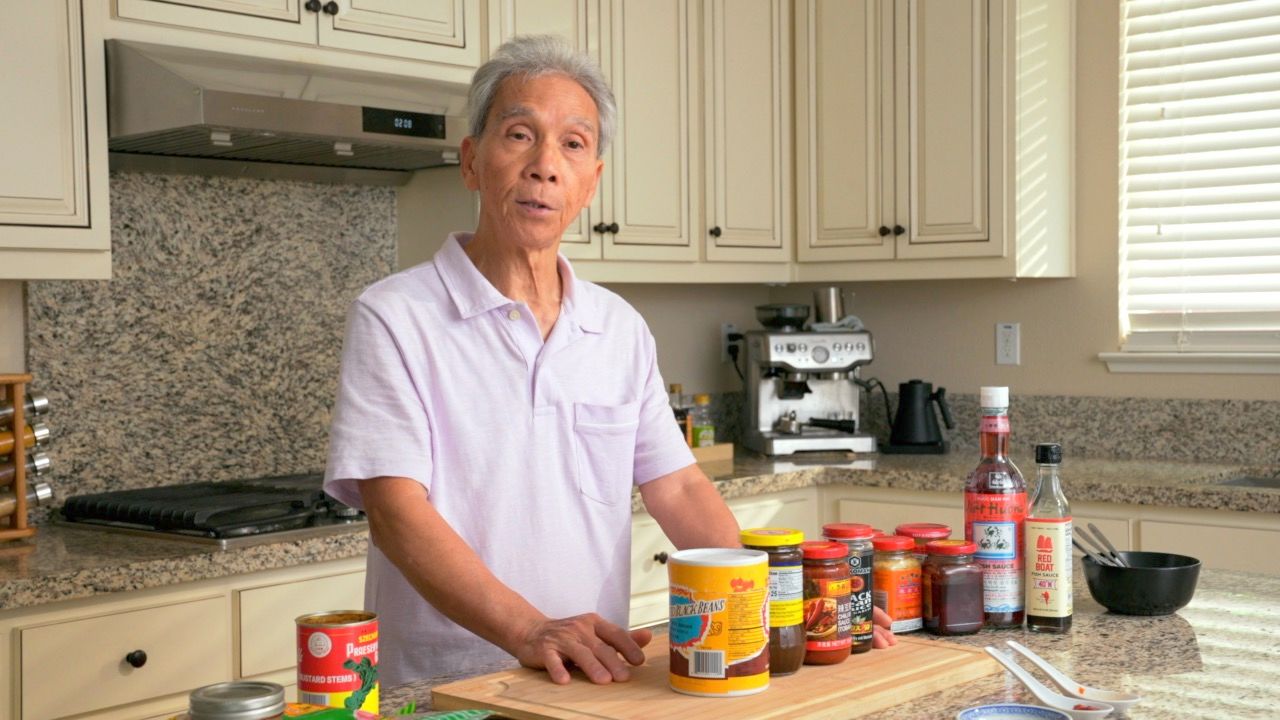
If you don't live near an Asian market, most of what my dad uses can be found on Amazon:
These links are affiliate links, which means that if you use our links to purchase these ingredients, Amazon pays my family a small amount for the sale - at no extra cost to you. If you use these links, we really appreciate the support!
Light vs Dark
Most of us know and recognize Chow Fun noodles by their rich, mouthwatering dark brown color. This color is typically achieved through dark soy sauce.
When cooking Shrimp Chow Fun specifically, most Cantonese chefs will opt to use light soy sauce. The lighter color of the noodles work in harmony with highlighting the beauty of the shrimp's orange color.
For Beef Chow Fun, you would use dark soy sauce.
Switching Up Vegetables
Stick to vegetables with low water content. Vegetables like bok choy, choy sum, spinach are poor choices for Chow Fun, because they release too much water while cooking.
Achieving Wok Hei
Wok Hei (鑊氣) is an important principle in the art of Chinese and Cantonese cooking.
It has many translations and meanings depending on who you ask, but my favorite is "The Breath of the Wok", where the wok imbues its energy into the stir fry to create an unforgettable meal.
The Cantonese word “hei 氣” is more commonly known by its Mandarin pronunciation, “chi" or "qi", the vital life force that runs through our body.
The science behind Wok Hei centers around the reactions that occur between sugars, oils, extreme heat, and rapid evaporation, which creates a fleeting, prized smoky essence that only lasts for a few minutes after cooking.
Although not impossible, it can be harder to achieve Wok Hei at home, since our stoves generally don't pack as much power as a commercial kitchen or the roaring flames that are a sight to see in Asian street food markets.
Achieving Wok Hei is an art and skillset that takes ample dedication to master. A great place to start is by reading Grace Young's award-winning book "The Breath of a Wok", which chronicles the rich legacy of the Chinese wok as told by artisans, chefs, and experts alike.
(We're not affiliated with Grace Young or "Breath of a Wok", just thought that it'd be a great resource for you to have!)
How to make Shrimp Chow Fun
Prepare shrimp
For this recipe, my dad bought unpeeled shrimp (5 oz), so the first step is to peel them. Already-peeled shrimp work just fine.
You don't want shrimp that are too big or too small - 41/50 is perfect. Any bigger, and they'll be harder to cook to perfection.
For 4 servings, my dad opted to use about 15 to 16 shrimp. Feel free to use as much or as little shrimp as you want though!
To help the shrimp stay tender and juicy, add cornstarch (1 tsp) and the shrimp to a bowl, and mix together with your hands.
(Usually for Chinese recipes, we add cornstarch AND water before mixing. Our shrimp are already wet, so we don't need to here.)
Cut onions and green onions
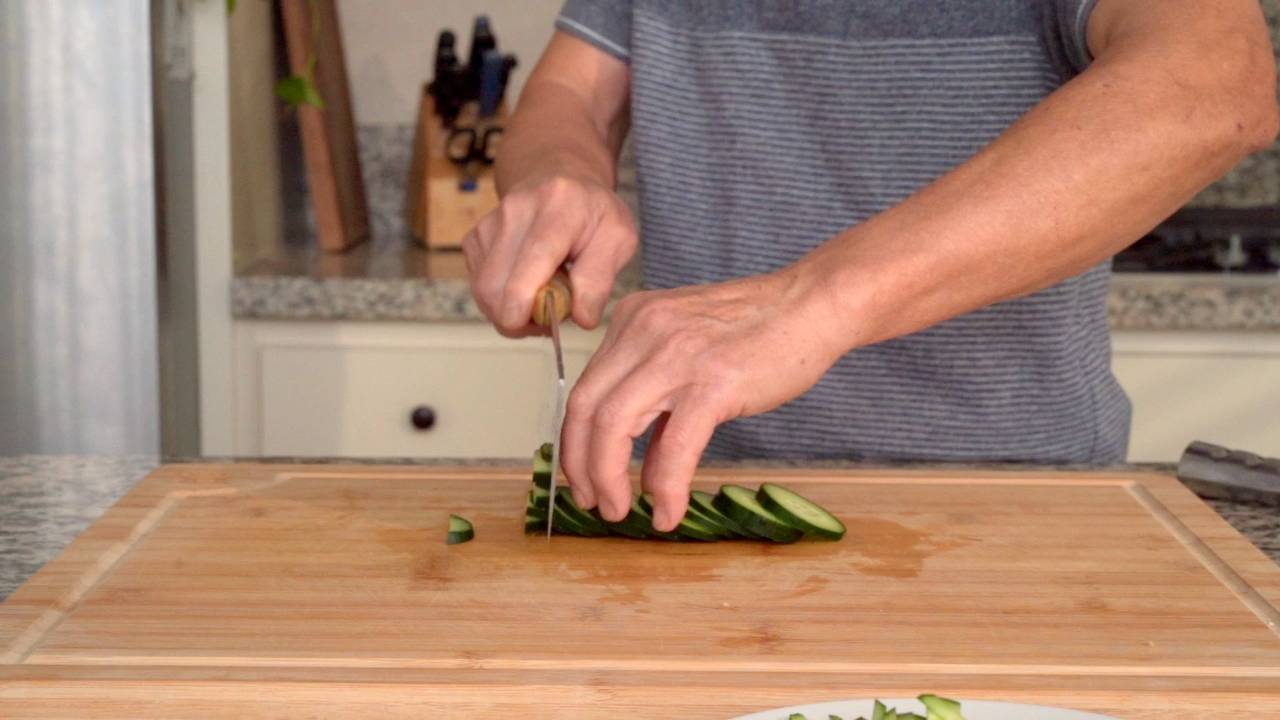
Chop the onions (3 oz) into thin slices.
Don't go overboard on the onions. If you do, the onions will release too much water, resulting in a sad, wet, and soggy Chow Fun.
No one likes sad, wet, soggy Chow Fun :(
Cut the green onion (0.50 oz) into 1.5-inch pieces.
Spread and massage rice noodles
Your fresh rice noodles (1 lb) likely came in a tight, compressed package.
For maximum chewy goodness, you'll need to spread out the noodles on a cutting board. Massage and separate the noodles for about 60 - 90 seconds.
The goal is to avoid thick clumps of noodles.
As we mentioned earlier, if you're not able to cook the fresh rice noodles the very same day, my dad describes two ways to optimally store them overnight (spread the noodles out before refrigerating, and using a microwave.)
Heat the wok
We need to get our wok as hot as possible before starting to cook. Set the stove to its highest setting, wait for about 3 to 5 minutes. The wok should begin to smoke, and you should be able to feel the heat by holding your palm close to the wok.
Then add vegetable oil (1 tbsp).
In traditional Chinese restaurants, the woks are extremely hot, which allows the masterful chefs to achieve Wok Hei easily. Watching them cook Chow Fun is almost like a performance of dancing flames and tidal waves of noodles being tossed around.
Cook shrimp, remove when done
Once the wok is hot, add the shrimp and cook for about 60 to 90 seconds in total. Flip the shrimp halfway through.
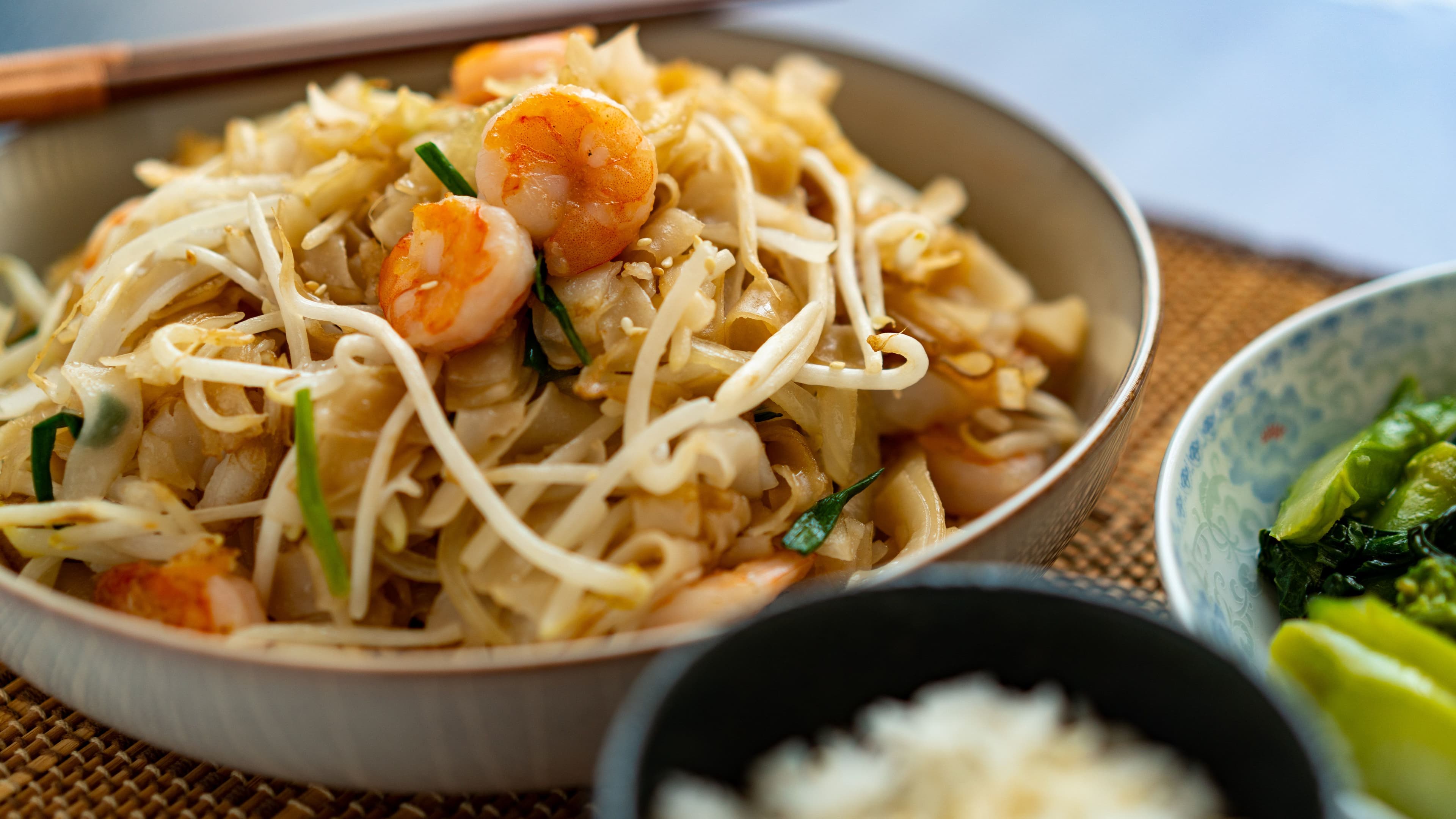
You should hear a beautiful sizzling sound as the shrimp start to turn a crisp red / orange color.
Once the shrimp is orange, you're done. Remove the shrimp from the wok and place into a bowl.
Cook onions, noodles
Add more oil to the wok, as well as the chopped onions. Cook the onions for about 20-30 seconds, until their fragrant aromas are released.
Next, add in your fresh rice noodles. From this point forward, it should be about 9 to 10 minutes until this Chow Fun is completely ready to eat.
You don't need to stir the noodles too rapidly. Using chopsticks, gently toss the noodles around the wok slowly, and occasionally flip the noodles over. The noodles should start to turn slightly golden yellow.
In traditional Chinese restaurants, the chefs constantly toss and flip the noodles with the entire wok. It works in this environment because the heat is much higher and the woks much thinner - the whole dish takes only 3 to 4 minutes to prepare.
Add remaining ingredients
After about 4 minutes of cooking the noodles, gradually add in the remaining ingredients: light soy sauce (2 tbsp), shrimp, green onion, chicken bouillon (1 tsp), and bean sprouts. Continue gently stirring and flipping the noodles. Add sesame oil to taste.
IMPORTANT: Make sure to wait to add the bean sprouts (6 oz) until the last 2 to 3 minutes of cook time, so they stay optimally crunchy and crispy.
Plate
You're done! Call your loved ones over to eat as you plate the noodles into your favorite dish.
Pairs well with
View all →
Made with love ❤️
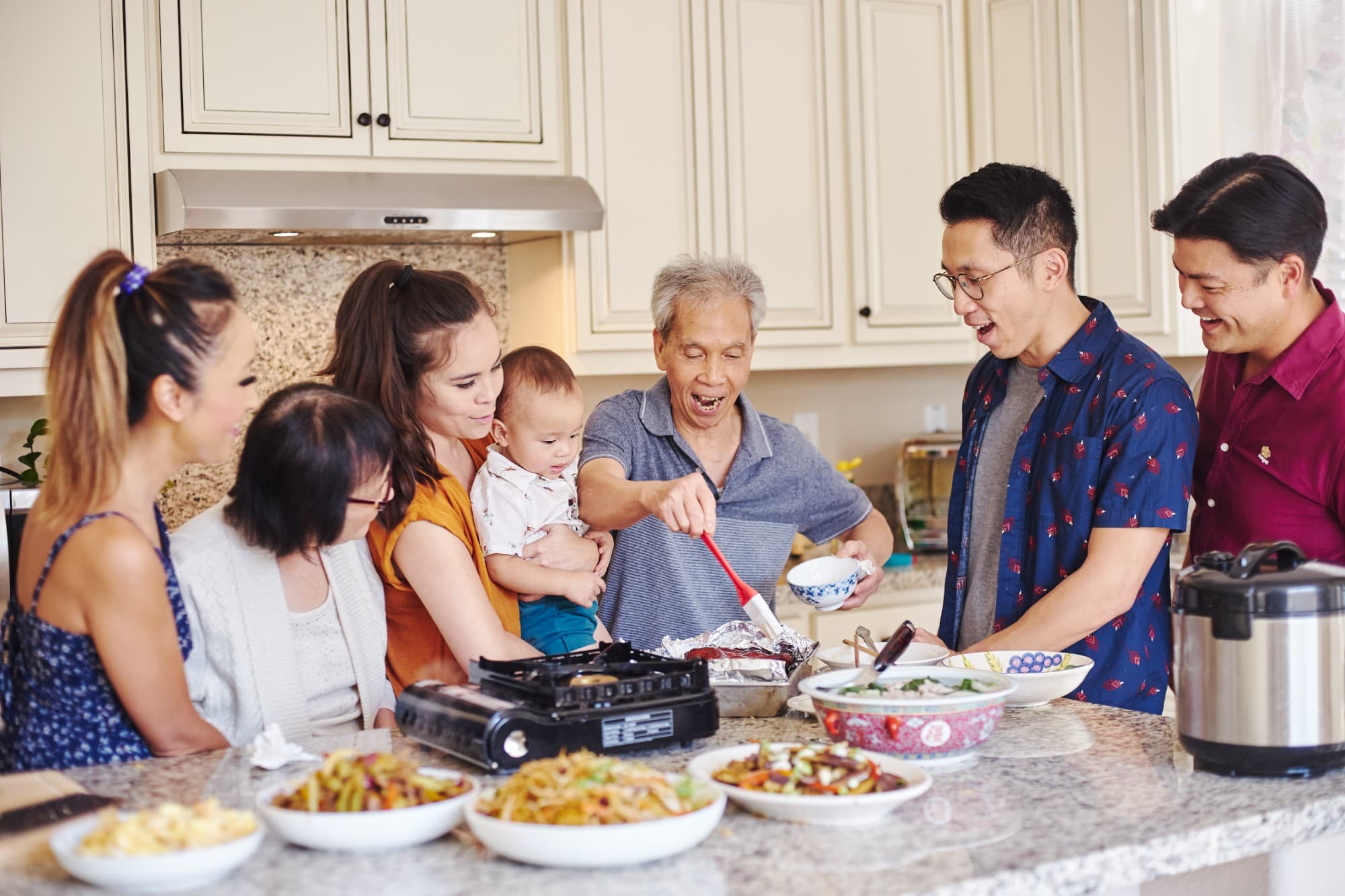
We started Made With Lau to celebrate Cantonese culture and honor the legacy of our wonderful parents, Jenny and Chung Sun Lau.
Our hope is that these recipes and stories help you spread the joy, love, and nostalgia that I felt growing up.
