Lo Mai Gai
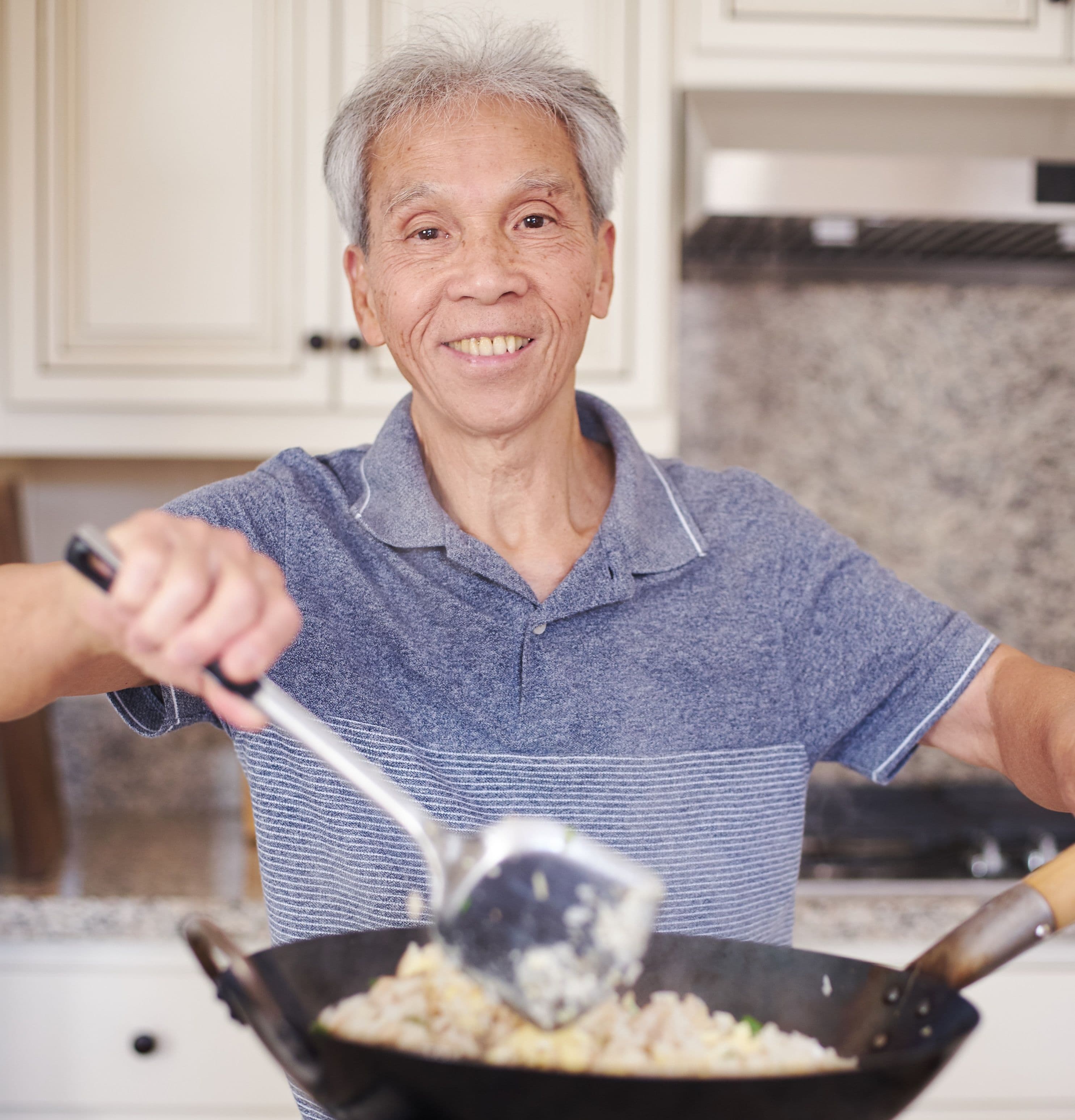
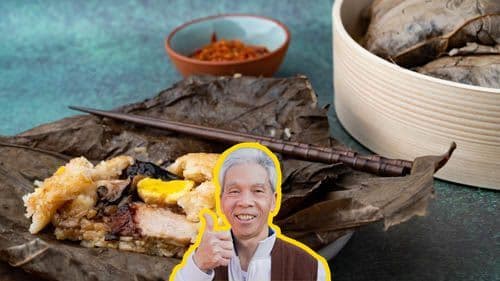
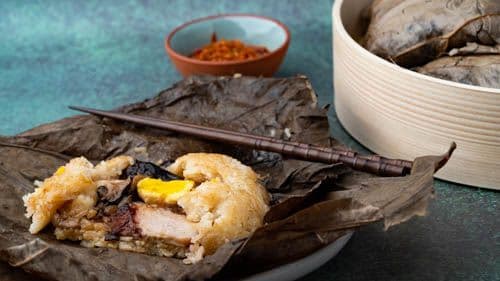
Learn how to make your own Cantonese-style Lo Mai Gai (糯米雞) at home!

Cooking Summary
Ingredients: (detailed list)
- Main Ingredients: glutinous rice, water, lotus leaves, salted egg, Chinese sausage, chicken drumstick meat, char siu, dried shiitake mushrooms, red shallot
- Chicken Seasoning: cornstarch, water
- Filling Seasoning: Kikkoman® Oyster Sauce, Kikkoman® Soy Sauce, Kikkoman® Tamari Soy Sauce, chicken bouillon, sugar, salt, cornstarch, water, Kikkoman® Sesame Oil
- Glutinous Rice Flavoring: water, Kikkoman® Oyster Sauce, Kikkoman® Soy Sauce, olive oil
Steps:
Jump To Section
Overview
Lo mai gai is a classic Cantonese dish which translates to "sticky rice chicken". Legend has it that it was first created in the humble night markets of Guangzhou.
Originally, street vendors used to steam this with a bowl, and then introduced lotus leaves as a more convenient to-go option. Not to be confused by joong/zongzi, which traditionally uses bamboo leaves and a variety of other fillings, lo mai gai is characterized by its use of glutinous rice and chicken steamed in lotus leaves.
Today, it's one of the most popular items at dim sum restaurants around the world.
Thank you, Kikkoman!
This recipe is brought to you in part by Kikkoman. My dad has been using Kikkoman flavors throughout his 50 year career as a chef, and it's a privilege to get to partner with them on such an iconic recipe, lo mai gai!
- Kikkoman products are a major flavor enhancer and bring out the “umami” taste, and helps balance and round out flavors
- Kikkoman® Less Sodium Soy Sauce is perfect for home cooks who are looking to cut down on their sodium levels, without sacrificing flavor (if applicable)
- Kikkoman offers wide range of Gluten-Free Asian sauces, including Gluten-Free Oyster Sauce and Gluten-Free Hoisin Sauce
- The KikkomanUSA.com Chinese site offers easy Asian recipes that home cooks can enjoy any night of the week
You can learn more about Kikkoman and follow them on social media here:
- Website: https://www.KikkomanUSA.com
- Facebook: https://www.facebook.com/KikkomanChineseUSA (Kikkoman 萬字在美)
- Instagram: https://www.instagram.com/kikkomanusa_chinese/ (Kikkoman 萬字在美)
Why this recipe
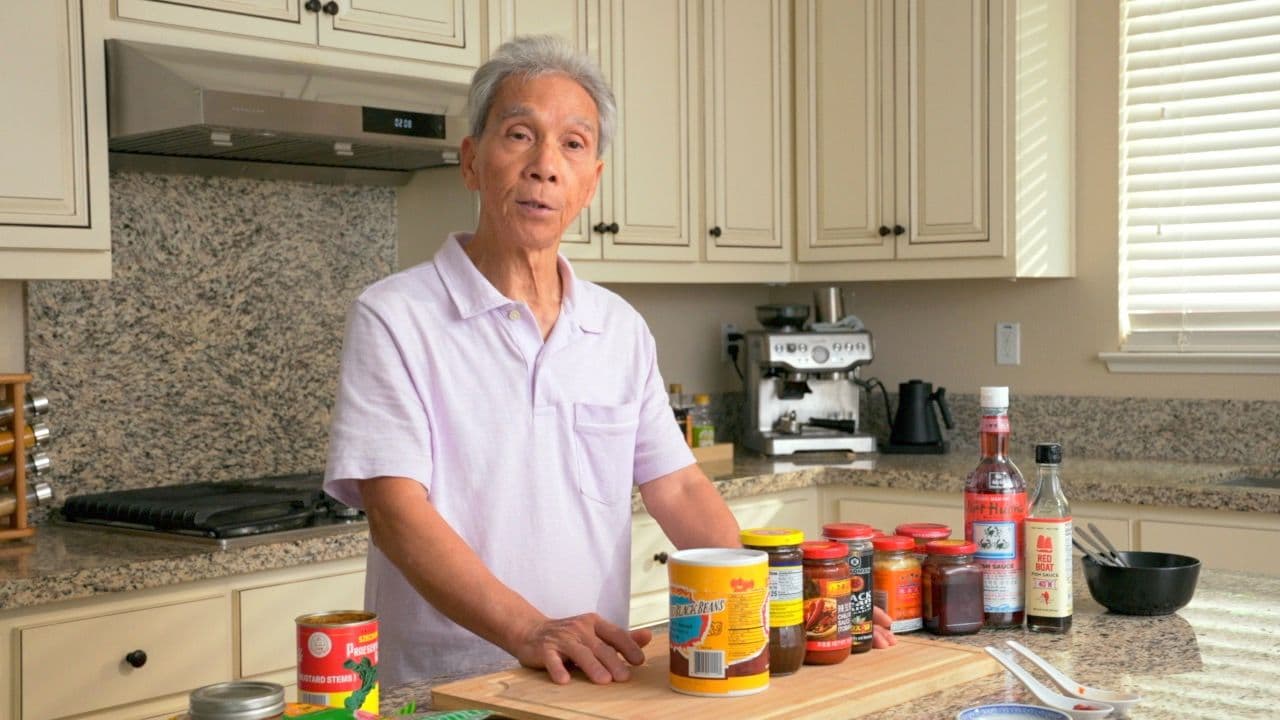
Most lo mai gai recipes online are tested only a handful of times. My dad used to make this dish multiple times a day, every day, for 60+ years and can make this in his sleep.
I know you'll love it as much as our community does! This recipe has over 587.7K views, 10.1K likes on YouTube.
Ingredients
Lotus Leaves
Also known as nelumbo nucifera or "hòh yihp" in Cantonese, the lotus is the national flower of Vietnam and India, with a ton of spiritual and cultural significance. In Hinduism and Buddhism, it's a sacred symbol of the path to spiritual awakening, often depicted as a pedestal for gods and deities.
In Vietnamese and Chinese culture, the lotus is a symbol of purity, associated with the saying "to grow out of the mud unsullied" referring to how the lotus grows in very dirty soil but blossoms beautifully.
It's fitting as a symbol of purity because the lotus is actually a self-cleaning plant due to its superhydrophobic surfaces. Water drops onto them, beads up, and rolls of the plant while picking up small particles of dirt. As an ingredient, the lotus plant is extremely versatile as a container, a flavoring agent, medicine, candy, tea, flour, and much more.
You can buy some online here:
Tamari
Here, we're using tamari, which is interchangeable with dark soy sauce. They both have a subtle sweetness and are often used to give food a slightly darker color.
Tamari is the OG Japanese soy sauce as its recipe is the closest to the soy sauce that was originally introduced to Japan from China.
It contains little or no wheat so it's a perfect alternative for anyone out there that's gluten intolerant. It's mainly made in the Chubu region of Japan and it's a great alternative to dark soy sauce.
Kikkoman offers regular Tamari and Gluten Free Tamari (which is the wheat-free version.)
Other Asian Ingredients
- Dried Shiitake Mushrooms (soak for 15-20 minutes in warm water before slicing)
- Salted Egg Yolk
Other Supplies + Tools
You'll need a good wok, which provides a ton of versatility for the classic Chinese cooking methods: steaming, stir frying, deep frying, and etc.
You will need a big salad bowl or basin for washing, lots of bowls for soaking ingredients, and a colander for draining.
For steaming, it’s best to use a dedicated steamer, but you might be able to get away with using a wok with a steamer rack.
You might want a food scale. It's not absolutely necessary for this recipe, but helpful if you want to get your proportions right.
These links are affiliate links, which means that if you use our links to purchase these ingredients, Amazon pays my family a small amount for the sale - at no extra cost to you. If you use these links, we really appreciate the support!
How to make Lo Mai Gai
Pour some warm water into a large bowl or pot and submerge the lotus leaves for 2 hours. You can keep them submerged by putting a heavy bowl on top of the leaves.
Each leaf can be used to wrap 2 Lo Mai Gais. Make sure to clean and check the leaves once they are done soaking.
Cut the leaves into quarters and the hard center of the leave off. Set them aside for assembly.
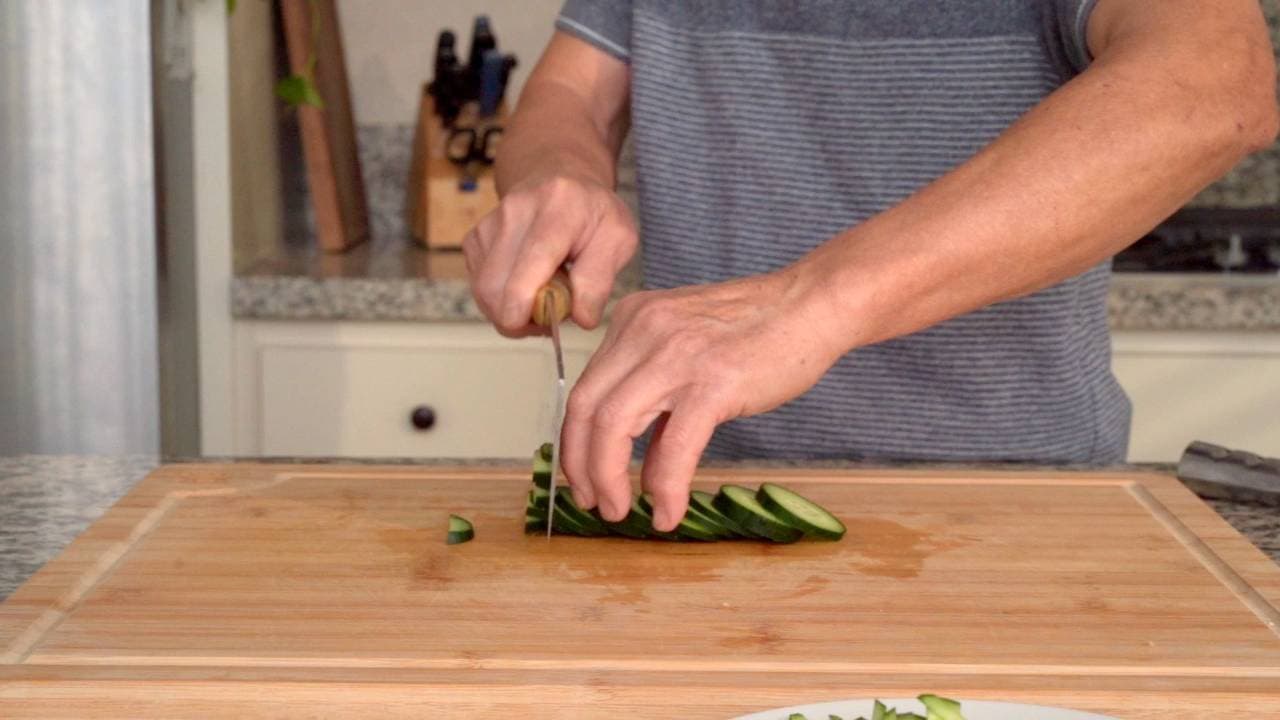
Wash the rice (1 lb) at least three times.
Many people soak the rice for a few hours before steaming but Daddy Lau chooses to cook it right after washing because it's easier.
Once washed, and optionally soaked, add the rice into the rice cooker with water (12 oz) and level the rice for even cooking.
When the rice is cooked, loosen the rice so then it will be easier for the sauce to penetrate it.
Bring a pot of water to a boil and place the salted eggs into the water to cook for 2 minutes. Once cooked, place the eggs into a bowl of cold water.
Peel off the chicken skin from the drumsticks (3 oz) with a paper towel. Then, start deboning it by cutting the meat lengthwise along the bone to expose it.
Carefully break the bone closer to the ankle or the "handle" of the drumstick. Pull the meat away from the rest of the bone and cut the remaining bone that is connected to the meat off. Cut away any stringy tendons.
Cut the meat into bite-sized cubes, transfer to a bowl, add cornstarch (1 tsp) and water (2 tsp), mix and marinate.
If you have dried shiitake mushrooms (6 pieces), rehydrate them in warm water for 10-15 minutes before cutting them. Make sure to save the water for later!
Once rehydrated, select your mushrooms (6 pieces) for the different styles of cutting- minced (3 pieces)and thickly (3 pieces) sliced. Cut your mushrooms accordingly and set aside.
Cut the Chinese sausage and char siu (2 oz) into 8 pieces.
Cut the ends of the shallot off, peel, and smash them before mincing it and setting it aside.
Next, we'll start stir-frying our ingredients. We'll set our stove on high heat, and let the wok heat up for 2-3 minutes.
The oil is hot enough when it starts rippling and smoking as we spread it around the wok.
When the oil has heated up, turn the heat off and add the chicken. Cook the chicken for 30 seconds with the heat off, and then set the stove back to high heat.
Let the shallots cook for about 15-30 seconds. Then add mushrooms and water (4 oz).
We'll stir the wok around for about 45-60 seconds. Then, we'll set the heat to low, and start adding our sauce.
Add oyster sauce (1 Tbsp), light soy sauce (1 Tbsp), tamari (½ tsp), chicken bouillon (2 tsp), sugar (2 tsp), and salt (½ tsp).
Turn the heat off and mix cornstarch (1 tsp) with water (1 tsp) until it becomes a slurry. Set the heat to high, add the slurry while stirring constantly, and gradually turn it down as the sauce thickens.
Cook it for about 2-3 minutes longer. Once the slurry comes together, add in sesame oil (2 tsp), then put the filling onto a plate to cool down. Turn the stove off.
Use a wide dish so that you can spread the filling out to cool down faster.
Once cool to the touch, peel the eggs and let them completely cool before gently peeling the egg whites off to expose the egg yolks.
Cut the egg yolks in half and set them aside for assembly.
Take the mushroom juice left over from soaking the dried shiitake mushrooms and combine it in a small bowl with water (3 oz), oyster sauce (½ Tbsp), light soy sauce (1 tsp), and oil (1 tsp). This sauce will help the glutinous rice to loosen and make it easier for us to wrap the lo mai gai.
Once combined, pour it over the rice, mix, and transfer onto a plate to cool down. It doesn't have to be completely cold, but it'll be easier to handle if it's not piping hot.
While the rice is on the plate, use the rice paddle or a spatula to roughly portion your rice into the number of Lo Mai Gai you're making.
Now it's time to fill the lotus leaves. Set up your station by having all the ingredients within reach.
First, take two quarters of lotus leaves and place them one on top of the other having the wider parts of the leaves overlapping each other and the narrow ends are at 12 o'clock and at 6 o'clock.
Take a portion of rice and flatten it by hand. Make sure to make the center a bit more thin to hold the filling in place. Place the rice onto the center of the lotus leaves.
Spread a tablespoon full of the chicken and mushroom filling over the rice.
Place the Chinese sausage, char siu, and salted egg yolk on top of the filling.
Make another flatten portion of rice to place on top of the filling. Make sure to have the filling not spill out around the rice.
Tightly fold the lotus leaves around the rice starting with the sides at 3 and 9 o'clock and the at 12 and 6 o'clock.
Repeat this process 7 more times.
If you notice any cracks or rips in the lotus leaf, you can cut another leaf to place on top of the rip to cover it.
Pour water into the steamer and place the steamer on the highest heat. When the water is boiling, it's time to load up the steamer with the lo mai gai!
Place the lo mai gai seam down onto the steamer's tray. Arrange them into a single layer. Do not stack them as they will not cook properly.
Steam for 20 minutes on high heat.
Top 3 Mistakes
- Skipping the rice seasoning:
Mix the seasoning sauce thoroughly through the cooked sticky rice before wrapping. Let the rice cool a little, so each parcel gets flavorful rice instead of pockets of plain grains.
- Stacking lotus leaf parcels:
Arrange the wrapped parcels seam down in a single layer on the steamer tray. Stacking them prevents them from cooking properly, so leave each parcel exposed to the steam.
- Adding thickener too fast:
Add the starch mixture gradually while stirring, checking the texture as it thickens. Pouring it all in at once gives you less control over the final consistency of the sauce.
Frequently Asked Questions
What kind of leaves are used to wrap Lo Mai Gai?
Lo Mai Gai, the sticky rice with chicken often found in dim sum, are wrapped in lotus leaves.
In contrast, joong, another type of leaf-wrapped packet of glutinous rice, which is made for the Dragon Boat Festival, are wrapped in bamboo leaves.
Why does the rice stick to the lotus leaf in my Lo Mai Gai?
The rice will stick to the lotus leaf if you forget to add oil when you're seasoning the cooked rice before wrapping it.
After cooking the glutinous rice, season it with a sauce made of the dried shiitake soaking liquid, water, oyster sauce, light soy sauce, and oil. Mix the sauce in well, let the rice cool down a bit, then proceed with assembling your Lo Mai Gai!
You can also apply a little oil on the leaves before wrapping, if you like.
What fillings can you put in Lo Mai Gai?
In order to be true to the name, the filling must include chicken in some form. If you don't like chicken, then of course you can leave it out.
In addition to chicken, our filling includes salted egg yolk, Chinese sausage, char siu, and dried shiitake mushrooms, which are pretty typical components.
Other roast meats, like roast pork or roast duck, would be delicious additions as well.
If you're not opting for meat, and you'd like to make a vegetarian version, you can add a variety of other mushrooms, like dried and fresh shiitake mushrooms, cloud ear fungus, and enoki mushrooms. Bamboo shoots will add a lovely crunch as well!
How long can you store Lo Mai Gai?
Lo Mai Gai will keep for 3-4 days in the refrigerator, and much longer in the freezer. If freezing, wrap them in plastic wrap or keep in an airtight plastic bag to prevent them from drying out.
When reheating Lo Mai Gai, steam for 10-20 minutes if thawed, and add 5 more minutes if reheating straight from frozen.
Pairs well with
View all →
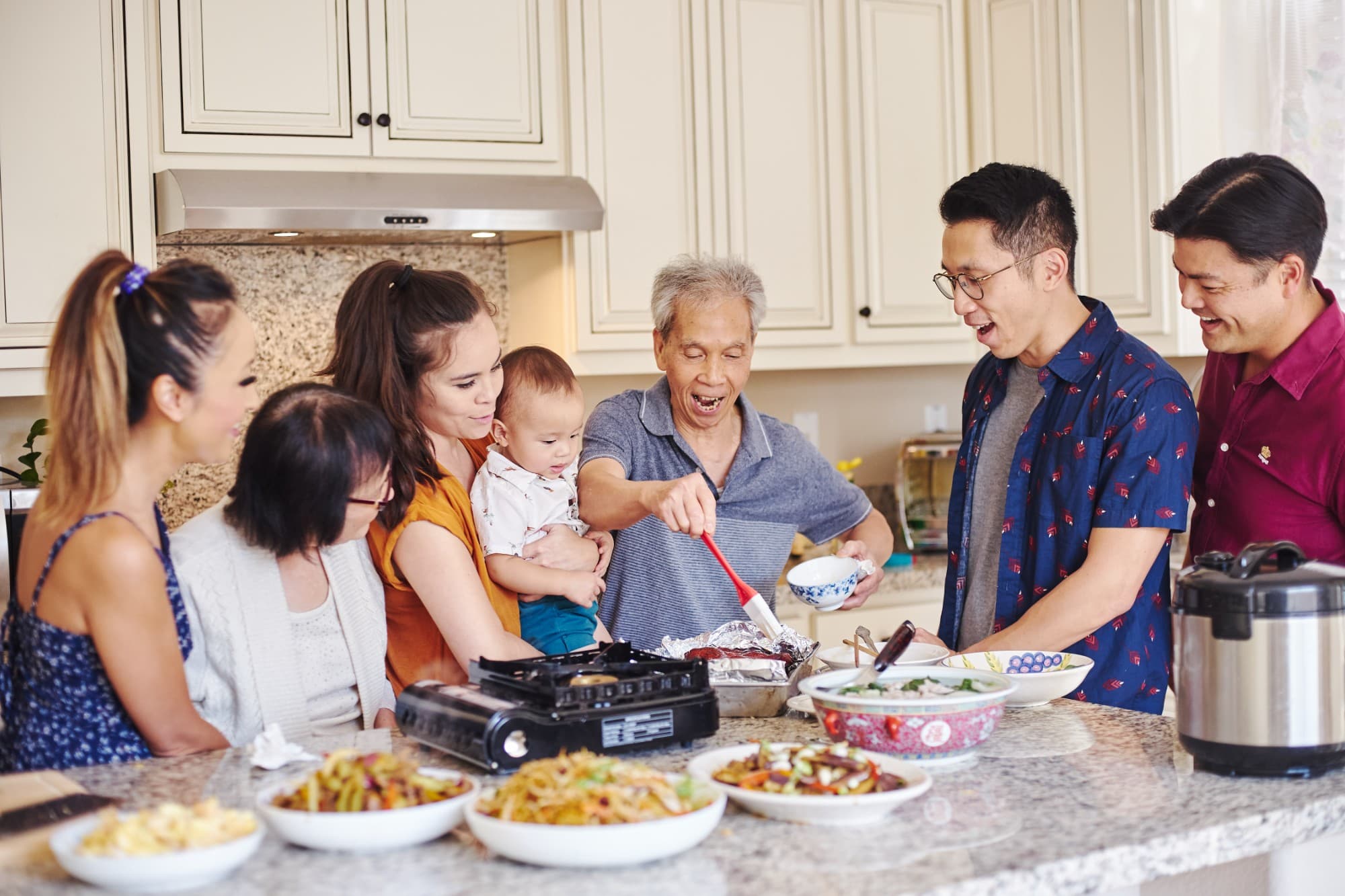
Made with love ❤️
We started Made With Lau to celebrate Cantonese culture and honor the legacy of our wonderful parents, Jenny and Chung Sun Lau.
Our hope is that these recipes and stories help you spread the joy, love, and nostalgia that I felt growing up.