Hot & Sour Soup

Learn how to make this classic Chinese soup that's equal parts soothing and stimulating!

Cooking Summary
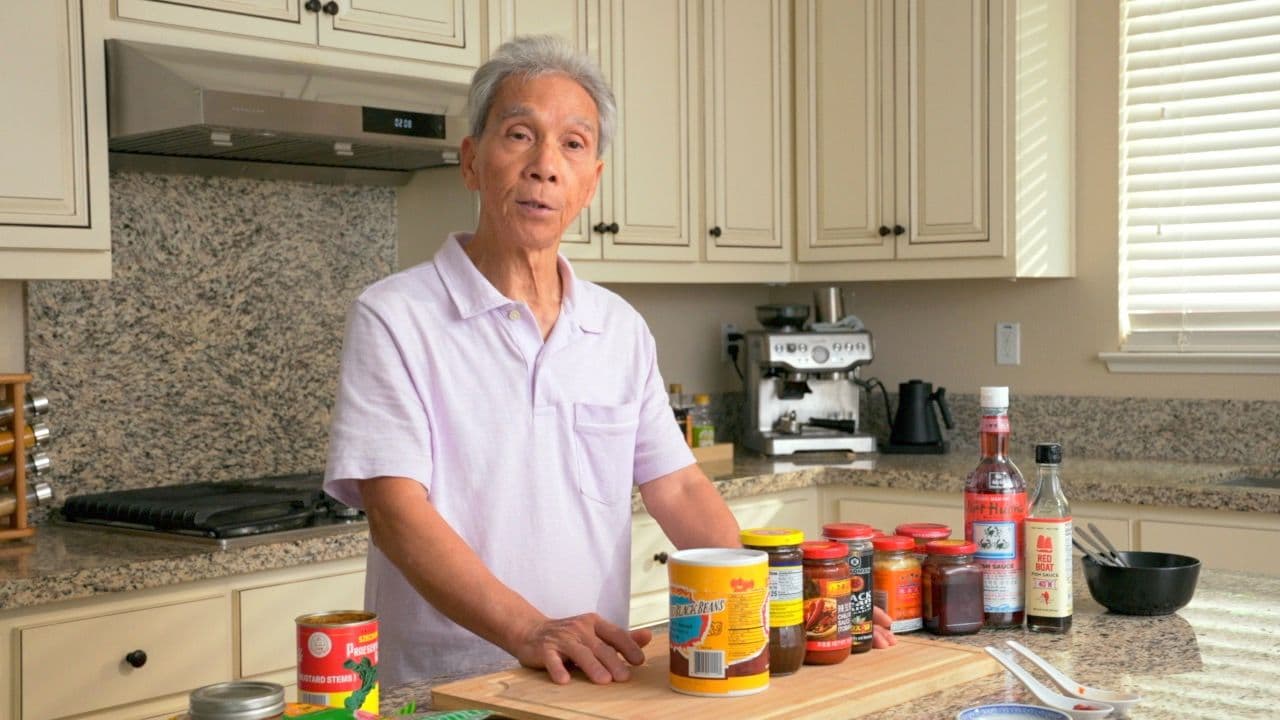
Ingredients: (detailed list)
- Main Ingredients: tomato, carrot, seafood mushroom, king oyster mushroom, shiitake mushroom, dried wood ear mushroom, egg, red bell pepper, green onion, dried chili peppers, tofu
- Other Flavors: water, vinegar, white pepper, salt, sugar, light soy sauce, dark soy sauce, cornstarch, sesame oil, corn oil
Jump To Section
Top 3 Mistakes
- Pouring the eggs too fast:
Add the beaten eggs in the slow stream described in the recipe. Dumping them in at once changes how they set, giving you larger clumps instead of the delicate strands you want.
- Adding thickener too fast:
Add the starch mixture gradually while stirring, checking the texture as it thickens. Pouring it all in at once gives you less control over the final consistency of the sauce.
- Rushing the mushroom soak:
Give the dried mushrooms time to soften before cooking. A quick rinse is not a substitute for rehydration; follow the soaking step so the centers are ready along with the edges.
Overview
This dish was a favorite at my parents’ old restaurant, and it’s often found on most Chinese takeout menus.
As popular as hot and sour soup is, interestingly, this wasn’t something my parents ate growing up in Guangzhou. As with a lot of Chinese dishes, the origin (or origins), are hard to pinpoint, but it’s likely further north where the weather is colder and the flavors are more heat-inducing.
(Our friends at Chinese Cooking Demystified also have a great write up on this in their own version of Hot and Sour Soup.)
Regardless of where the dish came from, it’s a perfect soup for a cold winter day that’s equal parts spicy and soothing.
Ingredients
Why this recipe
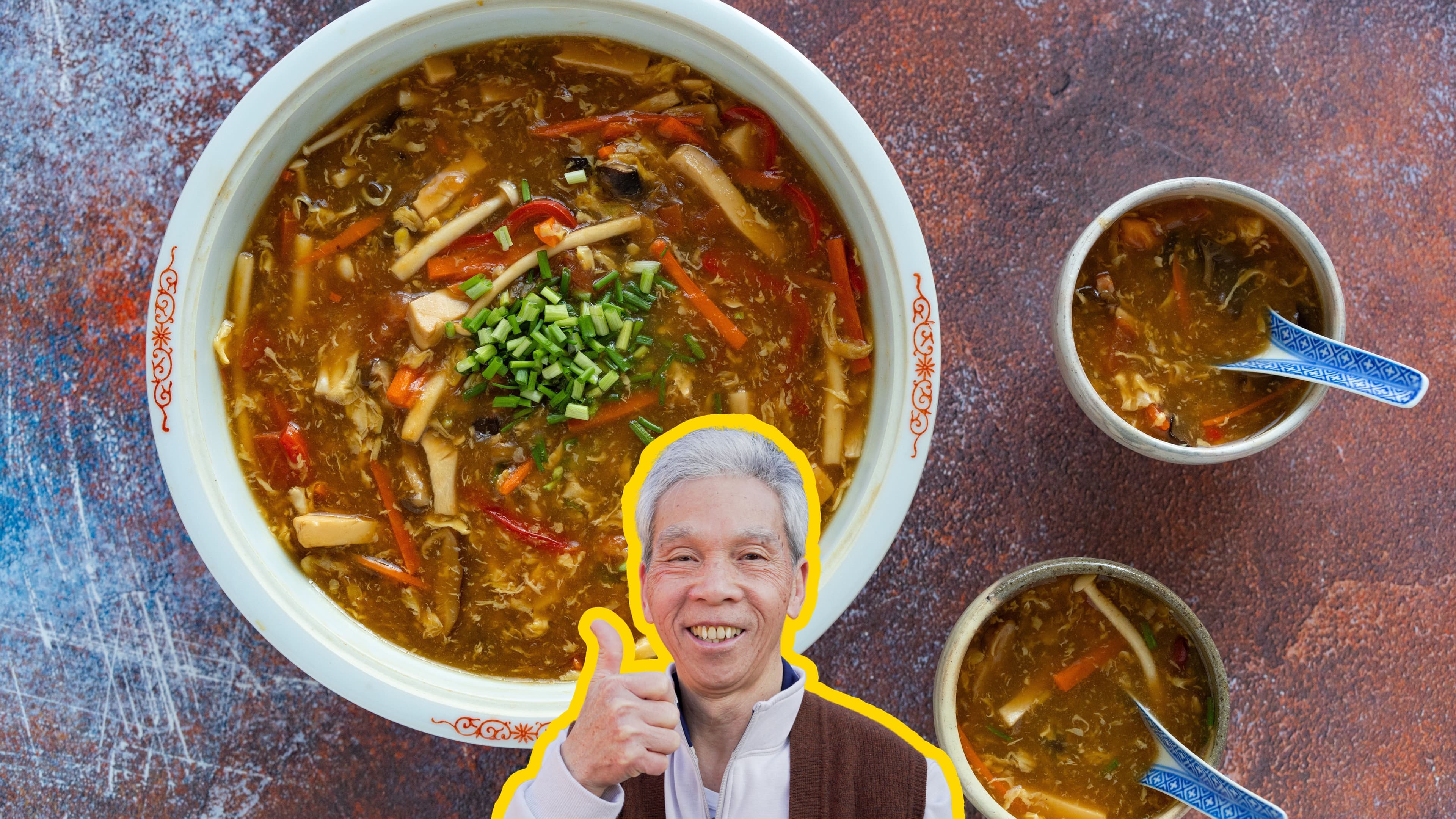
Most hot & sour soup recipes online are tested only a handful of times. My dad used to make this dish multiple times a day, every day, for 60+ years and can make this in his sleep.
I know you'll love it as much as our community does! This recipe has over 1.5M views, 31.4K likes on YouTube.
On White Pepper
If you’ve never heard of white pepper, it’s a spice that’s ground up from white peppercorns. Also, fun fact: black and white pepper actually both come from a fruit. The same fruit, to be exact. White peppercorns, black peppercorns, green peppercorns, red peppercorns, these are all the same berry from the same pepper plant, piper nigrum.
The main difference is when and how they’re harvested and processed. Black peppercorns are dried as soon as they’re picked, and their skin becomes black and shriveled. White peppercorns are soaked for at least a week, which allows the outer skin to decompose. This leaves just the seed to be dried, with its distinctive heat and concentrated spiciness.
As you’ll see in my dad’s recipe, even just a teaspoon of white pepper is enough for a pretty noticeable kick of heat.
Interesting reads:
- https://spicetrekkers.com/news/where-do-peppercorns-come-from-white-pepper-vs-black-pepper
- https://www.bonappetit.com/story/white-pepper
Finding Asian Ingredients
Some of these ingredients are hard to find in a typical grocery store.
If you don't live near an Asian market, most or all of what my dad uses in this recipe can be found on Amazon:
- Kikkoman Sesame Oil - https://geni.us/kkmsesameoil
- Kikkoman Soy Sauce - https://geni.us/kkmsoysauce
- Kikkoman Tamari - https://geni.us/kkmtamari
- Dried Shiitake Mushrooms (soak for 15-20 minutes in warm water before slicing)
- Dried Wood Ear Fungus (a few options, depending on what's in stock):
I've also included some other Chinese kitchen essentials, used in many of my dad's other recipes.
- Koon Chun Hoisin Sauce
- Kikkoman Oyster Sauce - https://geni.us/kkmoystersauce
- Lee Kum Kee Chicken Bouillon
- Shaoxing Cooking Wine
- Chinese Sausage - Lap Cheung
- Dried Shrimp
These links are affiliate links, which means that if you use our links to purchase these ingredients, Amazon pays my family a small amount for the sale - at no extra cost to you. If you use these links, we really appreciate the support!
How to make Hot & Sour Soup
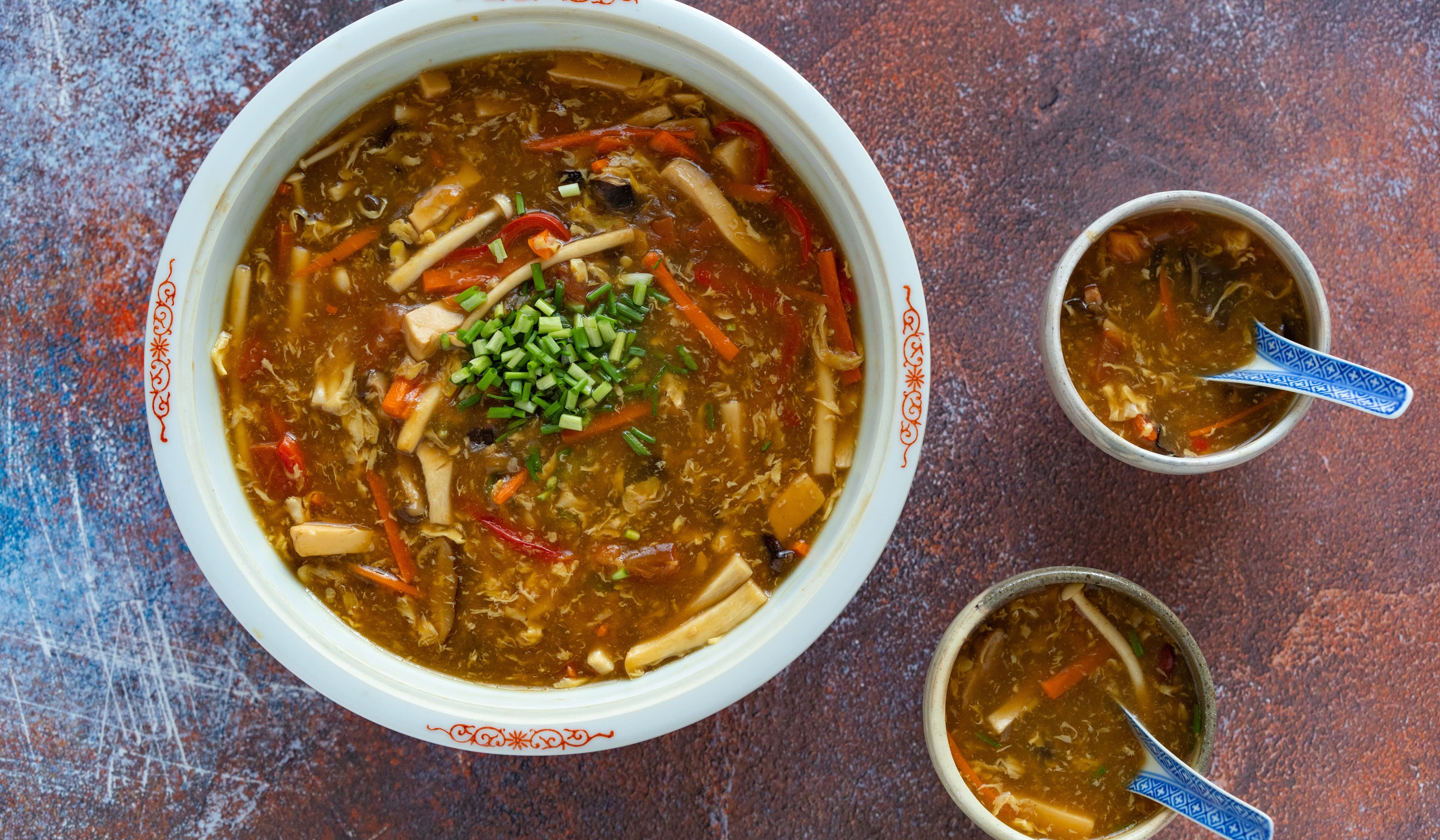
Wash all the vegetables, and then chop them:
- seafood mushrooms (2 oz): cut away the roots, and cut the stems in half
- king oyster mushrooms (2 oz): cut in little strips.
- My dad only uses about half of one for this recipe, but feel free to use more.
- shiitake mushrooms (3 piece): cut into thin slices
- If you bought dried shiitake mushrooms, rehydrate them in warm water for 10 minutes
- dried wood ear mushroom (0.25 oz): rehydrate in warm water for 10 minutes, then cut into thin slices
- tofu (14 oz): cut into thin strips
- carrots (2 oz): cut into thin strips
- red bell peppers (1 oz): cut into thin strips
- green onion (2 piece): mince
- tomato: dice into small cubes
For the tomatoes, my dad has a pretty cool technique:
- Cut off the end with the green stem, and cut the tomato in half
- Make cuts about 1 centimeter apart that just almost reach the edge of the tomato.
- Then, we’ll turn the tomato and make perpendicular cuts. Because the tomato is still held in place, it’s much easier to make these perpendicular cuts.
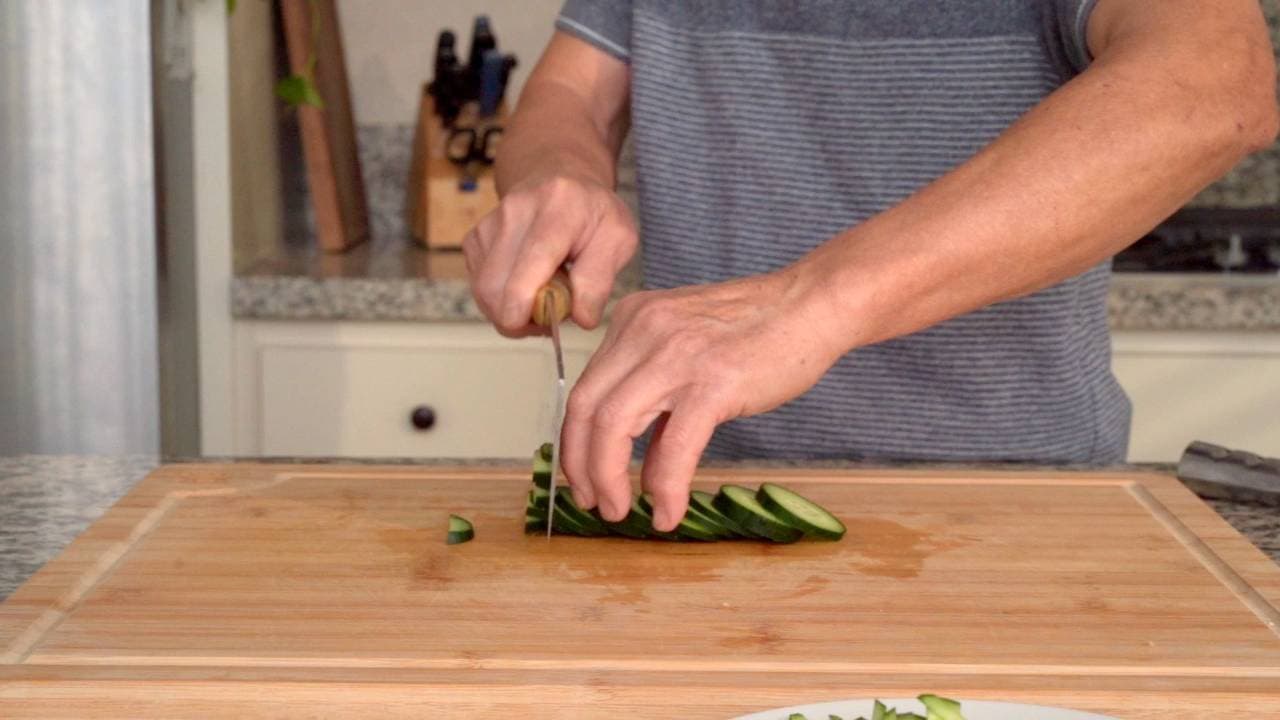
In a bowl, mix together cornstarch (3 tbsp) and water (2 tbsp) with a spoon until it becomes an even slurry.
In another bowl, crack eggs and mix well.
For both of these, you'll need to mix them again later right before you pour them into the soup.
To save time for later, boil water (5 cup) in advance.
Set the stove to its highest heat setting, and start to heat up the wok.
Add a little bit of corn oil (1 tbsp), as well as our dried chili peppers (2 piece).
We'll heat and toss the chilies around the oil for about 1 minute as our wok heats up. The purpose is to add more of a spicy essence to the oil.
Afterwards, we'll take the chilies out of the wok. We won't need them anymore.
Cook the diced tomatoes for 30-60 seconds, then add our boiling water (5 cup).
Next, we'll add white pepper (1 tsp) and stir for 15-30 seconds. It's important to add the white pepper before we thicken it with cornstarch, since it's much easier to mix the white pepper evenly across the soup base.
Then, we'll add salt (1 tsp), sugar (1 tbsp), light soy sauce (2 tbsp), and dark soy sauce (0.50 tbsp). If you prefer a darker look to your soup, you can add more dark soy sauce. Stir for 15-30 seconds.
And finally, we'll add our tofu, mushrooms, and vegetables (with the exception of green onion). Stir gently for 5-10 seconds.
Cover the wok with a lid. My dad opted for a smaller lid, which is supposed to help the wok come to a boil more quickly.
Once it's boiling (in about 3-4 minutes), we'll add the rest of our flavors.
Once the wok is boiling, we'll uncover the lid and add more character to our soup.
Cornstarch slurry
Since the cornstarch has probably settled, mix it up again with a spoon, and slowly pour in the cornstarch over the course of 50-60 seconds. Stir constantly.
Eggs
Beat the eggs again, and slowly pour in the eggs all around the wok, over the course of 20-30 seconds. Unlike Egg Flower Soup, we don't have to stir as we pour.
Vinegar, Sesame Oil
Add vinegar (2 tbsp) to the wok, as well as sesame oil (to taste).
In general, it's important to add the vinegar towards the end. In doing so, we aren't wasting its pungency by cooking and boiling it away.
For similar reasons, my dad also tends to add sesame oil last in his recipes.
At this point, you should taste the soup and see if it needs any adjustments. Hopefully you are as satisfied as my dad!
Almost done! Turn off the heat and transfer the soup into a bowl. Garnish with the minced green onions.
Call your loved ones over - it's time to eat!
Frequently Asked Questions
Is hot and sour soup vegetarian?
Our recipe is vegetarian!
If you'd like to add meat, you can chop your meat of choice into thin strips, so that they're a relatively uniform size and shape with the rest of the ingredients, and add them at the beginning of the cooking process, to ensure that they cook safely through.
Is hot and soup soup vegan?
Our recipe is easily adaptable to be vegan: the only non-vegan ingredient is eggs, so just replace that with your favorite egg substitute.
What kind of meat goes in hot and sour soup?
At restaurants, you'll commonly see slivers of pork or chicken. Our recipe is vegetarian, but feel free to add whatever additional ingredients you like in your soup!
Why is it called hot and sour soup?
The "hot" in hot and sour soup means spicy-hot, not temperature-hot, referring to the kick from the white pepper powder. Then it's sour from the vinegar.
In Chinese, we call this type of appetizer "開胃", meaning "whetting the appetite", as the spice and the sour will get your mouth watering and ready for the rest of the meal!
Is Chinese hot and sour soup healthy?
Yes, it is! You can make sure that you make the healthiest version possible by choosing good quality produce and seasonings. Our recipe already has very little added salt and sugar, and you can always reduce them further or omit them if necessary, though the soup may come out slightly less flavorful.
Heating the chili in oil, adding vegetables with a variety of tastes and textures, and adding that dash of sesame oil at the end are all techniques that go a long way in adding depth and flavor without compromising the healthfulness of the dish!
Restaurant or instant versions may not be as healthy when they include additives and preservatives, but because you're making this soup from scratch, you have full control over the ingredients.
Pairs well with
View all →

Made with love ❤️
We started Made With Lau to celebrate Cantonese culture and honor the legacy of our wonderful parents, Jenny and Chung Sun Lau.
Our hope is that these recipes and stories help you spread the joy, love, and nostalgia that I felt growing up.